As the work week draws to a close, the artificial intelligence landscape is witnessing a massive wave of platform updates, model releases, and practical workflow strategies designed to reshape how professionals operate. From Anthropic and Google to OpenAI, industry leaders are pushing deeper into enterprise solutions, agent capabilities, and hyper-efficient model architectures. Meanwhile, practitioners are adapting to these rapid shifts by streamlining their daily operations, leveraging cross-platform systems, and integrating generative tools into everything from print design to video production.
The rapid pace of innovation often leaves professionals guessing which tools actually matter and how to implement them without burning out. Addressing this challenge, industry experts emphasize that foundational systems must remain portable even as specific applications evolve. Demonstrating this principle recently, AI strategist Nicole Leffer experienced a sudden outage with Claude during a live presentation. Instead of stalling or panicking, she seamlessly transferred her workflow to ChatGPT, picking up the exact task without missing a beat. This adaptability stems from building platform-agnostic frameworks, highlighting the growing need for workflows that can traverse multiple AI environments effortlessly.
In product design and marketing, practitioners are increasingly combining generative text models with layout software to bypass traditional bottlenecks. Professionals juggling multiple roles—from strategy to customer engagement—can now use ChatGPT as a preliminary art director for print materials. By briefing the model with detailed content requirements, brand guidelines, and print specifications, users can generate surprisingly accurate drafts. Subsequent adjustments can be handled through direct visual edits, such as marking areas for removal or background changes, before exporting the asset into tools like Canva. Utilizing specialized features like Magic Layers allows creators to break designs into individually editable components, quickly fixing font shifts and spacing issues to produce print-ready materials with minimal friction.
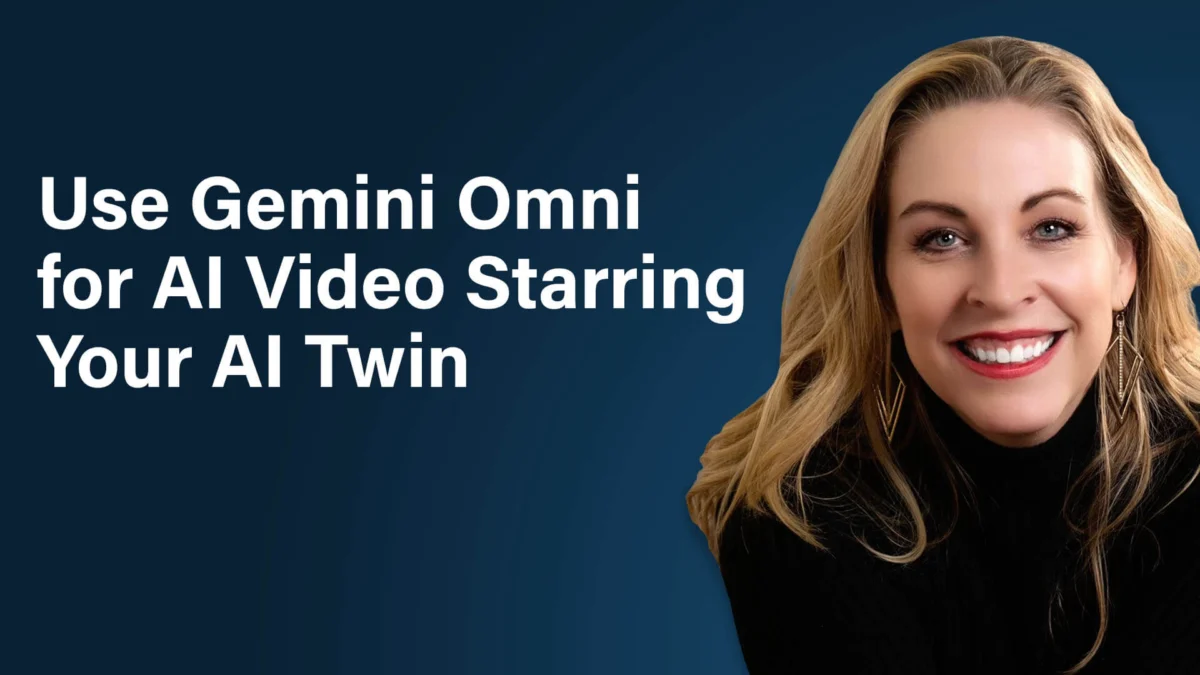
Video production is experiencing a similar democratization, driven by advanced multimodal systems. According to AI video strategist Eve Whitaker, creating professional, scroll-stopping video content no longer requires technical prompting expertise or an expensive film crew. Google’s Gemini Omni allows creators to integrate themselves into various settings, edit previously recorded footage, and generate engaging visual hooks through natural language instructions. By focusing on fundamental storytelling principles, such as deliberate camera placement and pre-production planning for longer narratives, creators can string short clips together seamlessly. Furthermore, advanced prompting techniques allow marketers to modify the background, season, or attire of existing video footage without starting from scratch, opening up new avenues for efficient content scaling.
On the enterprise and developer front, major foundation model releases are driving down costs while boosting processing speeds. Anthropic has officially launched Claude Sonnet 5.5, a faster and more cost-efficient model tailored specifically for coding, professional workflows, and complex content creation. Delivering substantial performance improvements over its predecessor, Sonnet 5.5 generates responses more than thirty percent faster while consuming fewer tokens per task. Anthropic has positioned the new model strategically between the upcoming high-volume Haiku 5.5 and its powerhouse Opus 5.5 variant, with immediate availability across major cloud platforms and the dedicated Claude Platform.

Google has similarly expanded its Gemini ecosystem with a series of high-profile releases aimed at real-time communication and workflow integration. The company launched Gemini 3.8 Live featuring Live Avatar, a capability that introduces animated visual personas to conversational AI for enterprise deployment. By combining speech and video generation with advanced multimodal understanding, background tool execution, and support for ninety-seven languages, the system enables AI agents to maintain expressive, continuous conversations while simultaneously processing complex backend tasks. Organizations can customize these avatars to reflect specific brand identities, with the service rolling out broadly through Gemini Enterprise.
In addition to visual avatars, Google is weaving its Gemini ecosystem deeper into third-party productivity platforms. A new wave of connected apps allows users to interact with tools like Airtable, Linear, Monday.com, Adobe, Squarespace, and Webflow directly within the Gemini interface, eliminating the need to constantly switch between disparate tabs and software. Google has also introduced Gemini 3.8 Flash TTS and Flash-Lite TTS, new text-to-speech models that offer customizable voice generation, voice replication, and detailed performance direction. These audio tools enable creators to generate original vocal identities, manage multi-speaker dialogues, and produce long-form multilingual audio while incorporating built-in consent verification and AI-content credentials.
Meanwhile, OpenAI made sweeping announcements at its developer conference, positioning ChatGPT as a comprehensive agent and developer platform rather than a simple conversational assistant. The updates introduce always-on Dots agents, cloud-based Codex workflows, expanded developer APIs, and collaborative workspaces known as ChatGPT Space for teams. By opening the platform to external developers through plugin extensions, Sign in with ChatGPT, and a dedicated marketplace, OpenAI aims to connect external services directly with its massive user base.
Complementing these platform expansions, OpenAI introduced GPT-6 Sol and GPT-6 Luna, bringing the architectural advances of GPT-6 Astra into more affordable models designed for scaled professional workflows. Both models improve upon previous iterations in factual reliability, coding capabilities, computer use, and communication while cutting API pricing in half. Enhanced prompt caching further reduces the cost and latency associated with long-running agent conversations, ensuring that developers and enterprises can deploy these advanced systems efficiently as they roll out across OpenAI’s ecosystem.