As declining organic search traffic continues to challenge digital marketers and business owners across industries, organizations are increasingly forced to diversify their marketing channels. While social media has long served as a vital instrument for building brand recognition, fostering community engagement, and driving direct sales, evaluating its holistic impact has historically remained a challenge. Prominent social networks have traditionally offered robust native analytics tools tailored to tracking follower acquisition and engagement metrics, yet these built-in dashboards fail to extend their analytical reach beyond their respective walled gardens. Crucially, they have never provided digital strategists with visibility into how social content intersects with organic search ecosystems.
Addressing this long-standing industry limitation, a significant new feature in Google Search Console now enables account holders to seamlessly track organic search activity directly tied to their official social media profiles. Following a gradual and anticipated rollout, this capability has officially become widely available to all users, offering native support for professional and creator accounts across major platforms, including YouTube, TikTok, X, and Instagram.
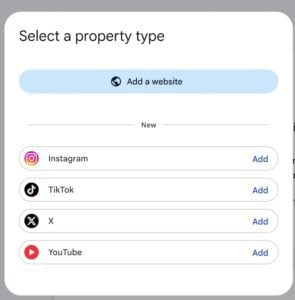
Within the Search Console architecture, these connected social media profiles are officially designated as "platform properties" and are treated by the system much like traditional websites. To activate tracking for a specific social channel, administrators simply need to select the "Add property" option located within the top-left navigation drop-down menu and complete the standard authentication procedures. Once successfully linked, accounts typically begin receiving performance data within thirty-six hours, integrating social assets directly into the broader search monitoring workflow.
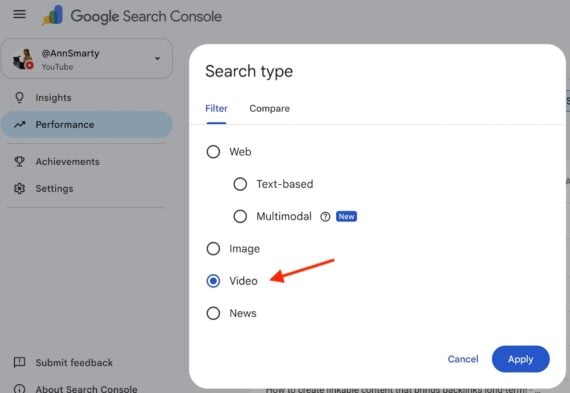
The newly introduced Search Console dashboard dedicated to social media profiles is streamlined, focusing specifically on the Insights tab and the comprehensive Performance section. The latter houses vital search metrics that can be filtered extensively by text or multimodal web search, image search, video search, and news, alongside robust tracking for Google Discover visibility.
Among these capabilities, the inclusion of the dedicated Video search option is proving particularly valuable for digital marketers. Because YouTube content consistently ranks strongly within Google Search results and is increasingly cited across artificial intelligence-driven interfaces such as AI Overviews, AI Mode, and Gemini, monitoring video visibility has become a priority. Historically, tracking individual video rankings and tying them back to specific search queries was a cumbersome, manual burden for content creators and brands alike.
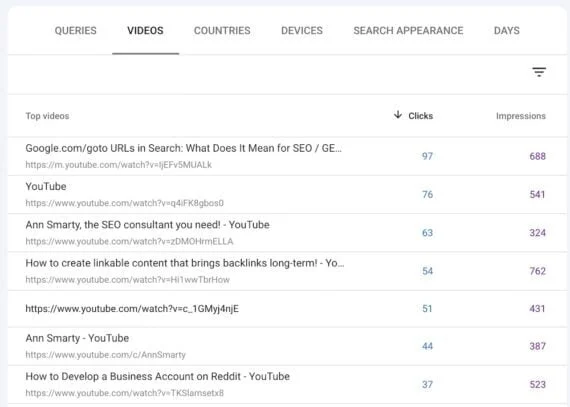
By adding a YouTube channel through the property drop-down menu, navigating to the Performance section, and selecting the "Videos" search type, users can immediately identify which of their YouTube pieces are actively ranking in search engines and generating valuable click-through traffic. Furthermore, clicking on individual video entries within the list reveals the exact search queries that led users to that specific asset.
Video Search Optimization
Traditional optimization methodologies can now be applied with greater precision to improve individual video performance within organic search results. For instance, content strategists can analyze performance reports to pinpoint search queries that generate a high volume of views but relatively few clicks, coupled with an average ranking position lower than fourth place. By strategically incorporating these specific queries into the video title, creators can often capture more relevant traffic. Similarly, identifying top-ranking queries allows publishers to experiment with varied video titles and descriptions to push their content even higher in search engine results pages.
For ecommerce enterprises and consumer brands that rely heavily on visual storytelling by publishing product imagery on Instagram, the platform property integration offers distinct advantages. By monitoring the "Multimodal search" performance filter within their Instagram property settings, businesses can easily determine whether and how often their shared photographs have successfully appeared in dedicated Image Search results.
While the newly launched social metrics do not currently incorporate the specialized Branded search filter found in traditional website properties, marketers retain the ability to manually filter queries. This manual review enables teams to closely monitor where their social profiles and updates are ranking for brand names and related spelling variations.
The introduction of platform properties significantly elevates cross-channel marketing strategies by allowing for more cohesive campaign measurement. For example, a modern merchant might publish an editorial article on their primary domain, produce a complementary video on the same core topic for YouTube, and share related product photography across Instagram. Using the updated Search Console infrastructure, the marketer can annotate the timeline with the precise dates each asset went live, subsequently tracking the organic search performance of every individual channel in a unified environment.
Moreover, this integration is expected to unearth valuable new target keywords derived directly from the queries driving traffic to YouTube videos, offering fresh insights into consumer intent and expanding the scope of modern digital marketing strategies.