In the ever-evolving ecosystem of WordPress development, site maintenance often remains a reactive endeavor. Website owners and agency professionals typically discover critical errors, performance bottlenecks, and security vulnerabilities only after a site crashes or a client complains. Seeking to shift this industry-wide mindset from reactive troubleshooting to proactive monitoring, the site health and performance SaaS platform Scanfully has officially launched its major 2.0 update.
Recently featured on the WP Tavern Jukebox podcast, Remkus de Vries, co-founder of Scanfully and a 20-year veteran of the WordPress space, discussed the motivations behind the platform’s extensive overhaul. Alongside his long-standing background in agency work focused on high-performance scalable WordPress websites, de Vries and his co-founder Barry developed Scanfully to tackle the deep technical complexities of site health and monitoring in the broadest sense possible.
Rethinking WordPress Site Health and Performance
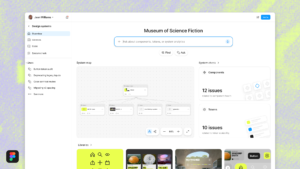
Scanfully was built to provide meaningful, actionable insights into a wide array of WordPress metrics. These include core site health, security vulnerabilities, uptime and downtime tracking, email deliverability, DNS configurations, and more. Rather than forcing users to sift through overwhelming spreadsheets or fragmented control panels, Scanfully consolidates this vast pool of data into a single, cohesive, and easy-to-understand dashboard.
The core philosophy driving the platform stems from first principles—approaching technical challenges at their foundational layer rather than merely treating surface-level symptoms. According to de Vries, many website owners struggle to stay on top of the technical side of their digital properties because they find complex data analytics and monitoring tools unapproachable. Scanfully aims to bridge this gap by transforming raw telemetry into clear, digestible signals, allowing users to understand the health of their WordPress installations without needing a background in advanced data science.
The Evolution to Version 2.0 and Human-Readable Insights
The release of Scanfully 2.0 represents a comprehensive reimagining of the platform’s user experience. Following months of collecting user feedback, the development team recognized that while the platform was already capturing essential data, the presentation needed to be significantly refined. The updated dashboard places the most critical metrics—such as pending updates, email delivery failures, and uptime percentages—front and center, offering human-readable summaries rather than intimidating charts and graphs.
Furthermore, the 2.0 update addresses the phenomenon of alert fatigue. In previous iterations, managing multiple sites on a single server could result in a flood of duplicate notifications if a server went down or if a widely used plugin required a security patch. Scanfully 2.0 introduces smarter notification grouping, alerting users to a single consolidated event while providing a granular breakdown of which specific sites are affected. Additionally, users can now snooze specific non-critical alerts, allowing them to prioritize what truly requires immediate attention.
Expanding Capabilities with Public APIs and AI Integration
Among the most significant additions in the Scanfully 2.0 release cycle is the introduction of a robust public API. This development opens up new possibilities for agencies, freelancers, and hosting providers who wish to integrate Scanfully’s deep monitoring data directly into their own custom dashboards or client-facing portals.
Alongside the public API, Scanfully has introduced an Model Context Protocol (MCP) server integration. This innovative feature empowers users to connect Scanfully to their preferred Large Language Model (LLM) and query their site health conversationally. Agency owners and site administrators can label their domains within the platform and ask complex conversational queries—such as checking for intermittent email delivery issues, investigating conflicting DNS validation records, or scanning for unexpected security vulnerabilities across a fleet of client websites. De Vries noted that this conversational layer has already proven its value in diagnosing elusive technical anomalies that would typically require hours of manual investigation.
Enhanced Activity Tracking and Future Add-Ons
Continuing its rapid iteration cycle, subsequent updates following the 2.0 launch have introduced advanced user activity tracking and content change logs. Rather than storing activity logs directly inside individual WordPress databases—which can degrade performance on busy sites—Scanfully asynchronously pulls comprehensive activity data into its external SaaS dashboard. This includes tracking plugin installations, core updates, administrator email changes, and privilege escalations, ensuring that administrators maintain a reliable audit trail even if a site experiences catastrophic failure.
Looking ahead, the Scanfully team is actively expanding the platform’s capabilities through specialized add-ons. Most notably, a beta release for WooCommerce checkout monitoring is currently rolling out. This feature simulates complete user journeys on e-commerce sites—verifying product availability, cart additions, and checkout processing steps without triggering live financial transactions or accumulating phantom orders. Future roadmap items include expanded monitoring solutions tailored for contact forms and other business-critical user flows.