Naming things remains one of the most persistent and vexing challenges in software development, design systems, and product management. The language professionals use not only shapes how they conceptualize interfaces and systems, but it also dictates the quality of cross-functional conversations. Across the industry, persistent confusion surrounds the identification of colors, icons, UI components, and product features, leading directly to ongoing struggles when it comes to naming design tokens, HTML classes, and variables.
Choosing the right name requires balancing two extremes. Too often, chosen names lean toward being overly generic, making it difficult to understand the precise intent or functionality behind a piece of code or an interface element. Conversely, names can occasionally be too specific, leaving very little room for flexibility, scalability, and future reuse. Navigating this delicate balance is critical for maintaining robust digital products, leading many teams to re-evaluate their naming conventions, structural taxomomies, and collaborative workflows.

How To Name Things
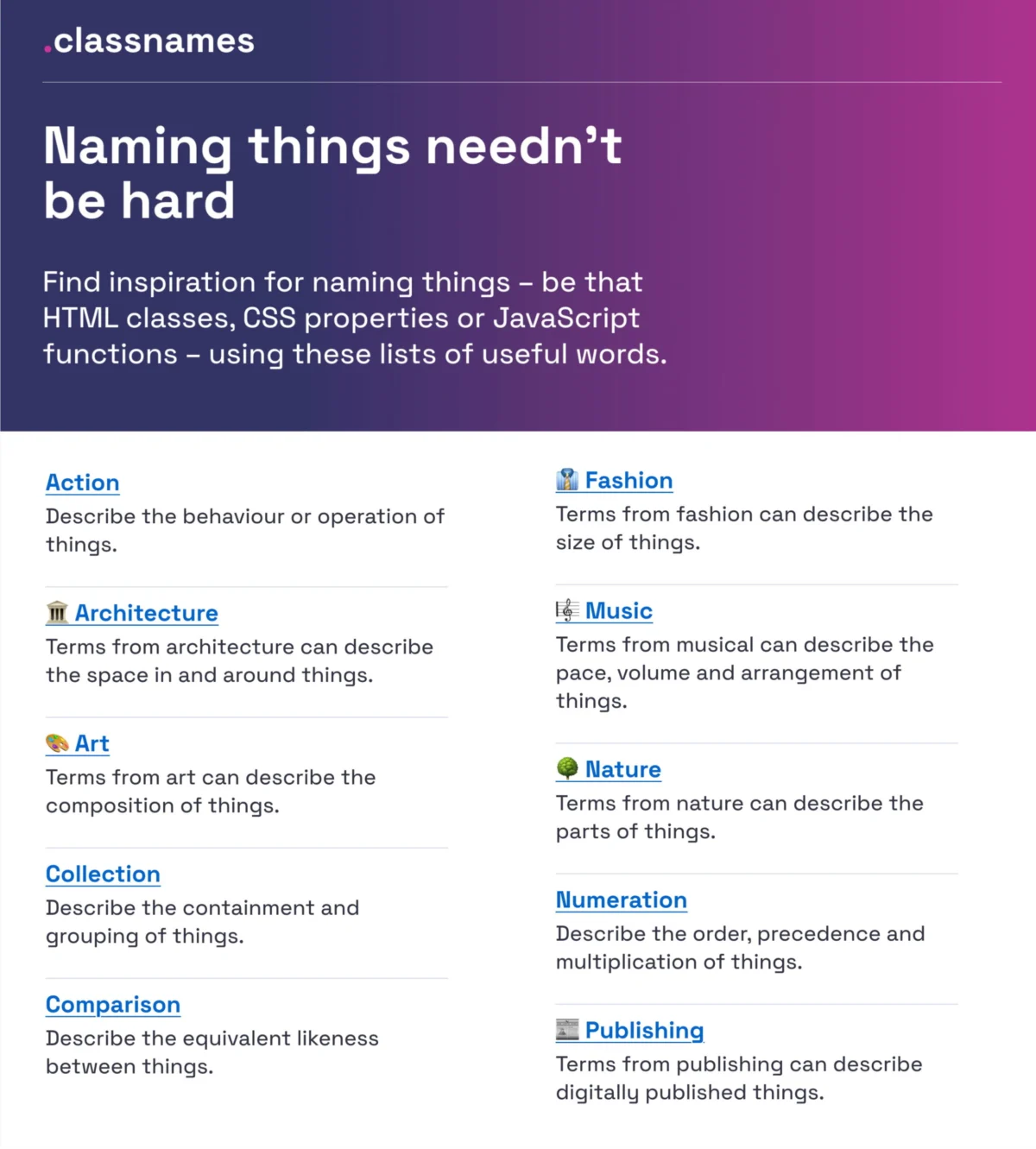
When developers and designers look for fresh inspiration when naming HTML classes, CSS properties, or JavaScript functions, resources like Classnames offer alternative perspectives that encourage thinking outside the box. Created by Paul Robert Lloyd, the platform provides thematically grouped lists of words designed to assist with nomenclature.
The site curates terms describing behavioral traits, similarities, orders, groupings, and associations, alongside themed collections drawn from disciplines outside traditional software development. These include terminology from nature, art, theater, music, architecture, fashion, and publishing. By stepping away from literal or purely technical descriptions, teams can discover descriptive, memorable names that remain distinct and meaningful within a codebase.

How To Name Colors
Establishing a standardized system for identifying colors poses another significant hurdle for design and engineering teams. Addressing this challenge, David Aerne maintains a repository of color names that currently catalogs over 30,000 unique designations sourced from various historical references and thousands of user contributions.
Often accessed through tools like Color Parrot, the repository includes color pickers and name-search functionalities that help teams move away from arbitrary hex codes or overly rigid naming schemes. This comprehensive reference collection serves as a practical tool for designers and developers seeking consistent, human-readable color identifiers for design systems and CSS architectures.

How To Name Layers and Groups
Within design tools like Figma, the lack of consistent naming conventions can quickly turn a file into an unnavigable maze. Javier Cuello addressed this operational bottleneck by compiling a set of naming best practices aimed at bringing consistency and scalability to layers, groups, and components.
According to these guidelines, an effective name possesses a logical structure, remains concise, carries clear meaning, is universally understood across teams, and avoids relying on superficial visual properties. By following established do’s and don’ts, practitioners can eliminate ambiguity when organizing sizes, colors, groups, layers, and distinct UI components within collaborative design environments.

How To Name Design Tokens
Building a flexible design token taxonomy that operates seamlessly across multiple products and brand themes represents a major hurdle for enterprise design systems. The challenge was tackled head-on by the team at Intuit, the parent company behind major financial and productivity platforms such as Mailchimp, QuickBooks, TurboTax, and Mint. The organization developed an adaptable token system engineered to extend far beyond a single brand theme, establishing a foundational architecture capable of supporting a diverse array of products.
In a detailed case study, Nate Baldwin shared valuable insights into the creation of Intuit’s design token taxonomy, outlining the specific pain points of their legacy systems and the criteria established for the new framework. Similarly, the Vodafone UK Design System team introduced a Variables Taxonomy Map on Figma, illustrating the complex anatomy and categorization required for a multi-brand, multi-themed ecosystem. This map breaks token structures down into distinct collections—spanning from brand primitives to semantic tokens and page-level applications—building upon foundational work by figures like Nathan Curtis to ensure developers and designers can immediately trace a token’s origin and usage directly from its name.

Further supporting this space, Romina Kavcic developed an interactive design token naming guide and builder tool alongside a structured inventory spreadsheet. These resources provide teams with a bird’s-eye view of their token architecture, allowing them to manage categories, states, roles, and themes without losing track of dependencies as systems scale.
Frequent Names For UI Components
When teams struggle to determine the appropriate nomenclature for interface elements, examining established design systems offers a reliable starting point. To mitigate the trial-and-error process of researching individual libraries, Iain Bean developed the Component Gallery, an exhaustive collection gathering interface components from real-world design systems.
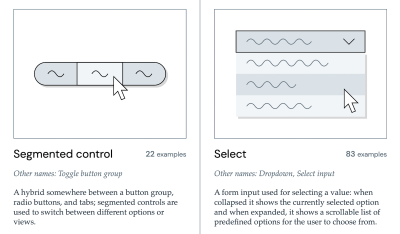
The repository features comprehensive examples for more than 50 distinct UI components—ranging from accordions to visually hidden elements—while also documenting alternative names used across different platforms. This cross-referencing capability helps standardize terminology and reduces friction between design and engineering teams. Complementary projects like Name That UI serve as visual dictionaries, providing clear references for common interface patterns.
How To Name New Features
Beyond codebases and design systems, the terminology used for product features plays a direct role in user adoption and discoverability. Features frequently suffer from low engagement not because of poor functionality, but due to ambiguous naming that obscures their purpose. Feature adoption is a sequential process requiring discovery, comprehension, trial, learning, and eventual integration into a user’s existing workflow.

Practical guides by product experts emphasize that effective feature names must be rooted in user needs and real problems. Rather than relying on internal jargon, names should signal the value or outcome of a feature—focusing on the "job-to-be-done"—while directly adopting the language used by customers. By asking users to describe a feature in their own words during research sessions, product teams can align feature nomenclature with user expectations, thereby improving discoverability and understanding.
Naming Products or Services
At the macro level, naming an entire product, service, or brand requires an entirely different set of methodologies. Open-source repositories like Onym organize tools, brainstorming frameworks, vetting processes, sprints, and etymological guides to assist organizations through the naming lifecycle. By centralizing resources, case studies, and reading lists, these directories provide structured approaches to navigating the complexities of brand identity and market positioning.

Wrapping Up
Ultimately, the most effective name is one that is universally understood and actively utilized by both product teams and end users. Significant amounts of organizational time and energy are often wasted when designers, developers, product managers, and users speak about the exact same functionality using entirely different dialects. These linguistic silos frequently generate unnecessary frustration, miscommunication, and friction within collaborative environments.
Addressing low adoption rates or workflow bottlenecks often begins with a simple audit of the terminology in use. By acknowledging potential naming conflicts, maintaining a dedicated backlog to resolve linguistic discrepancies, and standardizing vocabulary across disciplines, organizations can foster clearer communication and build more cohesive digital experiences.