Modern product development has reached a curious inflection point where the physical capability to write code has entirely outstripped an organization’s capacity to govern what ought to be built. For years, the standard critique of software engineering centered on delivery timelines, slow deployment pipelines, and the sheer friction of writing functional code. Today, generative artificial intelligence and sophisticated coding agents have largely dismantled those historical bottlenecks. Engineers can produce functional code faster than ever before, but this surge in raw velocity has illuminated an even more critical vulnerability: the scarcity of cohesive judgment.
As the velocity of execution accelerates across the tech sector, decision-makers find themselves drowning in decentralized communication channels and fragmented documentation. A typical organization’s strategic roadmap lives in a polished slide deck, while urgent customer requests languish in support queues. Vital product decisions are frequently buried deep within transient Slack threads or Microsoft Teams conversations, and the actual granular work is scattered across traditional ticketing systems that engineers and product managers often dread opening. Consequently, every strategic planning meeting inevitably begins with someone attempting to reconstruct context that theoretically already exists somewhere within the company’s digital ecosystem. Releases slip and projects stall not because development teams lack the technical capability to build, but because locating the relevant information takes significantly longer than building the feature itself.
This structural disconnect has only widened with the widespread adoption of AI coding tools. When autonomous and semi-autonomous agents begin writing code independently, they generate outputs that can easily become untethered from actual customer needs, technical debt realities, or strategic corporate priorities. When velocity outpaces strategic alignment, institutional judgment becomes the ultimate bottleneck. Effective judgment, however, depends entirely on accessible, high-fidelity context—an asset that most organizations struggle to consolidate.
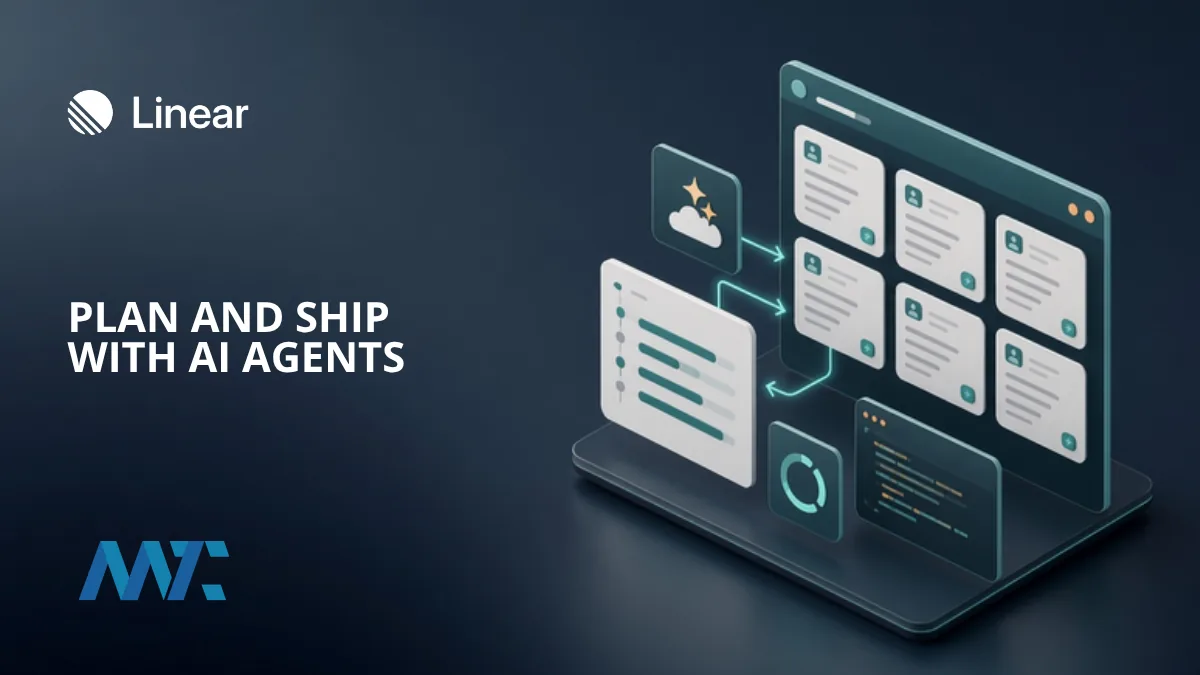
Addressing this paradigm shift, product development system Linear has positioned itself at the center of how modern engineering and product organizations plan and build alongside AI agents. Designed to unify disparate workflows, Linear offers a singular workspace where product managers, engineering leaders, designers, and customer-facing teams can seamlessly transition raw feedback into actionable issues, group those issues into coherent projects, and shepherd those projects through to shipped releases. The platform aims to establish a single, verifiable record of what an organization is building, the precise rationale behind why it matters, and the identity—whether human or agent—responsible for executing the work.
Faster Decisions from the Context You Already Have
At the heart of modern product friction is the reality that the most expensive and time-consuming phase of software development is rarely writing the code itself. Instead, it is the countless cumulative hours spent reading through disparate chat threads, combing through bloated backlogs, and piecing together fragmented customer feedback before leadership or engineering can commit to a definitive direction.
To combat this organizational tax, Linear actively ingests and centralizes conversations from channels like Slack, Microsoft Teams, email, and external customer support platforms. The system automatically routes, labels, and prioritizes these inputs into structured issues, transforming chaotic inbound noise into organized work streams and allowing teams to dedicate their cognitive energy to decision-making rather than administrative searching.
Through this integration, planning remains inextricably linked to execution. High-level corporate initiatives, long-term roadmaps, and detailed requirements documents sit side-by-side with the specific issues and GitHub pull requests that deliver them. This structural proximity provides executive leadership and product stakeholders with an accurate, real-time view of true project progress without requiring them to constantly chase down individual team members for status updates. When a cross-functional stakeholder asks whether a major feature launch remains safely on track, the definitive answer is already clearly visible within the workspace.

Furthermore, this architecture fundamentally redefines the role of artificial intelligence within the enterprise. Rather than remaining isolated as a solitary developer’s personal productivity shortcut, AI agents within Linear operate as collaborative, shared teammates. Product and engineering teams can delegate an entire issue end-to-end to an agent, carefully review the resulting output, and coordinate the subsequent steps within the exact same digital environment where the work was initially planned. Non-technical teammates—such as customer support representatives or sales professionals—can interrogate the system to understand how a specific feature functions or what recently changed in the codebase, receiving grounded, accurate answers without needing to interrupt an engineer. This transparency ensures that product, support, and go-to-market teams can maintain a synchronized pace alongside rapid software development.
The introduction of the Linear Agent further deepens this capability by embedding directly into the core workspace with native comprehension of the organization’s roadmap, existing issues, and underlying codebase. Users can prompt the agent to surface related historical customer requests, draft comprehensive product requirements, flag projects that show early warning signs of falling behind schedule, or even write targeted bug fixes. Because the agent operates from the exact same contextual foundation that the human team sees, its recommendations and outputs remain deeply relevant to the company’s broader operational goals.
The broader market has responded swiftly to this unified approach. More than 40,000 companies currently trust Linear to manage their product development lifecycles. According to recent disclosures from Linear CEO Karri Saarinen, AI agents are now installed across 95% of all paid Linear workspaces, reflecting a massive shift in how software teams operate. Even more striking is the volume of work generated by these autonomous systems: the share of work created by AI agents has surged from just 3% a year ago to 50% today, signaling that agentic workflows have transitioned from experimental novelties into core drivers of production output.
Getting Started and Ecosystem Integration
For organizations looking to adopt this model, Linear provides flexible entry points tailored to teams of varying sizes and operational complexities. The platform offers a free tier featuring unlimited team members, a capped number of teams and issues, and baseline access to Linear Agent and the broader agent platform, enabling small teams to evaluate the system with minimal friction.
Paid tiers scale upward based on user counts and advanced organizational requirements. A Basic tier expands core team and issue limits, while a Business tier unlocks sophisticated capabilities including private teams, guest access, Triage Intelligence, Code Intelligence, Insights, Linear Asks, and deep support tool integrations. For large-scale organizations, custom Enterprise plans incorporate advanced security protocols like SAML and SCIM, dedicated migration support, and personalized account management.
Adoption typically begins by targeting the organization’s loudest intake channel—whether that is an overactive Slack channel or a congested customer support queue—and utilizing Linear’s automated routing to transform that noise into structured, prioritized work. By importing existing issues from legacy trackers and connecting communication hubs like Slack and version control systems like GitHub, organizations can unify their human workforce and AI agents within a single operational environment.