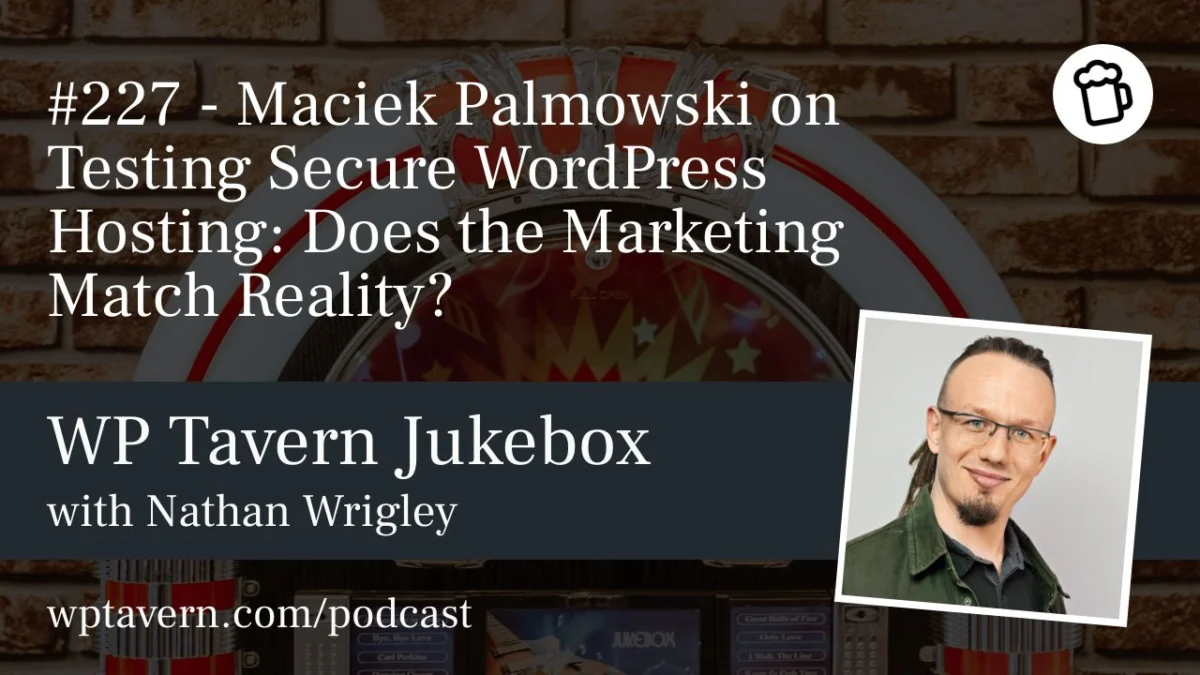
The debate over what constitutes genuine website security in the WordPress ecosystem has taken a critical turn following new empirical research. Speaking on a recent episode of the Jukebox Podcast from WP Tavern, Nathan Wrigley sat down with Maciek Palmowski, Growth Team Engineer at WordPress security firm Patchstack, to discuss a provocative presentation exploring whether the industry-standard claims of "secure hosting" actually match the reality of everyday cyber threats.
Recorded on location at WordCamp Europe in Kraków, Poland, the conversation delves into a rigorous penetration testing initiative undertaken by Patchstack. The research sought to answer a pointed question raised by WordPress co-founder Matt Mullenweg: Aren’t hosting companies taking care of security already? According to Palmowski and his team, the answer is far more complicated and sobering than many website owners might hope.
The Reality Behind "Secure Hosting" Claims
For years, users browsing the landing pages of major WordPress hosting providers have been greeted with reassuring assurances. Phrases promising "secure hosting," built-in threat protection, and peace of mind are ubiquitous across the industry. Managed hosting providers frequently market their services on the premise that users can bypass third-party security plugins entirely because the foundational infrastructure has everything covered.
However, Patchstack decided to test these foundational marketing promises using standard penetration testing methodologies. The team compiled a list of over 30 known, publicly documented plugin vulnerabilities—all previously reported through Patchstack’s bug bounty program—complete with verified proof-of-concept attack vectors. They installed these vulnerable components across multiple hosting environments, enabling every available security feature offered by the respective hosts to give them an optimal chance to defend the sites.
The findings were stark. In an initial beta run, approximately 80 percent of the simulated attacks successfully bypassed hosting-level defenses. A subsequent, broader test across a larger pool of hosting companies and plugins yielded similarly alarming numbers, with a vast majority of WordPress-specific attacks successfully penetrating the systems. While hosting providers generally performed adequately against generic PHP-level threats—such as file uploads or path traversal issues—they routinely failed when confronted with targeted, WordPress-specific exploits.
Tools Versus Configuration and the Swiss Cheese Model
One of the most compelling insights to emerge from the research was the discovery of significant performance disparities between hosts utilizing identical underlying security tools. Palmowski noted that multiple hosting providers often display the logo of the same third-party security infrastructure provider, such as Cloudflare, on their feature lists. Yet, when subjected to identical penetration testing, these hosts produced drastically different outcomes.
This discrepancy highlights a fundamental truth about cybersecurity: protection is dictated not merely by the tools deployed, but by how rigorously and aggressively those tools are configured. Some hosts implement more aggressive firewall rules that successfully block attacks but risk introducing annoying usability side effects for site administrators. Others lean toward looser configurations to maximize convenience, inadvertently leaving the door open to sophisticated threats.
Consequently, Palmowski advocates for the "Swiss Cheese model" of security. Because every individual layer of defense inevitably contains flaws or vulnerabilities—akin to the holes in Swiss cheese—effective security requires multiple overlapping barriers. Strong hosting-level defenses are vital because they intercept a high volume of generic attacks, thereby reducing the burden on subsequent layers. However, additional WordPress-aware security solutions, proactive software maintenance, and comprehensive disaster recovery plans remain indispensable.
The Shrinking Window of Vulnerability and the AI Factor
The conversation also touched upon the escalating pressures facing the WordPress ecosystem as attack speeds accelerate. According to Patchstack’s broader telemetry, malicious actors begin leveraging newly published vulnerabilities within an average window of just five hours. This rapid exploitation timeframe underscores the inadequacy of traditional, passive maintenance strategies, such as simply updating a website on a weekly basis.
Compounding the problem is the compliance rate among software vendors. Palmowski revealed that roughly 50 percent of plugin developers fail to patch reported vulnerabilities within the standard 30-day disclosure window provided by bug bounty programs. When developers leave their code unpatched, automated threat actors—increasingly empowered by artificial intelligence to discover vulnerabilities and execute attacks in fractions of a second—can exploit those openings long before site administrators are even aware a risk exists.
Despite these systemic challenges, Palmowski emphasizes that WordPress Core itself maintains an exceptionally strong security record, with very few vulnerabilities discovered annually in the foundational software. The primary vector for risk stems from the vast library of third-party plugins and themes that drive the platform’s versatility, combined with a marketing culture that encourages users to drop their guard.
Navigating Security Claims and Asking the Right Questions
Given the prevalence of broad marketing claims across the hosting industry, Palmowski advises consumers to adopt a healthy dose of skepticism. Rather than relying on vague assurances of safety, website owners are encouraged to probe hosting providers with intelligent, targeted questions.
A primary line of inquiry should focus on whether a host’s security stack is explicitly "WordPress-aware" rather than relying solely on generic Web Application Firewalls that lack context regarding plugin and theme mechanics. Additionally, looking for hosts that integrate directly with specialized WordPress security ecosystems—such as official Patchstack hosting partnerships—can serve as a reliable indicator that a provider invests deeply in targeted ecosystem protection.
Ultimately, Palmowski and Wrigley agreed that while security is inherently a complex grey area resistant to simple marketing slogans, open dialogue and rigorous testing are essential for elevating standards across the entire WordPress community.