The way most modern organizations are rolling out artificial intelligence feels less like a calculated business strategy and more like an elaborate corporate farce. If the current wave of enterprise AI adoption were adapted into a feature film, movie reviewers would likely dismiss it as completely unbelievable, arguing that no real-world management team could possibly be that short-sighted.
Yet, businesses around the world find themselves locked in this exact scenario. What makes the current state of enterprise artificial intelligence all the more frustrating for industry observers is a profound sense of déjà vu. Businesses have fundamentally walked down this exact path before, stumbling over the exact same obstacles during the height of the digital transformation era a decade ago.
Back in 2014, consultant and author Paul Boag published a book for Smashing Magazine titled Digital Adaptation, which examined the systemic mistakes organizations were making while attempting to modernize their technological operations and what strategies they should have been pursuing instead. Looking back across the landscape of modern enterprise technology, the similarities between the digital transformation boom of the 2010s and the artificial intelligence gold rush of today are strikingly transparent.
Reviewing the core lessons outlined in Digital Adaptation reveals how deeply relevant past organizational missteps are to the contemporary artificial intelligence era. Chief among these recurring errors is the persistent temptation to approach a massive organizational evolution primarily as a technological challenge rather than a fundamental human one.
It’s About People, Not Technology
Of course, both digital transformation and the integration of artificial intelligence represent undeniable technological advances, and certain levels of technical implementation are inherently required to make them function. However, deploying software is merely the tip of a very large and hazardous iceberg.
During the height of the digital transformation movement, internal IT departments busily rolled out content management systems, customer relationship management platforms, and corporate intranets. Meanwhile, customer-facing divisions pushed out brand-new websites, mobile applications, and early personalization algorithms. Yet, these organizations invested almost zero effort into understanding how everyday employees and customers were actually going to utilize these systems. Consequently, internal enterprise software remained notoriously difficult to use, while customers either grew indifferent to what was being built or actively wanted something entirely different.
A remarkably similar phenomenon is playing out across the corporate world today in the context of artificial intelligence. Senior leadership teams are thoroughly buying into the sweeping industry hype, prompting internal technology departments to blanket enterprises with platform licenses—such as organization-wide Copilot Studio rollouts—and promptly consider the job finished. Aside from a cursory, generic training video or a broad corporate seminar, virtually nothing else is done to support the transition.
Just as they did a decade ago, everyday staff members are left scratching their heads, wondering what they are genuinely supposed to do with these new systems while simultaneously feeling immense, unspoken pressure to use them to instantly deliver measurable business results.
Organizations must urgently recognize that artificial intelligence represents a profound cultural shift just as much as it represents a technological breakthrough, and that cultural shift carries enormous, high-stakes implications for their workforce. This time around, the stakes feel even higher and more precarious for employees because they are actively fearing for their livelihoods. Staff members read the exact same alarming headlines about automation and job displacement that corporate executives read, and no amount of empty, reassuring promises from senior management is going to make them feel genuinely secure.
Why Would Staff Want To Adopt AI?
Examining this situation from the perspective of an everyday staff member brings the core adoption barrier into sharp focus. Artificial intelligence offers employees very little tangible personal benefit, particularly when they harbor deep suspicions that management ultimately intends to use these very tools to replace them or downsize their departments.
The primary reason senior management teams are so fiercely excited about artificial intelligence is the promise of unprecedented productivity gains. Leadership sees a world where individuals can accomplish significantly more output in considerably less time. However, this fundamental economic benefit does not naturally trickle down to the everyday worker. Employees are still firmly required to work their standard hours, but they are now quietly expected to squeeze vastly higher volumes of work into that exact same timeframe. They do not get extra time back in their schedules, nor do they typically receive higher compensation, leaving them to wonder why they should willingly embrace a technology designed to intensify their workloads.
Before demanding that staff enthusiastically embrace artificial intelligence, organizations must first ask themselves how they genuinely intend to motivate workers to do so. One practical strategy involves helping employees identify the specific, mundane administrative tasks they deeply loath within their daily routines, demonstrating how artificial intelligence can help them execute those exact chores more quickly and with less friction. People are naturally far more receptive to sudden workplace disruption when the change is framed as a genuine opportunity to improve the quality of their daily working lives.
Even so, addressing tedious tasks should merely serve as the baseline starting point. Organizations may ultimately need to consider providing direct, tangible incentives for staff to adopt artificial intelligence, whether through enhanced career progression pathways, adjusted compensation structures, or experimenting with reduced working hours enabled by genuine productivity gains.
Staff Need Time And Support To Adopt AI
Furthermore, adopting artificial intelligence into a daily routine is far from a simple, frictionless task. It requires challenging and dismantling almost every single working practice and operational habit an employee has carefully built up over years, or in some cases, decades of professional experience. All of that accumulated procedural knowledge must be completely re-evaluated and rebuilt from the ground up. That is an enormous psychological and cognitive burden to place on any employee under even the most ideal circumstances—and most modern corporate employees are far from operating in ideal circumstances.
The vast majority of contemporary workers are already overworked, stretched thin, and constantly struggling just to stay on top of their overflowing daily to-do lists. They simply do not possess the luxury of unallocated time required to sit down, patiently learn an entirely complicated new software tool, and thoughtfully figure out how it seamlessly fits into their existing operational workflows.
Acquiring these competencies demands much more than just a fleeting moment; it requires dedicated consideration and continuous experimentation. Pushing a staff member through a generic, mandatory training course and expecting them to instantly leverage artificial intelligence to its absolute maximum potential is a recipe for disillusionment.
At an absolute minimum, staff require specialized training tailored directly to the realities of their specific functional roles. Beyond initial instruction, organizations need to develop sophisticated, ongoing support structures that grant employees the necessary time and psychological safety to experiment with artificial intelligence and discover the most effective applications for their daily responsibilities.
However, formal corporate training programs will only carry an organization so far. Practical experience shows that the most effective, trusted support consistently comes from immediate peers. Rather than focusing initial adoption efforts entirely on winning over the most stubborn, change-resistant employees, organizations should instead look to the internal enthusiasts—the small handful of people who are already experimenting with artificial intelligence on their own initiative, often without anyone asking them to do so. Bringing these early adopters together, giving them dedicated time and physical space to share what is already working for them, and letting their organic enthusiasm spread naturally through the workforce yields far better results.
This dynamic was clearly visible during the digital transformation era as well. Internal company conferences where staff proudly demonstrated innovative solutions built for their peers proved far more effective for driving widespread adoption than any top-down corporate memo ever could. People are inherently much more likely to try a new approach when they witness a colleague in a similar role utilizing it successfully, rather than when they are simply commanded to do so by senior leadership.
Unfortunately, genuine experimentation inherently carries a major professional downside: mistakes are guaranteed to be made along the way.
It Needs To Be Safe To Fail
Many organizations continue to foster a pervasive corporate culture of fear where accidental mistakes are silently interpreted as definitive signs of professional incompetence. Yet, by its very nature, mastering a transformative new tool like artificial intelligence involves trial, error, and misstep. When failure carries heavy penalties, this dynamic erects a massive psychological barrier to adoption.
This exact contradiction played out during the digital transformation era. Senior management would loudly demand comprehensive digital transformation, only to express profound confusion and frustration when enterprise progress stalled out. What leadership failed to realize was that they were broadcasting deeply mixed messages to their workforce. On one hand, they were verbally demanding radical digital modernization; on the other hand, they were rigidly demanding that the exact same historical key performance indicators be met without disruption, and they continued to aggressively penalize any procedural mistakes during annual performance reviews.
There was simply no operational space left to fail safely, because the day-to-day pressure to deliver relentless output was absolute.
In the current artificial intelligence landscape, those same counterproductive dynamics appear to be intensifying. Reports emerge of corporate employees being formally reprimanded for consuming excessive application programming interface tokens mere weeks after leadership aggressively urged them to integrate artificial intelligence into their workflows. In other instances, staff are subjected to such heavy, legalistic warnings about what they are forbidden to do with the technology that they become paralyzed by anxiety, concluding that it is infinitely safer to completely ignore the new tools and continue doing things the old, familiar way.
If executive management genuinely expects their workforce to adopt artificial intelligence, they must proactively establish an environment where employees feel entirely safe to experiment. This requires leadership to meaningfully adjust performance metrics, overhaul how staff contributions are evaluated, and temporarily relax rigid corporate governance while employees climb the steep learning curve.
Handle Governance With Care
To be fair, artificial intelligence cannot be turned loose across an enterprise without establishing some baseline governance guardrails. However, governance is precisely the domain that organizations have historically handled with remarkable clumsiness.
In the midst of the digital transformation era, governance structures either existed entirely as a chaotic vacuum or manifested as suffocatingly strict bureaucracies that effectively strangled all internal innovation. Today, that exact same polarized pattern is rapidly emerging around artificial intelligence adoption.
Employees undeniably need clear governance to understand their operational boundaries, defining what is expected of them and outlining the clear boundaries of permitted and prohibited activities. However, organizations frequently draft regulations so restrictive that employees find it infinitely easier simply to avoid using the technology altogether. Lengthy, impenetrable policy documents detailing microscopic instructions on corporate data sharing only serve to amplify the exact culture of fear that cripples progressive initiatives.
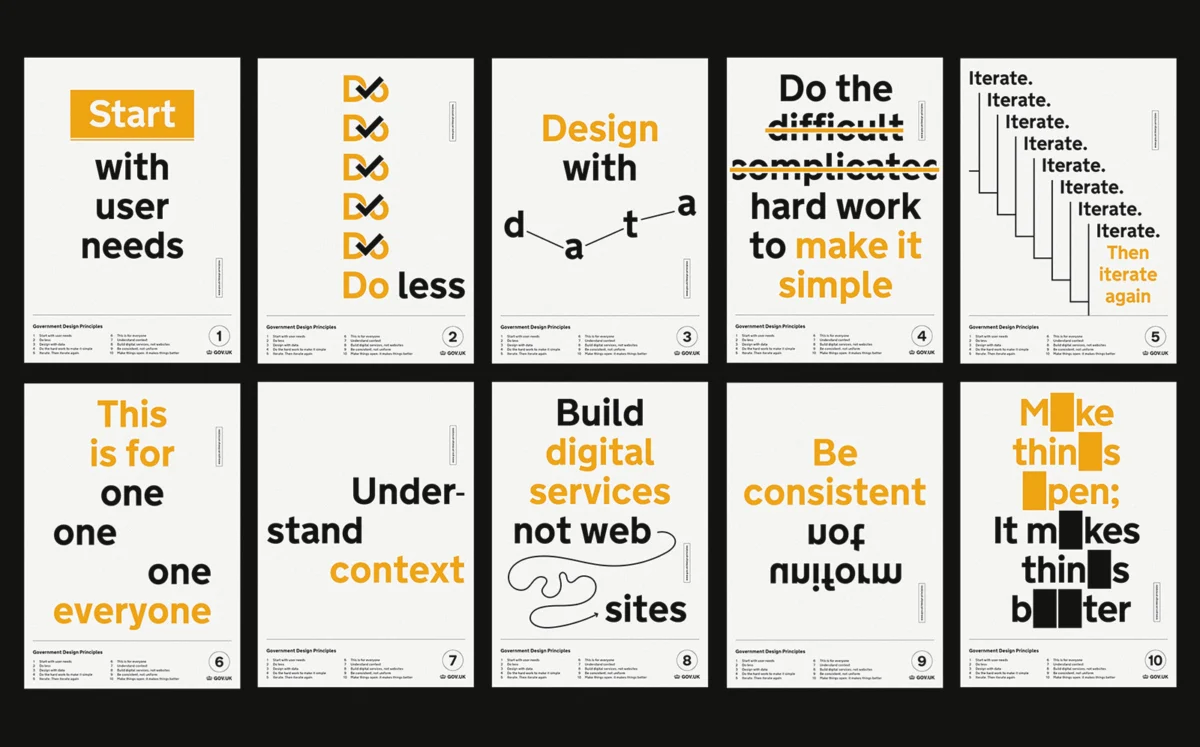
Organizations require a concise, accessible set of guiding principles—something brief enough to fit comfortably on a handful of posters, reminiscent of the clean, human-centric design philosophies popularized by government digital services. Beyond those core principles, leadership must demonstrate a baseline degree of organizational trust, empowering their staff to apply common professional sense.
Inevitably, mistakes will occur as employees navigate the new terrain. Organizations must accept that these missteps are simply an unavoidable cost of modernization and calibrate their rollout strategies to mitigate those risks thoughtfully.

Adaptive Technological Rollout
Alongside cultural considerations, organizations must exercise immense care regarding how artificial intelligence is deployed from an underlying information technology perspective. Once again, it remains dangerously easy for administrative teams to over-correct by locking down the technical infrastructure so aggressively that organic adoption is entirely choked off.
This exact pitfall was highlighted back in 2014 during the digital transformation movement. Overstretched, under-resourced IT departments would arbitrarily select a narrow suite of enterprise software technologies and force them organization-wide, typically with little to no consultation with the actual end-users. Any application sitting outside of that approved vendor list was forced to navigate a glacial, hostile approval process usually overseen by a risk-averse steering committee. The resulting stagnation of technological progress was a primary contributor to the notoriously high failure rates of early digital transformation projects.
Today, corporate technology teams are repeating this exact cycle by purchasing a single, standardized enterprise license, declaring the software stack complete, and walking away.
Consider the real-world friction experienced by professional design and research teams operating under intense management pressure to incorporate artificial intelligence. These teams are often genuinely excited about leveraging artificial intelligence to build sophisticated research repositories or dynamic qualitative personas—initiatives that sound like textbook success stories for modern enterprise adoption.
Unfortunately, the practical reality often halts progress entirely if the mandated enterprise tools are incapable of delivering on those specific technical requirements. Staff quickly find themselves bogged down in endless bureaucratic appeals as they attempt to convince risk-averse steering groups to authorize alternative software toolsets. Understandably, employee enthusiasm rapidly evaporates when every innovative idea hits a bureaucratic brick wall.
When official channels become too restrictive, employees do not simply abandon their goals; instead, they bypass internal technology altogether. Much like the widespread emergence of "shadow IT" during the digital transformation era—where frustrated workers secretly signed up for consumer file-sharing and cloud document services because official corporate tools were inadequate—modern workplaces are now witnessing the widespread rise of "shadow artificial intelligence." When approved internal systems prevent employees from efficiently completing their daily responsibilities, workers simply open personal consumer accounts on their personal mobile devices or home laptops and proceed with their work.
This workaround behavior introduces risks far more dangerous than the hypothetical problems internal restrictions were originally designed to prevent. Proprietary corporate data ends up flowing directly into consumer-grade tools completely outside the organization’s visibility, lacking enterprise oversight, auditing, or compliance records. In their panicked attempts to lock down every digital surface, organizations inadvertently drive high-risk behaviors completely underground.
The instinctive corporate reaction is frequently to clamp down even harder with stricter policies, aggressive firewall blocks, and threats of formal disciplinary action. However, punitive crackdowns rarely succeed in changing underlying operational habits; instead, they simply drive the behavior further out of sight. Shadow artificial intelligence is fundamentally a symptom, and a remarkably useful one at that, because it accurately highlights precisely where official enterprise toolsets are failing to meet the practical needs of the business.
Rather than wasting valuable resources trying to brutally stamp out shadow usage, organizations should use these workarounds as a diagnostic tool. By speaking openly with staff about what personal accounts are being utilized for and understanding what functional gaps exist in the officially provided toolsets, leadership can directly inform how subsequent technology rollouts are shaped.
Admittedly, managing a messy, decentralized technology stack can feel deeply uncomfortable for centralized administrative units. However, during the fragile early phases of any major technological shift, organizations must be prepared to tolerate a degree of operational chaos while workers actively explore the boundaries of what is genuinely possible and establish common, productive use cases.
Organizations must allow staff sufficient flexibility to explore diverse artificial intelligence applications to determine what precisely suits their unique functional requirements within their specific professional roles. Enterprise technology stacks can always be gradually tightened and centralized later once genuine organizational requirements become clear through practical experience.
A Dangerous Time
For many corporate risk management departments, this decentralized, exploratory approach naturally feels deeply unsettling. Centralized leadership naturally craves total control over the adoption lifecycle to ensure that nothing can possibly go wrong. However, meaningful organizational evolution always carries an inherent degree of operational risk, and in a rapidly shifting technological landscape, the long-term risk of moving far too slowly vastly outweighs the immediate risk of moving too quickly.
Even so, the single greatest danger facing modern enterprises is the persistent tendency to view artificial intelligence adoption exclusively as a straightforward technological upgrade while completely overlooking the critical human dimensions involved. The successful integration of artificial intelligence is not simply a matter of deploying new software licenses across a network; just like the digital transformation wave that preceded it, it is fundamentally an exercise in managing people, evolving corporate culture, and navigating complex organizational change. The sooner business leaders fully comprehend the actual scope of the challenge before them, the more effectively they will navigate the road ahead.