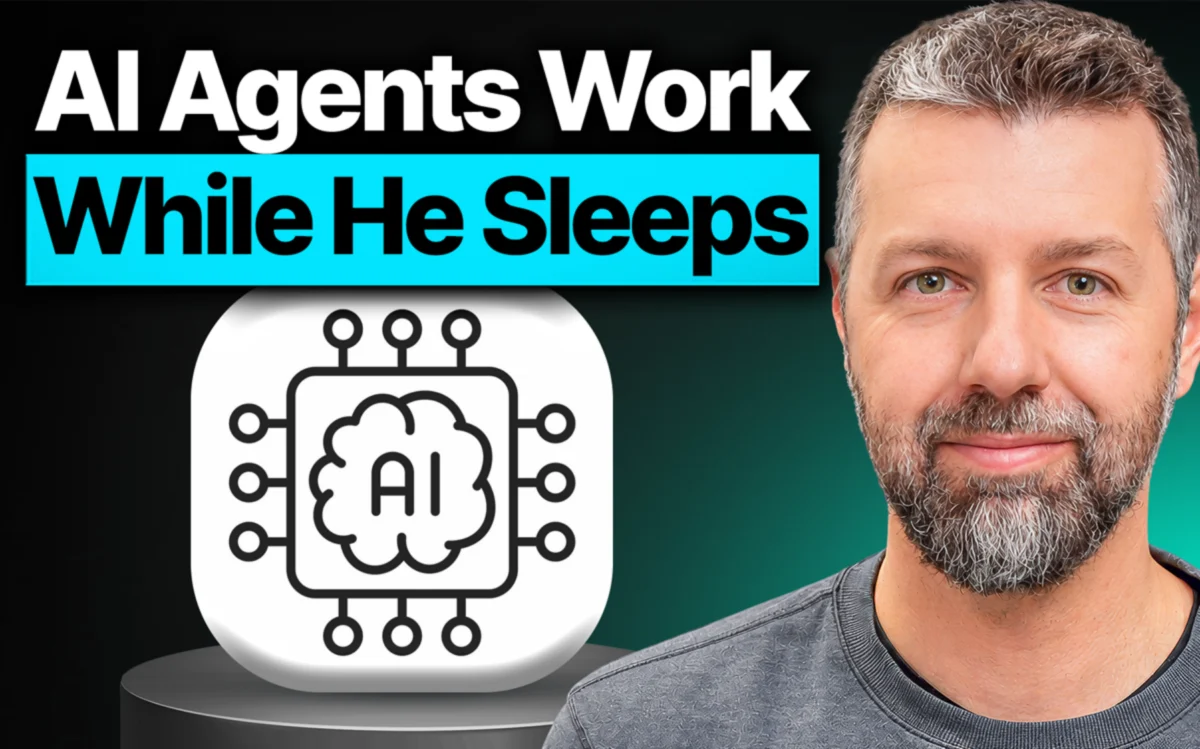
Veteran founder and operator Brian Casel is charting a new course in the software and AI education space, leveraging twenty years of digital entrepreneurship to build his latest venture, Builder Methods. In a recent appearance on the Niche Pursuits podcast, Casel sat down to discuss how he is scaling the business through a strategic mix of YouTube content, email marketing, an engaged digital community, and autonomous AI agents. Rather than chasing fleeting tech trends, Casel’s approach is rooted in decades of practical experience building online businesses, designing user interfaces, developing software, and managing operations.
Casel’s journey in the digital economy spans roughly two decades. Beginning as a designer and developer, he eventually transitioned into a bootstrapped entrepreneur, mastering marketing, sales, content creation, and business operations along the way. Before turning his attention toward AI-first infrastructure with Builder Methods, he built and managed several notable companies. Among his most significant milestones was Audience Ops, a productized content marketing service that he launched around 2015 and successfully operated until selling it in 2020. Alongside his new venture, he continues to manage Clarityflow, a software-as-a-service product he initiated in 2021 that provides asynchronous video, audio, and text messaging solutions tailored for coaches and their clients.
The launch of Builder Methods did not stem from a sudden desire to capitalize on the artificial intelligence boom. By 2024, while working full-time on his SaaS enterprise, Casel encountered the familiar plateau frequently faced by bootstrapped software founders. While Clarityflow continued to experience slow, steady growth, it lacked the explosive momentum that characterizes high-profile startup success stories. This steady rhythm prompted Casel to seek a fresh direction where his accumulated skills, current interests, and market opportunities cleanly intersected. Although he maintained his commitment to Clarityflow, Builder Methods emerged as the primary vehicle for his evolving entrepreneurial ambitions.
At the center of Casel’s current marketing and audience-development strategy is YouTube. Having taken the platform seriously for approximately two years prior to shifting his focus entirely to artificial intelligence, he initially published weekly videos covering topics like Ruby on Rails and various software experiments. However, by early to mid-2025, his content pivoted toward modern AI development methodologies, Claude Code, spec-driven development, and fundamental shifts in software creation. This pivot resonated strongly with viewers as demand for practical AI building tutorials surged, allowing Casel to publicly document workflows he was already implementing in his own daily operations.
Producing this content requires a significant investment of time and resources. Although many of his published videos run between 15 and 20 minutes, a single piece of content often demands multiple full-time days of work across research, ideation, scripting, recording, and technical editing. Casel notes that he continues to refine this pipeline, utilizing artificial intelligence to assist with ideation and internal systems while maintaining a high standard of quality for the final output.
The performance of these videos varies, revealing important insights into audience engagement. While certain technical deep dives achieve massive reach—such as an OpenClaw video released in March that helped propel his channel toward nearly one million total views—other niche videos generate more modest view counts, landing between 1,000 and 3,000 views in their initial weeks. Despite the smaller numbers, Casel emphasizes that these targeted videos consistently attract highly qualified professionals. A viewer discovering a specific technical tutorial is frequently inclined to join his newsletter, enroll in his membership program, or recommend his work to fellow business owners.
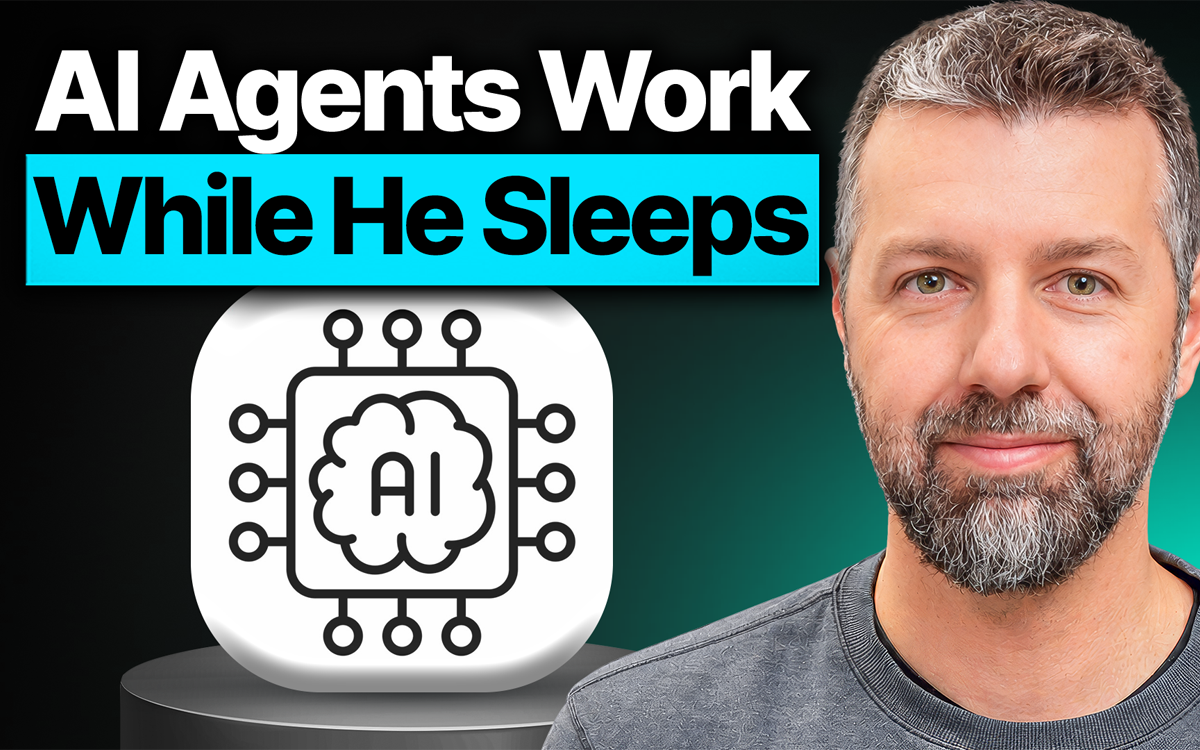
To capture and nurture this audience, Casel utilizes YouTube as the top of his marketing funnel, systematically guiding interested viewers toward his email newsletter and paid community. His approach to conversion has evolved through continuous testing. While he previously promoted his newsletter within the first thirty seconds of nearly every video, he later adjusted his strategy to introduce the offer closer to the middle or end of the content. This shift acknowledges that viewers discovering a video via a thumbnail often need to invest time in the material before they are ready to explore further steps. Once individuals join his email list, Casel maintains a streamlined communication cadence, delivering a fresh newsletter roughly once a week supported by a concise automated onboarding sequence that provides immediate value through free tools and resources.
The primary revenue engine behind Builder Methods is Builder Methods Pro, an annual membership program that grants subscribers access to comprehensive training, an extensive course library, and a collaborative community. At the time of the podcast interview, the membership housed over one hundred instructional videos organized into structured courses covering AI building techniques, Claude Code implementation, no-code tool creation, and agent configuration. Alongside the curriculum, the community features hundreds of active builders who share insights, ask questions, and navigate the rapidly shifting technological landscape together. While Builder Methods Pro serves as the foundational offering, Casel also generates revenue through specialized workshops, consulting, and associated digital products.
A notable evolution in Casel’s business strategy involves refining his target customer avatar. Initially, his messaging spoke directly to professional software developers seeking to adapt their workflows to emerging AI coding assistants. While this technical audience remains well-represented within his community, Casel has increasingly pivoted his messaging toward traditional business owners and non-technical operators. He points out that many business owners already possess a strong systems mindset, even if they do not view themselves as programmers. Because modern AI agents rely heavily on clear instructions, structured workflows, and repeatable processes, operators who are accustomed to writing Standard Operating Procedures, training staff, and managing recurring tasks often possess the exact instincts required to build effective internal tools.
Casel categorizes his own practical application of artificial intelligence into two distinct operational buckets. The first involves direct, interactive software development sessions where he writes and refines code alongside tools like Claude Code. The second category involves autonomous, agent-based workflows that operate on automated schedules to complete recurring administrative and operational tasks. By setting agents to run hourly or daily routines, he automates functions ranging from content preparation to background data management. This framing repositions AI agents not merely as conversational chat tools, but as dependable digital workers capable of executing multi-step business processes.
This operational mindset extends well beyond software startups and content creators. Casel highlights examples from his community, such as a California-based dental practice owner who is leveraging these methods to build custom internal applications for case management, bookkeeping, and administrative tracking. Across service providers, local enterprises, agencies, and professional practices, the underlying thread remains process optimization. When business workflows are repeatable, opportunities emerge to transition portions of that labor into agent-supported systems.
By maintaining a clear division between his public-facing content and his paid offerings, Casel ensures sustainable growth without compromising value. Free YouTube videos are structured for maximum engagement, broad accessibility, and top-of-funnel reach, while the paid membership dives deeper into granular, step-by-step implementation. Through a balanced ecosystem of educational video content, direct email relationships, free resources, and an annual recurring membership, Casel has built a modern digital enterprise grounded in two decades of hard-earned entrepreneurial experience.