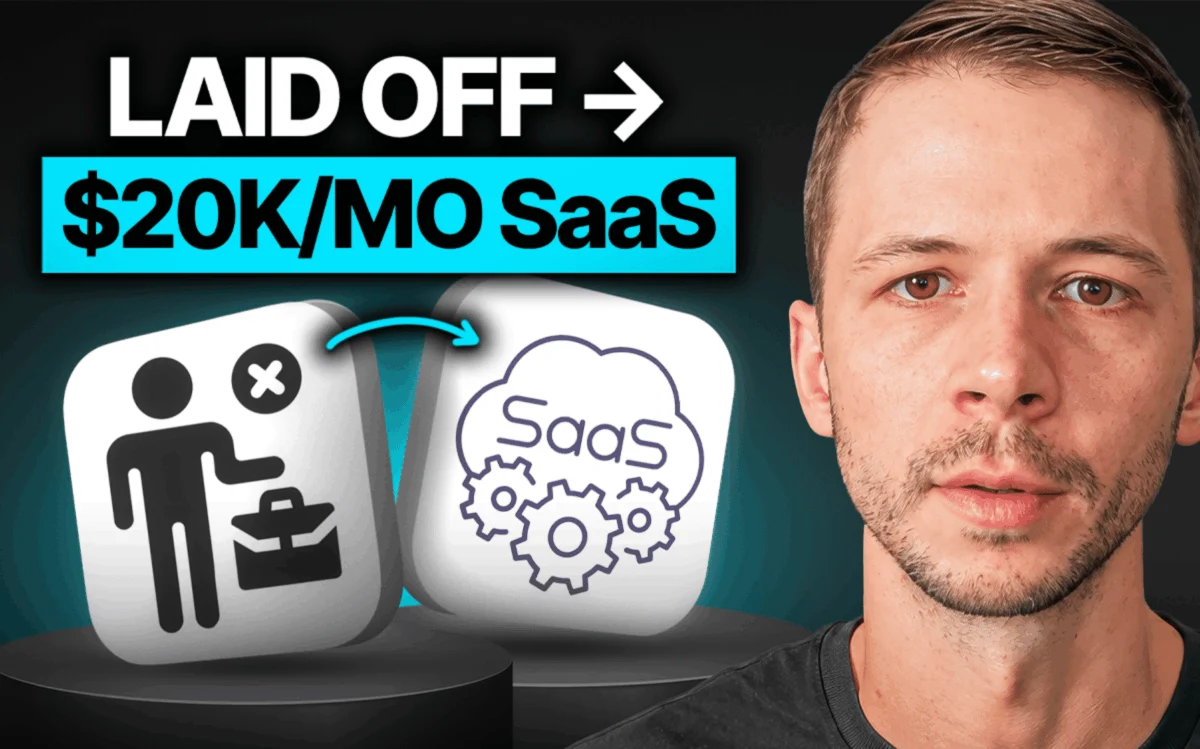
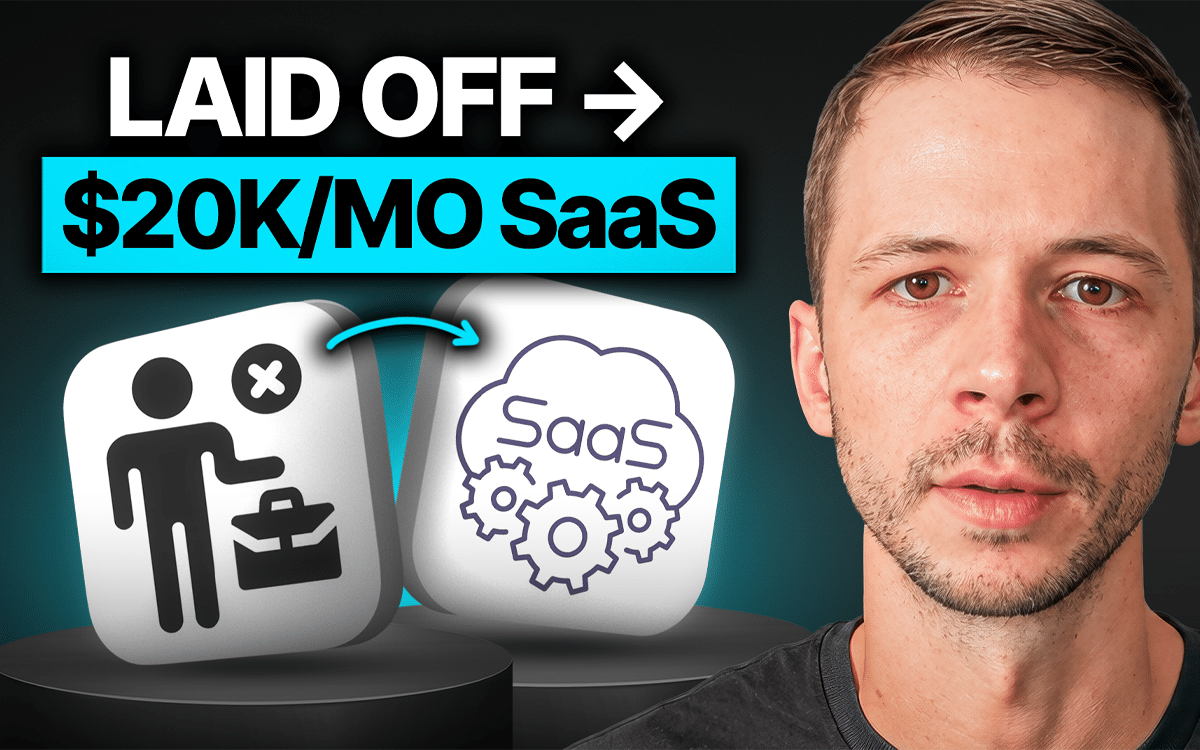
In a recent episode of the Niche Pursuits podcast, founder Ben Bozzay sat down to discuss the remarkable trajectory of Tech Lockdown, a digital wellness and cybersecurity business that has scaled to $20,000 in monthly recurring revenue. What makes Bozzay’s journey particularly compelling within the modern software landscape is the unconventional, organic evolution of the business. Rather than emerging from a rigid, pre-planned venture capital pitch, Tech Lockdown transformed incrementally over several years, shifting shape from free online guides to paid educational content, and ultimately maturing into a full-fledged software-as-a-service operation.
Bozzay’s path highlights a bootstrap methodology rooted in addressing real-world friction. By tackling a personal challenge and publicly documenting the granular details of his solutions, he discovered a broad, underserved market of adults seeking robust digital boundaries. Today, the business operates as a profitable solo venture supported by targeted contractors, while expanding its product ecosystem to address emerging challenges in personal cybersecurity and screen visibility.
Ben’s Origin Story
Bozzay’s professional background sits precisely at the intersection of software development, cybersecurity, and search engine optimization. Before building Tech Lockdown, he gained practical engineering experience working at cybersecurity firms. In addition, he ran a marketing agency, equipping him with a deep, tactical understanding of organic search traffic, audience acquisition, and online content distribution. This dual expertise in technical systems and digital marketing would eventually serve as a foundational advantage for his entrepreneurial efforts.
The catalyst for the entire venture emerged during the COVID-19 lockdowns in 2020. Like millions of professionals transitioning to remote work environments, Bozzay found his personal internet habits drifting off course. Facing diminished productivity and mounting digital distractions, he began searching for reliable methods to establish stricter guardrails around his personal internet usage.
The core obstacle was technical competence. Because Bozzay understood how networks and operating systems functioned under the hood, he routinely found himself bypassing standard consumer website blockers and mobile app restrictions with ease. Recognizing that consumer-grade tools were insufficient for his needs, he pivoted toward enterprise-grade infrastructure. Instead of relying on basic consumer software, he began implementing corporate-style controls on his personal devices, utilizing advanced networking and administrative frameworks typically reserved for managing enterprise work fleets. This technical experimentation planted the seeds for what would eventually become Tech Lockdown.
The First Content Experiments
Initially, Bozzay had no intention of founding a commercial enterprise. He simply began documenting his experiments across platforms like Medium, Reddit, and YouTube, outlining the exact technical steps he took to engineer a healthier digital workspace. To his surprise, the public response was immediate and overwhelming.
Audiences were not merely consuming the content; they were actively engaging through comments, direct emails, and requests for one-on-one consulting. This wave of interest signaled to Bozzay that his personal friction was shared by a much larger population. He had successfully identified a distinct gap in the market: individuals who possessed the technical awareness to bypass standard blockers, yet lacked the specific frameworks required to implement permanent, enterprise-level accountability systems on their own devices.
The early content gained traction because it relied on rigorous, firsthand experimentation. Rather than publishing generic recommendations, Bozzay tested configurations on dedicated test devices and detailed his findings transparently. This approach set his material apart from standard internet guides.
The Shift Into Paid Content
By 2021, Bozzay transitioned his publishing efforts to a dedicated platform under the Tech Lockdown banner. As search engines began indexing his technical articles, organic traffic increased steadily. Capitalizing on his SEO background, he recognized a clear opportunity to formalize his efforts beyond a hobbyist blog.
The first monetization phase took the form of a paid membership portal. Rather than deploying software, this initial commercial offering functioned essentially as productized consulting. Users paid for comprehensive, structured guides that condensed hours of trial-and-error setup into an organized workflow. The paid tier succeeded because the preceding free content had already established deep trust with the audience. By delivering high-value technical insights upfront without a paywall, Bozzay built credibility with users who were struggling with identical digital habits. When a comprehensive resource was introduced to streamline the setup process, purchasing it felt like a natural extension of the educational journey.
The Move Toward SaaS
While paid educational guides generated early revenue streams, the model carried inherent structural limitations. Most customers required the instructional material only temporarily to configure their systems. Once the setup was complete, the incentive to maintain a recurring monthly subscription diminished.
This realization prompted Bozzay to explore a software-as-a-service model. Around 2022, he introduced a DNS filtering service to complement the educational content. The initial software iteration was intentionally minimalist, offering users a selection of preset configurations with limited customizability.
Even in its rudimentary form, the introduction of software transformed the business model. It provided customers with an ongoing utility rather than static reading material, effectively binding the informational content to a functional tool designed to solve the same underlying problem. This slow, deliberate progression from free articles to paid documentation, and finally to proprietary software, underscored a vital entrepreneurial lesson: listening closely to user demand and expanding capabilities step by step.
Layoff Forced a Decision
A significant inflection point occurred in 2023 when Bozzay was laid off from his primary engineering job amidst broader corporate workforce reductions. Suddenly, Tech Lockdown transitioned from a promising side project into a mandatory financial path.
At the time of the layoff, the business supported roughly 300 active customers, generating less than $2,000 in monthly profit—an amount insufficient to replace a corporate engineering salary. The timing coincided with added financial strain, including the sudden burden of acquiring private healthcare coverage. Although Bozzay received competitive corporate job offers that promised immediate financial security, his wife encouraged him to commit fully to the bootstrapped business.
The initial months following the transition to full-time operations were characterized by flat growth and intense working hours. Revenue did not immediately surge, validating the risk only through sustained, long-term persistence in product development and content optimization.
Content Strategy That Drove Growth
Organic search optimization remained the primary engine for customer acquisition. Rather than diluting his efforts across every available social media platform, Bozzay concentrated exclusively on long-form technical content optimized for search intent.
His articles gained traction by addressing hyper-specific technical pain points that standard keyword research tools often dismissed as having negligible search volume. For instance, instead of targeting broad phrases like "block websites," he addressed specific scenarios, such as preventing a user from terminating a blocking application via the Windows Task Manager. By focusing on these granular, real-world problems, Bozzay captured high-intent traffic that competitors frequently overlooked.
At its peak, Tech Lockdown reached approximately 70,000 organic monthly visitors. This growth occurred during a volatile period in the search engine landscape marked by algorithm updates and automated AI summaries. Bozzay attributed this resilience to the depth and authenticity of his technical documentation.
The Focus on Adults as the Core Market
A defining strategic decision for Tech Lockdown was narrowing its target demographic. While the vast majority of digital control applications cater to parents managing minor children’s devices, Bozzay identified a distinct and underserved market: adults seeking self-imposed accountability and restriction.
This distinction is operationally significant. While a parent can physically confiscate a child’s device or enforce administrative restrictions, an adult user retains full administrative access, system passwords, and recovery rights, making self-restraint inherently more challenging. By designing solutions tailored for professionals, students, and adults managing specific behavioral goals, Tech Lockdown carved out a distinct market position that required more sophisticated interventions than consumer-level app blockers could provide.
His Business Today
By the time of the podcast recording, Tech Lockdown crossed the milestone of $20,000 in monthly recurring revenue, operating primarily as a solo venture assisted by a single customer support contractor.
The product suite has continued to evolve, particularly regarding advanced mobile device management solutions for Apple ecosystems. Furthermore, Bozzay has introduced a secondary software application under a separate brand named LivingRoom. While Tech Lockdown focuses primarily on strict digital restriction and filtering, LivingRoom addresses accountability through visibility. The companion app captures periodic activity screenshots and employs artificial intelligence to detect inappropriate content, creating a transparent shared environment reminiscent of a living room display.
As search engine behavior continues to shift with the integration of AI-generated summaries, Bozzay maintains that authoritative content and branded terminology remain essential for maintaining visibility. His journey stands as a testament to the viability of bootstrapping, illustrating how deep technical knowledge, patience, and direct responsiveness to consumer demand can transform a personal solution into a scalable commercial enterprise.