
The debate surrounding whether keyboard-driven content can reliably pay the bills continues to polarize the digital landscape, caught between two exaggerated extremes. On one side, internet marketing campaigns periodically flood social media with claims of overnight millionaires, usually tied to the launch of a commercial product, course, or service designed to sell the "secret" to online wealth. On the other side, cynical critics dismiss the entire industry as an illusion, claiming that anyone reporting a full-time income from a blog must either be a scammer, a liar, or peddling get-rich-quick schemes.
Industry veterans, however, point to a reality that sits quietly between these two loud extremes. It is entirely possible to generate revenue from a blog, and that success is no longer confined exclusively to digital marketing gurus or "make-money-online" commentators. From personal creative outlets to lucrative full-time enterprises, bloggers across diverse traditional sectors—such as fashion, food, and travel—are steadily cashing in. Yet, behind the scenes, industry experts emphasize that sustainable blogging is rarely an overnight success story; rather, it demands long-term grit, creative adaptation, and sharp digital business savvy.
1. It is Possible
The foundational reality of the blogging industry is that monetization works, though it rarely happens quickly. For individuals who have spent years building a digital footprint, a blog often begins as a modest creative outlet yielding only a few dollars a day. Over time, through consistent effort and audience cultivation, those trickle earnings can gradually scale into the financial equivalent of a part-time job, a full-time career, or eventually a structured business enterprise capable of employing others.
While early pioneers in the digital publishing space often benefited from entering the market during its formative years in the early 2000s, newer creators continue to establish viable, income-generating platforms across various modern niches. For some creators, a blog remains a profitable hobby that pays for daily expenses or supplements income from traditional employment. For others, it provides crucial financial flexibility, supporting households while creators manage other life commitments, such as raising a family. For a dedicated segment of publishers, it serves as a primary, full-time profession.
2. There is No Single Way to Make Money from Blogs
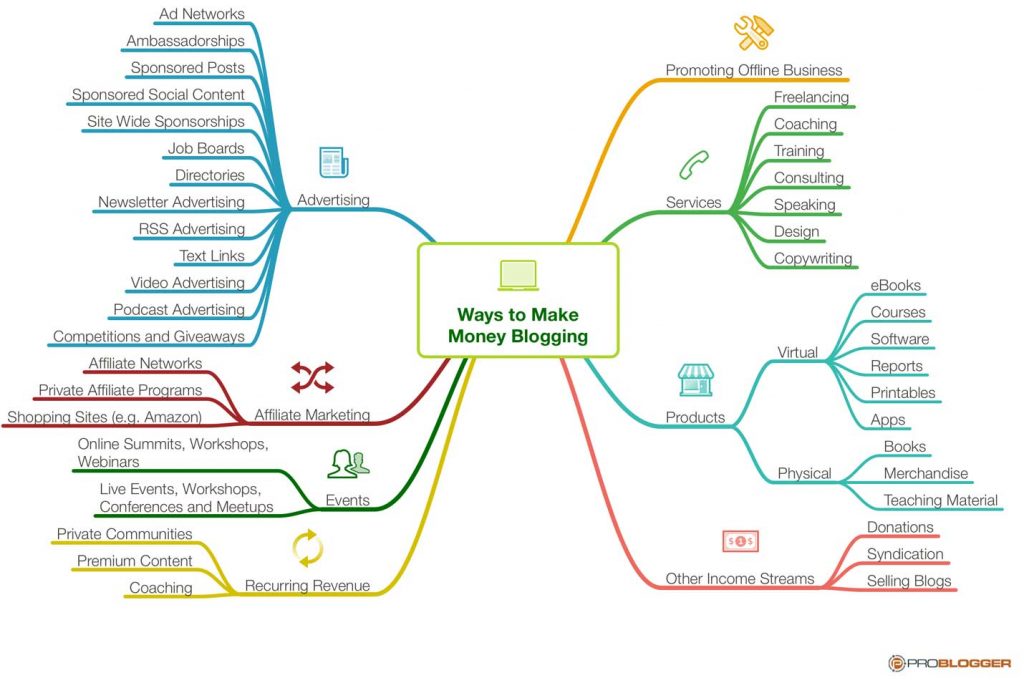
A common misconception is that all profitable blogs rely on the same advertising models. In reality, successful publishers monetize their platforms through a remarkably wide array of diverse revenue streams. Industry gatherings and conferences consistently showcase creators from completely different niches who employ distinct financial models to sustain their operations.
These monetization strategies encompass everything from traditional display advertising and sponsored content to exclusive membership areas, premium digital products, affiliate marketing promotions, and book publishing deals. Many full-time bloggers deliberately cultivate a combination of multiple income streams to stabilize their revenue. Furthermore, these diverse business models are replicated globally across numerous geographic regions, proving that geographic location is no barrier to digital monetization. Whether a creator focuses on selling physical products offline, securing speaking engagements, or offering specialized digital content, the path to revenue generation is dictated by the specific needs of the audience rather than a rigid template.

3. There Are No Formulas
Despite the frequent marketing pitches promising guaranteed formulas for online success, experienced digital publishers stress that no universal blueprint exists for building a profitable blog. Each full-time creator typically forges a unique path, often driven by creative hunches, personal experimentation, and unexpected discoveries along the way.
While successful blogs share certain foundational traits—such as audience engagement and high-quality writing—each blogger brings a distinct personality, style, and voice to their platform. Different niches also require entirely different approaches to audience building and revenue generation. Consequently, while new creators can learn valuable lessons by observing established publishers, long-term viability ultimately depends on a willingness to experiment, adapt, and build an independent strategy tailored to one’s specific strengths and audience.
4. Many Niches Monetize
A frequent critique leveled against the blogging economy is that the only people successfully making money are those who teach others how to make money. Data and industry observations, however, soundly refute this claim.
While publishing platforms dedicated to internet marketing certainly exist, the vast majority of profitable blogs operate within entirely conventional, everyday topics. Health and wellbeing, simple living, woodworking, photography, and travel represent just a fraction of the diverse niches where creators build sustainable businesses. In many cases, specialized hobby or lifestyle blogs significantly outperform sites dedicated strictly to online business education, proving that commercial viability is driven by broad consumer interest and genuine utility rather than the subject matter being meta-commentary about the internet itself.
5. Most Bloggers Don’t Make a Full-Time Living from Blogging
Despite the inspiring success stories of top-tier publishers, readership surveys and platform analytics consistently reveal that bloggers earning a full-time living remain a distinct minority within the broader digital ecosystem.
Data collected from publisher surveys involving thousands of aspiring creators demonstrate that a significant percentage of individuals attempting to monetize their sites earn very little or nothing at all during their initial phases. Because a large proportion of new bloggers are relatively early in their publishing journeys—often having maintained their sites for less than two years—the vast majority make minimal daily revenue. A small fraction achieves moderate, part-time levels of income, while an even smaller percentage breaks into higher financial brackets, earning substantial monthly revenues that translate into six-figure annual earnings. While the overall population of full-time professional bloggers has grown over the years, the statistical reality remains that the majority of hobbyist and part-time bloggers do not generate substantial financial returns.
6. It Takes Time to Build
An analysis of top-earning publishers reveals a stark correlation between financial success and the passage of time. The vast majority of creators operating in the highest income brackets have maintained their digital platforms for multiple years before reaching peak financial performance.
For most successful publishers, the initial phase involves months or even years of consistent content creation without significant financial return. Once monetization strategies are introduced, revenue typically grows through a gradual, compounding process as search visibility improves, brand authority solidifies, and reader trust deepens. Building a sustainable digital business is fundamentally distinct from get-rich-quick ventures; it requires sustained patience, continuous audience development, and a long-term commitment to maintaining a reputable online presence. Even after years of dedicated publishing, financial success is never guaranteed, underscoring the high-risk, high-effort nature of independent digital media.
7. It Takes a Lot of Work
Longevity alone does not guarantee a profitable blog. Alongside time and patience, professional bloggers consistently highlight that active, rigorous effort is the primary driver of digital success.
The popular perception of blogging as a completely passive income stream often clashes sharply with reality. Full-time publishers frequently report working harder on their independent businesses than at any previous point in their traditional careers. Sustaining a competitive digital publication requires daily content creation, active community engagement, continuous technical monitoring, product development, and strategic marketing. Creators must focus intensely on building resources that genuinely matter to their audiences, ensuring their work remains original, interesting, and deeply helpful. Without this ongoing commitment to quality and execution, digital platforms struggle to retain readership in an increasingly crowded online environment.