In the contemporary enterprise landscape, the fundamental mechanics of how work gets done are undergoing a profound architectural shift. For decades, the digital workspace has been defined by the browser—a portal where knowledge workers log in, navigate through intricate menus, locate specific records, and manually execute tasks. However, as the integration of AI agents into the workforce accelerates, a growing divide is emerging between "browser-bound" workflows and a new, "headless" paradigm. This distinction is no longer just a technical preference; it is increasingly becoming the deciding factor in whether an organization’s investment in artificial intelligence compounds into significant productivity gains or stalls under the weight of outdated operational models.
Defining the Headless Architecture
At its core, a headless architecture represents the decoupling of a platform’s business logic and data layer from its user interface. In traditional software models, the browser serves as the primary binding layer, acting as the necessary bridge through which users access data, trigger workflows, and interact with complex systems. This dependency requires a human to be present at every step of the journey, translating business intent into clicks, keystrokes, and page loads.
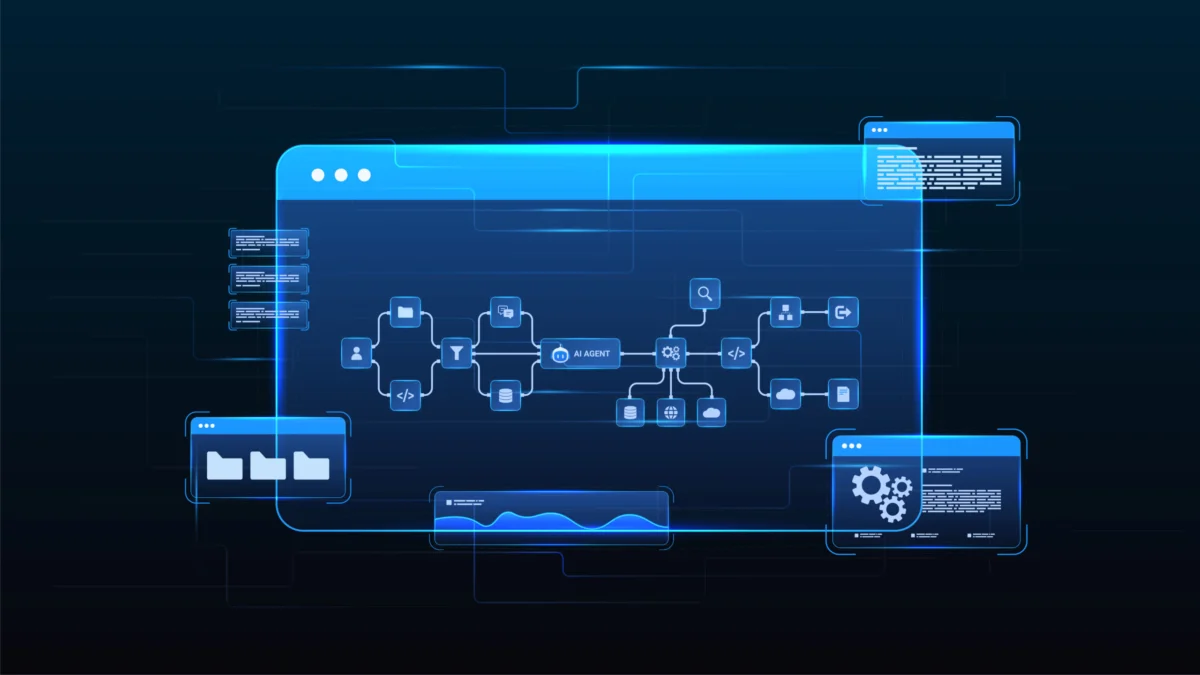
For a platform like Salesforce, which has spent 27 years building an ecosystem of customer data models, workflow automation, compliance controls, and governance frameworks, moving to a headless model is a strategic evolution. It transforms these decades of institutional knowledge into a programmable surface. By removing the dependency on a graphical user interface, AI agents are granted the capability to read, write, and execute tasks on Salesforce data with the same authority as a human, but entirely free from the overhead of manual navigation. This is the essence of the Headless Toolkit: a bridge that ensures every Salesforce capability is accessible via API, Model Context Protocol (MCP), or CLI. Consequently, humans and AI agents can function as co-creators, operating on the same trusted data and logic without forcing the AI to "learn" how to navigate a site designed for human eyes.

The Friction of Browser-Bound Work
The most visible difference between these two architectural approaches manifests the moment a task is initiated. In a browser-bound model, work is fundamentally reactive and constrained by the availability of human resources. An Account Executive, for instance, cannot begin a task until they have cleared their schedule, opened the necessary application, authenticated their session, and navigated to the correct dashboard. Each of these steps introduces a "handoff" period—a moment of friction where data sits idle while waiting for a human to be present, focused, and ready to engage with the UI.
In contrast, a headless model treats work as a continuous flow rather than a series of human-triggered events. When the system is designed for execution rather than navigation, the trigger and the result occur in a single, fluid motion. There is no need for a browser tab to be opened or a user to be physically present at a terminal. The system moves because it is engineered for direct interaction, removing the administrative bottlenecks that have historically slowed enterprise operations. The distinction here is not a matter of employee diligence or effort; it is a structural reality. Browser-bound systems are designed to facilitate human navigation, whereas headless systems are designed for the rapid, automated execution of business logic.
Unified Data Layers and the Risk of Fragmentation
In large-scale enterprise environments, the quality of data is paramount. An incomplete or fragmented picture of a customer is often more dangerous than a slow one, leading to misinformed decisions and inconsistent service. In traditional browser-bound environments, data is often siloed behind logins and proprietary interfaces. To gain a holistic view of a customer account, a representative might be forced to toggle between a CRM, a billing platform, a support ticketing system, and disparate spreadsheets. This constant context-switching is not just an annoyance; it is a significant source of operational latency and human error.

A headless architecture resolves this by providing agents and humans with a single, unified data layer. By exposing every platform capability through direct APIs, MCP tools, or CLI commands, the system allows for an "AIforce" that operates on the same data models and governance rules that the entire organization relies on. Whether the task involves reviewing account history, managing open opportunities, or updating service cases, the information is accessible in one connected, secure, and compliant execution. There is no need to rebuild or replicate data across multiple environments; the platform serves as the single source of truth for both autonomous agents and human employees.
Integrating for the Future
Integration has long been the graveyard of enterprise software ambitions. Traditionally, browser-bound integrations are fragile, high-maintenance projects. Every new connection requires new logins, complex data mapping, and often a dedicated middleware layer to translate between systems. If the source system undergoes an update, the downstream effects can ripple through every integration built upon it, causing widespread instability. These connections are fragile because they are built around user interfaces rather than robust data contracts.
Headless models flip this dynamic by prioritizing explicit, versioned, and observable connections. Salesforce, for example, hosts MCP servers that allow tools such as Claude Code and Cursor to connect directly to the platform without the need for custom integration middleware. Because these connections are built on standardized protocols, they inherit the security and governance standards of the underlying platform. With the introduction of over 60 MCP tools and more than 30 preconfigured coding skills, teams are provided with a foundational layer designed specifically for integration. This changes the nature of the conversation from "how can we make these two systems talk?" to "how can we leverage this unified infrastructure to drive value?"

Empowering the Human Experience
A significant risk in the rapid adoption of AI is the tendency to treat these tools as just another layer of software for employees to master. Organizations frequently introduce new dashboards, interfaces, and workflows, each requiring training, behavioral adjustments, and the inevitable, slow adoption curve that has historically hampered enterprise technology. When the tool dictates the workflow, people are forced to orient themselves around the software’s limitations—learning where things live, how navigation is structured, and how to interpret buttons in context. In the current era of high-speed, agentic AI, this approach is increasingly unsustainable.
The headless philosophy is built on the premise that people should be able to work where they already are. By separating what an agent does from how it appears, the Headless Experience Layer allows business logic to be defined once and rendered natively across multiple surfaces—whether that is Slack, Microsoft Teams, WhatsApp, or any other collaboration tool the team prefers. The agent manages the heavy lifting, while the human remains in the loop to direct execution and make high-level decisions.
As organizations evaluate their investments in AI, the platform architecture is just as critical as the capabilities of the agent itself. An AI agent is only as powerful as the data and logic it can securely access. The Headless Toolkit offers a way to tap into the full depth of an organization’s historical data and governance, ensuring that the transition to AI-driven workflows is built on a foundation of trust. While the browser served as the essential interface for an era where humans performed all the work, the coming age of agentic AI suggests that the most powerful interface may, in fact, be no interface at all.