For decades, the relationship between marketing and sales departments has been defined by a persistent, systemic friction. Despite residing in the same corporate buildings and sharing the same revenue targets, these two functions have historically operated like ships passing in the night. Marketing has focused on generating interest and casting a wide net, while sales has been tasked with chasing down leads, often with insufficient context, delayed timing, and no unified perspective on the buyer’s journey. This siloed approach has long been an accepted, if inefficient, reality of the B2B landscape. However, the rise of agentic AI is fundamentally dismantling these barriers, transforming the way departments collaborate. Two Salesforce customers, TaskUs and Cloud Protection by WithSecure, are currently demonstrating how this technological shift is creating a more cohesive, data-driven revenue engine.
The core of the problem has always been a lack of shared reality. Marketing teams often lack visibility into what happens after a lead is passed over, and sales teams frequently struggle with the "coldness" of leads that haven’t been adequately nurtured. Agentic AI changes the equation by acting as a connective tissue, synthesizing data and automating complex workflows that were previously manual or overlooked. By examining the successes of these two organizations, it becomes clear that the future of enterprise growth lies in the convergence of automated action and human oversight.
The Death of the Lead Form: Identifying Intent in the Shadows
A foundational assumption in modern marketing has been that a prospect must fill out a lead form to be considered "interested." Organizations have relied on these forms to capture data and qualify potential buyers. However, the experience at Cloud Protection by WithSecure reveals that this perspective is increasingly outdated. Buyers are now conducting extensive research—often through AI assistants or anonymous browsing—long before they ever formally "raise a hand" by submitting contact information.
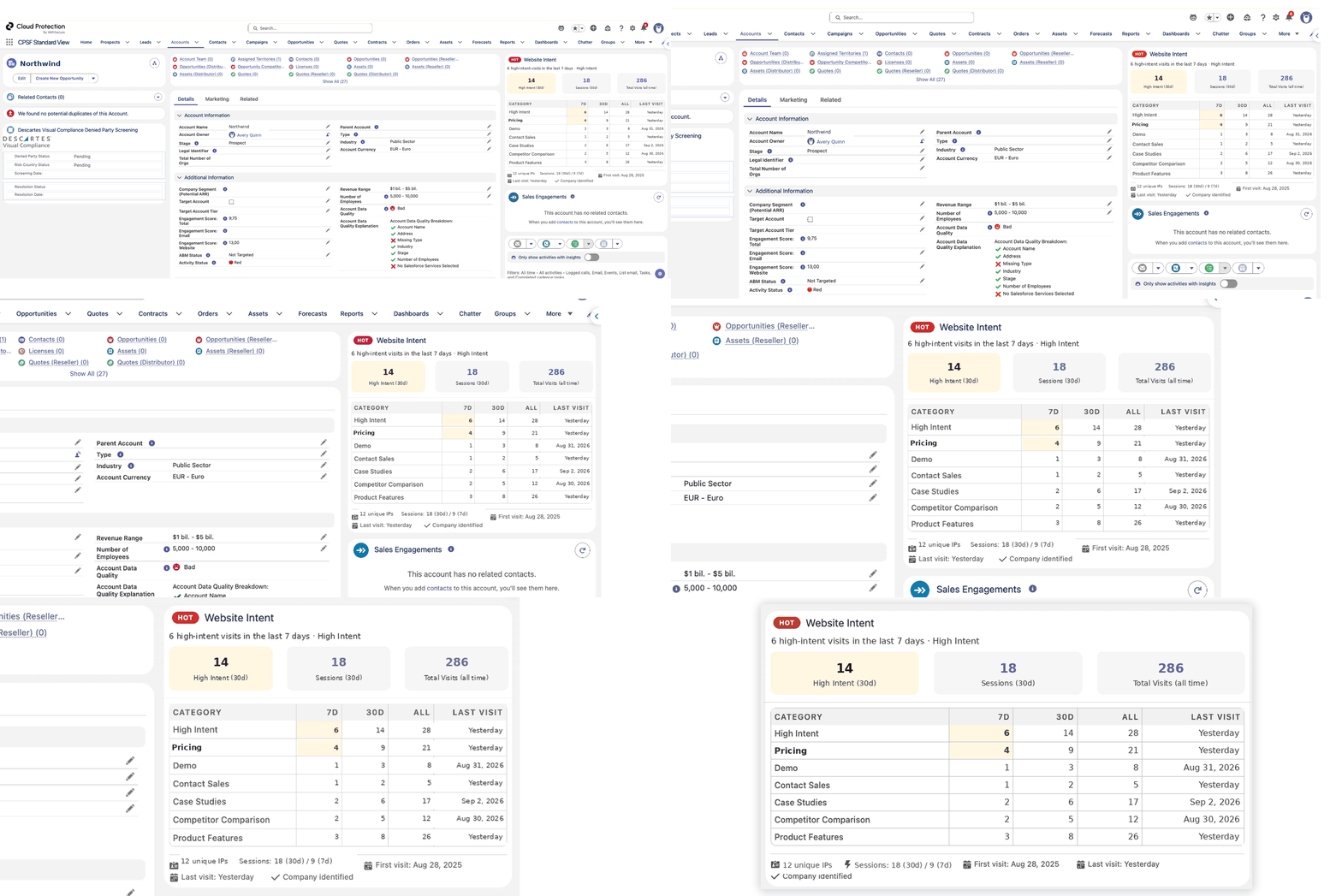
To address this, Cloud Protection by WithSecure implemented a sophisticated visitor-matching pipeline. By running website logs through Data 360 and ZoomInfo, the company has created a system that identifies 98.5% of visiting organizations by name in real-time. This capability, developed and deployed by a lean team of just two full-time employees over six months, has effectively turned invisible browsing behavior into an addressable pipeline. By identifying high-value organizations the moment they land on the site, both marketing and sales teams gain a head start, moving away from reactive lead management toward a proactive engagement strategy.

Redefining Lead Scoring for a Real-Time World
Another common trap in B2B strategy is the reliance on static lead scoring models. Historically, a lead might be tagged as "hot" based on a single action taken months ago, leaving sales teams to chase ghosts—prospects who were interested in a past quarter but have long since moved on. Cloud Protection by WithSecure realized that for lead scoring to be effective, it must be dynamic.
The company rebuilt its scoring infrastructure to process over 300 distinct signals, ranging from granular page views and email engagement to high-intent actions. Crucially, these scores now recalculate continuously and are subject to decay based on inactivity. This ensures that the data reflecting a prospect’s status is always current, rather than a snapshot from a previous quarter. The technical shift is minor in terms of complexity, but the operational impact is significant: sales representatives can now focus their energy on active, verifiable intent, significantly increasing the efficiency of their outreach.
Automating the Follow-Through
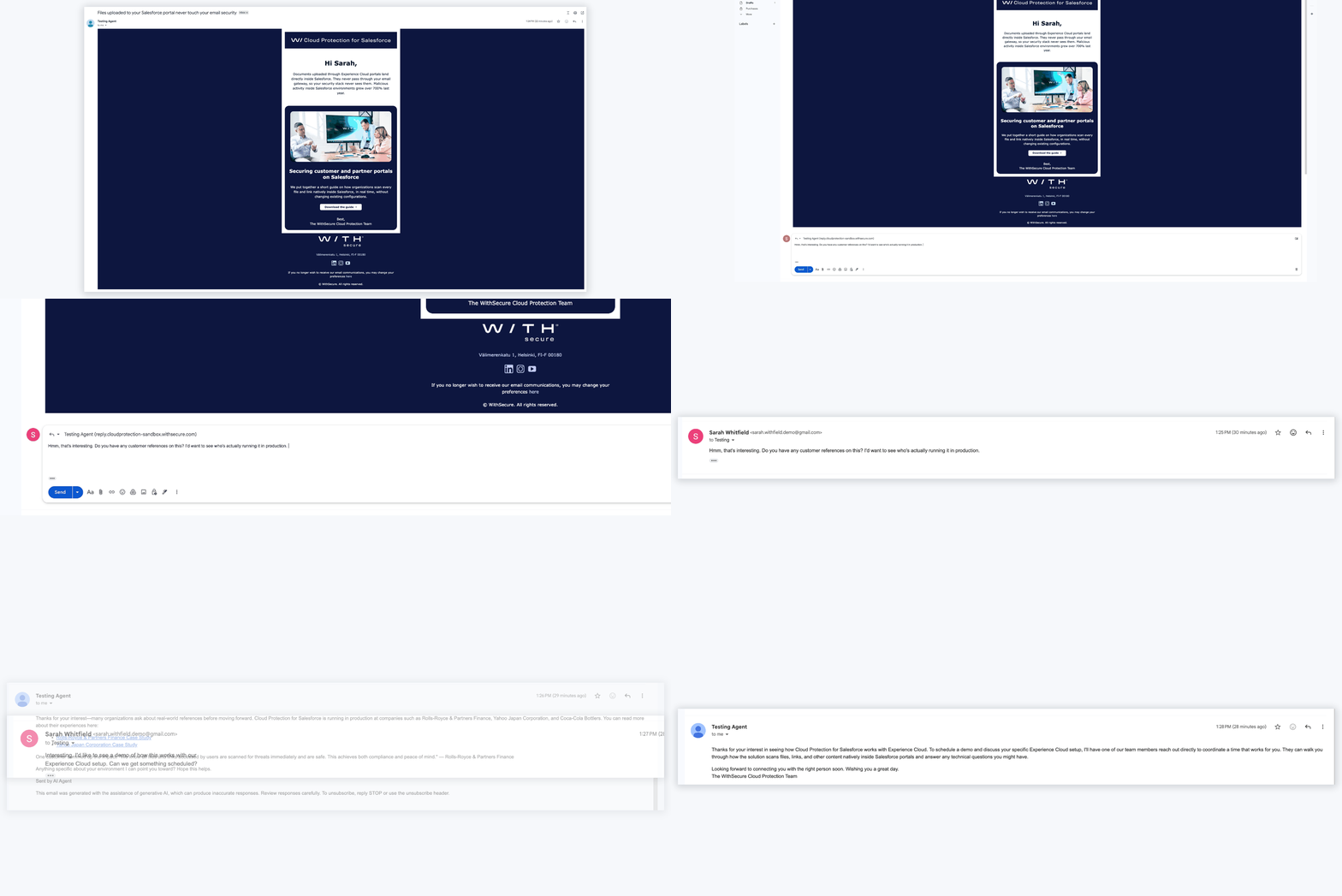
While many organizations have successfully automated outbound lead generation, the follow-through process—the critical stage of nurturing a lead once they respond—remains a major bottleneck. Cloud Protection by WithSecure addressed this by integrating two-way agentic email. This AI agent is capable of reading every incoming reply, qualifying the buyer’s intent, and routing sales-ready accounts to the appropriate representative.
This system provides the rep with the full context of the interaction, including the original campaign, the specific reply thread, and enriched data about the prospect. This eliminates the "who owns this lead" scramble and ensures that no potential customer is lost in the shuffle of an inbox. It is a critical distinction in modern sales: generating interest is merely the first step, but converting that interest into a closed deal requires the kind of consistent, context-aware follow-through that only agentic AI can provide at scale.
Pairing Automation with Human Judgment
As organizations integrate AI into their sales development processes, the question of trust remains paramount. TaskUs navigated this challenge while scaling its AI SDR, nicknamed "Liz." Initially, the sales team was skeptical about whether an AI could effectively manage the nuances of lead follow-up. To overcome this, the team adopted a measured approach: they started small, assigning the AI to cover a single representative’s gaps.
The success was immediate. Once the team saw the AI performing, the demand for "Liz" grew rapidly across the organization. As Tina Katic-Michalos, Senior Director of Demand Gen and Marketing Operations at TaskUs, noted, the skepticism evaporated once the results became undeniable. The implementation achieved a 100% follow-up rate on every lead—a feat that would be impossible for a human team to sustain without massive burnout. By offloading the repetitive, high-volume aspects of lead management, human BDRs and sellers were empowered to focus on the high-value, complex opportunities that require human intuition and relationship-building.
The broader philosophy here is that the goal of AI is not to replace the human element, but to enhance it. The system follows the principle of "agents propose, humans merge," ensuring that every automated action is backed by human oversight. The efficiency gains are measurable; teams running agentic workflows at Cloud Protection by WithSecure reported that they were able to ship features roughly three times faster per sprint, even when accounting for the time spent on implementation.
Achieving a Unified View of the Buyer
The most profound structural change in these organizations is the move toward a single, shared metric. Cloud Protection by WithSecure is currently constructing a unified health score that integrates marketing engagement, service ticket history, and actual product usage data—three silos that have rarely been combined in the past. This score does not simply provide a report; it triggers action, such as automatically shielding at-risk accounts from automated upsell outreach, again following the "agents propose, humans merge" governance model.
TaskUs found similar success in operational velocity. By re-platforming its newsletter production to Marketing Cloud Next with Agentforce, the team compressed a production cycle that previously took up to 20 days down to approximately 10 to 12 days—a 40% improvement in speed. Additionally, the build time in Account Engagement was reduced from several days to just one. When marketing processes accelerate and sales teams have access to the same real-time buyer signals, the traditional friction between the two departments naturally dissipates.
The throughline connecting these successes is a departure from the "bolted-on" approach to AI. Both TaskUs and Cloud Protection by WithSecure prioritized a shared data foundation. By leveraging Data 360, Agentforce, and Marketing Cloud Next, they ensured that their AI agents were acting on the same, high-fidelity information that their human teams were already using.
The primary takeaway for B2B organizations looking to replicate these gains is that the true value of agentic AI lies not in speed for its own sake, but in the creation of a "single version of the truth." When marketing and sales departments stop guarding their own isolated data and instead share a live, accurate picture of the buyer, the conversion process becomes a fluid, natural outcome of the engagement. As evidenced by these two organizations, the path to a faster, more effective pipeline begins with the realization that the buyer is a single entity, and therefore, they deserve a unified experience.