The cultural landscape is mourning the loss of Sir Patrick Stewart, an actor whose towering presence defined generations of storytelling across stage, television, and film. He passed away at the age of 86. For millions around the globe, his final illness came as a shock—kept largely private, it felt almost unimaginable that anything could dim the light of a performer who stood so monumentally in the public consciousness.
From his formative years navigating a troubled childhood in working-class Yorkshire to his decades-long dedication to the Royal Shakespeare Company, Stewart was an artist of rare intellect and emotional depth. He was a committed socialist, knighted by Queen Elizabeth for his contributions to drama, and an impassioned advocate who lent both his voice and resources to critical causes, including LGBTQ+ rights, animal welfare, and the eradication of domestic violence. To countless fans, his performances did not merely entertain; they provided a moral compass and a profound sense of connection.
While tributes from those who knew him personally highlight his warmth, wit, and unwavering integrity, his cinematic and theatrical footprint remains his most enduring monument. Though he is forever etched in history as Captain Jean-Luc Picard of the USS Enterprise and Professor Charles Xavier of the X-Men, Stewart’s career extended far beyond these iconic sci-fi and superhero pillars. His versatility allowed him to seamlessly transition from high classical tragedy to camp comedy, gritty horror, and poignant human drama.
Jeffrey (1995)
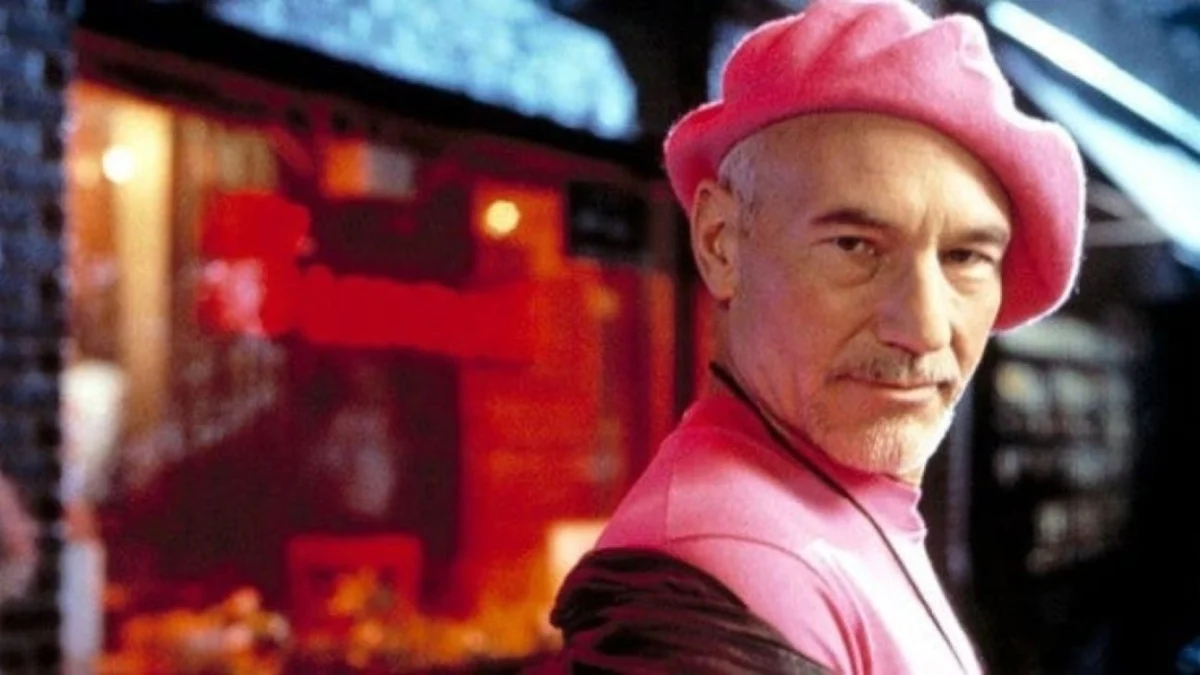
In the mid-1990s, finding a cinematic depiction of the LGBTQ+ community that avoided both villainy and patronizing pity was a rarity. Jeffrey offered a goofy, feel-good romantic comedy set against the sobering backdrop of the HIV/AIDS crisis. Amid an ensemble cast featuring Steven Weber, Michael T. Weiss, Christine Baranski, Victor Garber, Nathan Lane, Olympia Dukakis, and Sigourney Weaver, Stewart emerged as an unforgettable standout. As Sterling, the irrepressible, high-camp gay best friend, he stole every scene with a dazzling blend of sass and strength. As the leader of the "Pink Panthers"—a group defending locals from violence—Stewart delivered a character unapologetically vibrant, fierce, and entirely devoid of weakness.
Excalibur (1981)
Directed by John Boorman, Excalibur remains a sprawling, visually stunning, and lusty cinematic exploration of the King Arthur legend. Amid a sweeping epic that occasionally bordered on the chaotic, Stewart left a lasting impression as Leodegrance. As the boisterous, boorish, yet fiercely loyal father of Guenevere, his performance anchored the emotional reality of a realm undergoing seismic shifts as knights pledged their allegiance to the young king.
Green Room (2015)
Demonstrating his chilling range, Stewart stepped into the shoes of Darcy Banker, the erudite, intellectual, and utterly terrifying leader of a white supremacist gang in the Pacific Northwest. When a young punk band accidentally witnesses a murder at an isolated Oregon venue, they find themselves trapped and hunted. Stewart played the villain with a calm, methodical menace, creating one of the most chilling antagonists in modern thriller and horror cinema.
Logan (2017)
Having inhabited the role of Professor Charles Xavier across nearly three decades and multiple films, Stewart delivered his absolute finest work in this elegiac chapter of the mutant franchise. Portraying an elderly professor suffering from profound cognitive decline, Stewart stripped away the character’s traditional bravado, leaving behind a frail, prickly, and deeply human figure grappling with the twilight of his life and the crumbling of his lifelong dream.

A Christmas Carol (1999)
Stewart brought his theatrical command and booming vocal resonance to this television adaptation of Charles Dickens’ timeless classic. As Ebenezer Scrooge, he bypassed caricature, infusing the notoriously bitter miser with a dimensional, Shakespearean intensity that ranks among the finest interpretations ever captured on film.
Hamlet (2009)
Long before his television stardom, Stewart spent two decades as a core associate of the Royal Shakespeare Company, building a formidable reputation on the live stage. While much of that foundational work lives on only in theatrical lore, this modern-dress film production preserves his brilliant interpretation of King Claudius, performed opposite David Tennant’s melancholic prince.
Match (2014)
Shifting away from operatic and larger-than-life characters, Stewart delivered a remarkably muted and subtle performance in Match. Playing Tobi Powell, a Juilliard dance instructor whose career is winding down, Stewart explored the quiet complexities of an aging artist forced to confront the hidden realities of his past when a mysterious couple arrives to interview him.
Robin Hood: Men in Tights (1993)
Proving he was entirely willing to poke fun at his own serious theatrical background, Stewart embraced self-deprecating comedy in Mel Brooks’ satirical romp. Shedding any trace of pomposity, he delivered a memorable cameo as King Richard, chewing the scenery with joyful absurdity.
Dune (1984)
Stewart’s early journey into science fiction began with David Lynch’s ambitious, highly divisive, and wildly surreal adaptation of Frank Herbert’s classic novel. As the troubadour and warrior Gurney Halleck, Stewart lent steadfast gravitas, believability, and commanding presence to the chaotic expanses of Arrakis.
The Kid Who Would Be King (2019)
Revisiting the Arthurian mythos late in his career, Stewart portrayed an aged Merlin in this inventive modern fantasy adventure. Adorned in wild hair and graphic tees, his Merlin balanced whimsical eccentricity with a profound, grounding kindness, culminating in a deeply poignant farewell that added another cherished chapter to a legendary career.