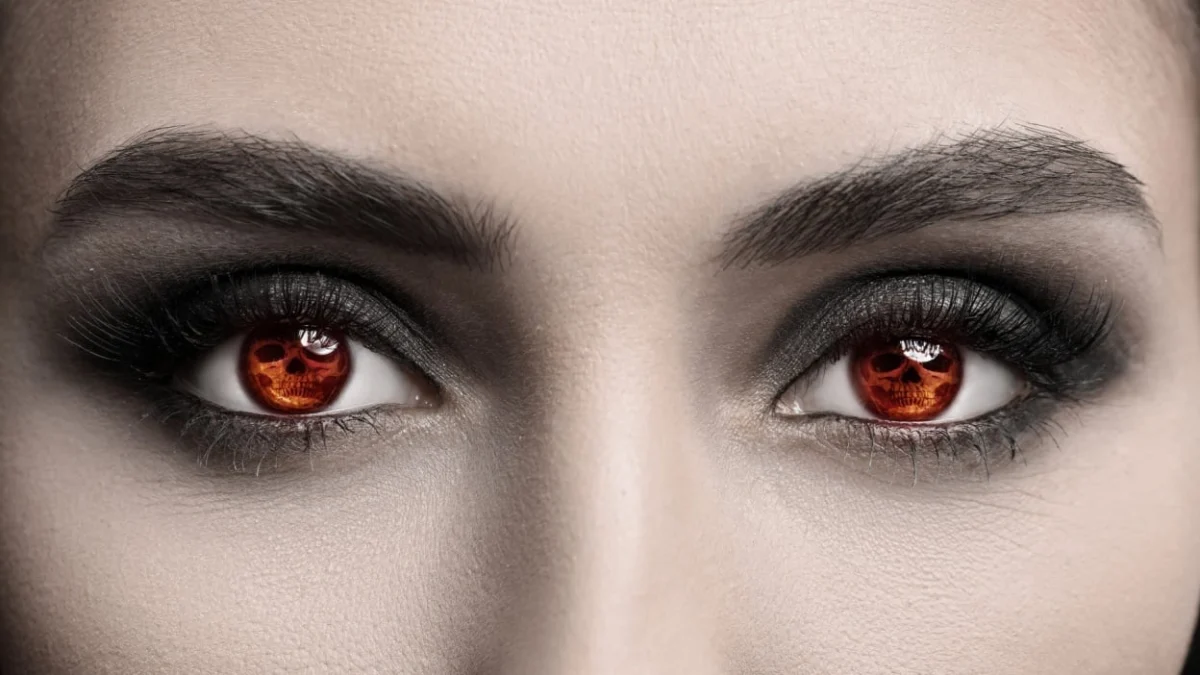
As Halloween approaches, costumes often feature elaborate accessories designed to complete a dramatic transformation. Among the most popular additions are decorative contact lenses, capable of turning ordinary eyes into glowing neon orbs, hypnotic spirals, or feline slits. However, eye care professionals and public health agencies are issuing urgent warnings regarding the safety of these trendy cosmetic items, reminding consumers that putting unprescribed pieces of plastic directly onto the surface of the eye carries severe medical risks.
According to guidelines from the American Academy of Ophthalmology, purchasing and wearing non-prescription costume contacts is a dangerous gamble with vision health. Although thousands of novelty shops, pop-up stores, and online vendors freely market these products ahead of holidays and conventions, federal regulations classify all contact lenses as medical devices. This means that under United States law, selling them without a valid prescription is illegal, regardless of whether the lenses possess vision-correcting properties or are intended purely for cosmetic use.
Public health organizations, including the Centers for Disease Control and Prevention, have repeatedly underscored the hazards associated with over-the-counter decorative lenses. Reported complications range from minor discomfort and superficial irritation to severe conditions such as corneal ulcers, painful eye sores, and permanent vision loss. Because the eye is exceptionally delicate and vulnerable to pathogens, even a brief encounter with a poorly fitting or contaminated lens can trigger catastrophic health consequences.
The fundamental design flaw of cheap, mass-market costume lenses lies in their universal manufacturing approach. Standard costume contacts are typically produced as one-size-fits-all items, completely ignoring the fact that human eyes vary significantly in curvature and diameter. Ophthalmologists emphasize that contact lenses should never be treated as universal accessories. When a lens is either too large or too small for an individual’s eye, it fails to rest correctly on the cornea, causing continuous mechanical friction every time the eyelids blink.
This friction frequently leads to corneal abrasions, creating microscopic tears in the outer layer of the eye that serve as open entry points for bacteria, fungi, and amoebas. Once pathogens infiltrate these compromised tissues, they can rapidly develop into dangerous infections like keratitis. In severe cases documented by medical professionals, these infections advance so aggressively that they cause irreversible corneal scarring or necessitate surgical intervention, occasionally resulting in total blindness.
Government investigations have repeatedly highlighted the shocking lack of quality control among unregulated manufacturers. A comprehensive report published by the Food and Drug Administration revealed that a staggering 27 percent of tested costume contact lenses contained bacterial contamination. Furthermore, many of these illicit products are manufactured using substandard materials with poor oxygen permeability, which suffocates the cornea and further increases the likelihood of tissue damage and infection.

Medical professionals stress that anyone who chooses to wear contact lenses—whether for daily vision correction or for a seasonal costume—must remain vigilant for early warning signs of trouble. Symptoms such as persistent redness, unexpected swelling, sharp pain, light sensitivity, or excessive discharge should never be ignored. If any of these indicators appear, individuals are urged to remove the lenses immediately and seek prompt medical evaluation from an optometrist or ophthalmologist. Treating an eye infection in its earliest stages is critical to preventing long-term damage.
Legitimate decorative contacts do exist and can be worn safely, but obtaining them requires navigating the proper medical channels. Because contact lenses are classified as medical devices, acquiring them legally requires an examination and a prescription from a licensed eye care professional. While authentic cosmetic lenses can be more expensive than their illegal counterparts, reputable retailers strictly enforce these legal standards. Online platforms and suppliers require buyers to submit valid prescription details before completing a transaction.
Navigating the prescription process is protected by federal regulations designed to empower consumers. Under rules established by the Federal Trade Commission, eye care providers are legally mandated to provide patients with a copy of their contact lens prescription immediately following a fitting, allowing them to purchase their lenses from any authorized seller of their choice. Furthermore, providers are prohibited from charging extra fees to release a copy of a prescription.
For individuals who take the appropriate steps to obtain a legal prescription and purchase properly fitted cosmetic lenses, proper hygiene and handling remain essential. Those who wear contact lenses regularly are already familiar with the necessary routines involving sterile solutions, careful handwashing, and strict wearing schedules. However, individuals who purchase lenses solely for occasional use with a costume must still adhere to these fundamental safety practices to avoid introducing harmful microorganisms into their eyes.
Ultimately, public health officials emphasize that transforming one’s appearance for a holiday should never come at the expense of long-term vision. The temporary effect of a striking gaze or a bloodshot zombie look loses its appeal rapidly once the costume is removed, particularly if it leaves behind lasting medical complications.