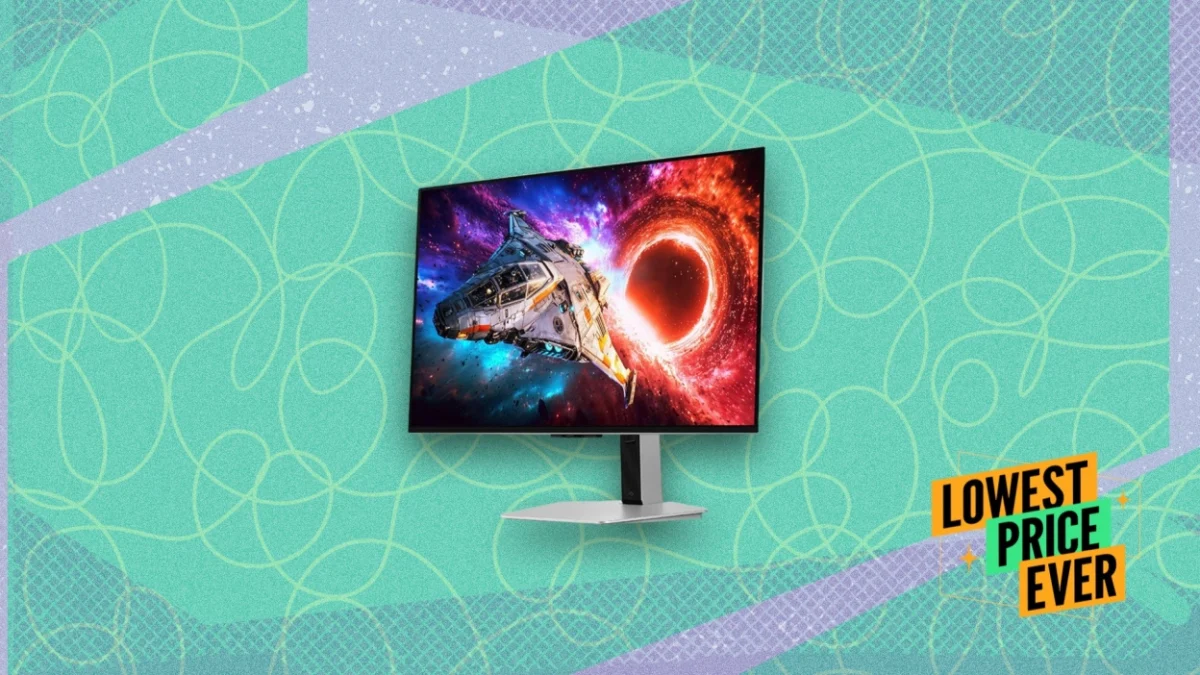
Tech enthusiasts looking to upgrade their display setups have a rare opportunity this week, as Amazon has slashed the price of the 32-inch Samsung Odyssey OLED G8 (G80SH) gaming monitor to $999.99. Down significantly from its standard retail price of $1,299.99, tracking tools confirm that this discount marks the lowest price ever offered for the high-end display since its market introduction.
This specific promotion highlights the 4K QD-OLED model rather than Samsung’s similarly named G80HS, which is a completely different 6K IPS variant. For consumers attempting to balance high-end competitive gaming with everyday desktop productivity without transitioning to a cumbersome ultrawide screen, the Odyssey OLED G8 occupies a compelling sweet spot in the current hardware market.
At the core of the monitor’s appeal is its advanced 4K QD-OLED panel, which boasts an impressive 240Hz refresh rate. This combination provides the G80SH with the raw speed necessary for fast-paced competitive shooters and racing simulators, while retaining the pixel density and clarity required to keep slower, more cinematic games looking sharp and detailed. Utilizing such high specifications effectively does require considerable hardware investment, however. To push frame rates anywhere near 4K at 240Hz, users will need a top-tier gaming PC equipped with powerful graphics cards. Fortunately, the monitor is well-prepared for modern hardware ecosystems, featuring both DisplayPort 2.1 and HDMI 2.1 connections.

Beyond raw gaming performance, the monitor also caters heavily to professionals and remote workers who maintain a shared setup. The inclusion of a USB-C port capable of up to 98W of power delivery means that compatible laptops can transmit video signals and receive substantial charging power over a single cable, successfully reducing desk clutter and eliminating the need for a separate power brick. Furthermore, support for FreeSync Premium Pro and G-SYNC compatibility helps keep screen tearing under control during intense gameplay sessions, though prospective buyers should note that OLED displays can occasionally exhibit visible variable refresh rate flicker in darker scenes when frame pacing fluctuates.
The most transformative visual differences, however, become apparent when consuming HDR content or playing titles with dark, moody environments. In these scenarios, the QD-OLED technology ensures that dark areas remain truly black, while bright visual effects pop dynamically without the distracting blooming artifacts frequently observed on traditional LCD monitors.
Like all display technologies, QD-OLED is not without its compromises. In brightly lit rooms, deep blacks can sometimes take on a distinct purplish tint due to ambient light reflection. Additionally, long-term pixel burn-in remains a primary concern for organic light-emitting diode panels, though Samsung has integrated active cooling systems and a suite of software-based screen-protection features designed to mitigate uneven wear. Furthermore, Samsung covers burn-in resulting from normal usage under its standard product warranty, offering some peace of mind for buyers hesitant to make the switch to OLED.
For casual gamers who primarily play at lower frame rates or users who remain indifferent to the infinite contrast ratios offered by OLED technology, the Odyssey OLED G8 is likely an over-engineered and expensive option. However, for enthusiasts who possess the robust graphics hardware required to fully leverage a 4K resolution at 240Hz, this substantial three-hundred-dollar price cut makes the G80SH a significantly more justifiable investment for a hybrid work and play desktop environment.