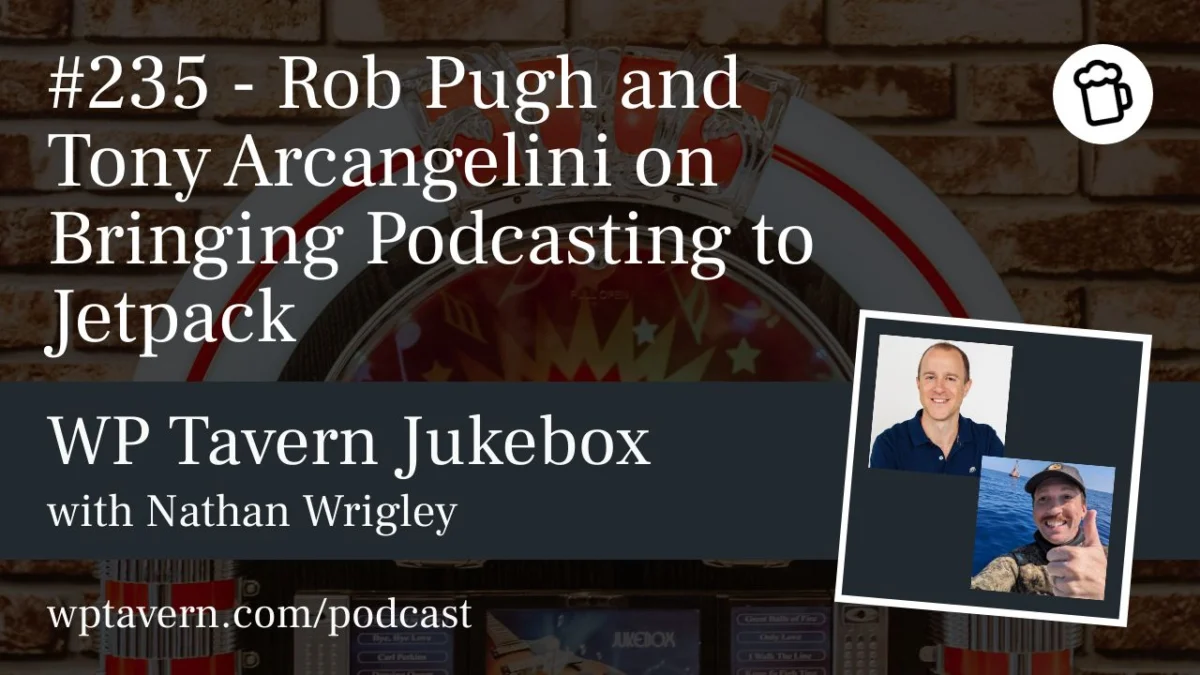
WordPress users seeking a unified home for their content can now leverage a robust, newly integrated suite of podcasting tools inside Jetpack and WordPress.com. The features, which mark a significant expansion of WordPress’s creator capabilities, were detailed on a recent episode of the Jukebox podcast from WP Tavern, hosted by Nathan Wrigley. Wrigley sat down with longstanding Automattic team members Rob Pugh and Tony Arcangelini to discuss the strategy behind bringing native audio distribution, RSS feeds, and audience analytics directly into the WordPress ecosystem.
The conversation highlights a broader industry shift toward content ownership at a time when creators are increasingly growing fatigued by the strict rules and monetization models of proprietary, walled-garden platforms like Substack and Patreon. By combining blogs, newsletters, and podcasts under a single roof, Automattic aims to provide an open-source alternative that ensures creators retain absolute control over their data, their audiences, and their digital futures.
A More Robust Home for Creators
For years, basic audio capabilities existed on WordPress.com, offering users a simple way to drop audio files into a post and generate a rudimentary RSS feed. However, that foundational feature had remained largely untouched for a long period. Recognizing the surging demand for streamlined creator tools, Automattic decided to overhaul the system and make it widely available across self-hosted WordPress sites via Jetpack.
Tony Arcangelini, a software developer at Automattic who has spent eight years building the company’s tools, explained that the transition was far more than a simple port of old code. While the initial WordPress.com offering was basic, the newly engineered suite integrates advanced statistics, episode management, and expanded compatibility.
From an architectural standpoint, Jetpack served as the ideal vehicle for the rollout. Features like download analytics—which require tracking and aggregating data from the various listening apps touching the audio files—demand robust backend infrastructure. By anchoring the podcasting features within Jetpack, the engineering team could leverage existing endpoints and tools while placing audio alongside other critical creator mediums, such as newsletters and the WordPress.com reader.
The integration addresses a historical gap in the WordPress.org ecosystem. While individual components like newsletters, RSS feeds, and blogging tools have existed for decades, they rarely functioned as a cohesive, joined-up publishing experience out of the box. Consequently, many creators migrated to external platforms. Automattic’s latest initiative is designed to claw that audience back by proving that creators do not need to abandon the open web to run a successful show.
Battling the Walled Gardens of Content
Rob Pugh, who has worked in marketing and product development at Automattic for seven years, emphasized that the new tooling arrives during a period of renewed technological focus on data ownership. Platforms like Substack initially offered a clean space for serious writing, but as they pursued venture capital growth, many evolved into traditional social media networks featuring short-form video reels and altering rules midstream.
Creators who build audiences on proprietary platforms often find themselves trapped, facing high revenue cuts—such as Substack’s 10 percent fee on paid subscriptions—or technical hurdles when attempting to port their communities elsewhere. In contrast, WordPress offers complete architectural flexibility. If a podcaster wants to sell merchandise alongside their episodes, they can simply install WooCommerce. If they want to change their site’s design for the holidays, they can customize their theme without running into arbitrary corporate roadblocks.
This open foundation ensures that creators are never locked in. Even if they utilize Jetpack or WordPress.com, the underlying software remains open source, allowing them to migrate their feeds and data to alternative hosts or plugins whenever they choose.
Simplifying the Podcasting Workflow
Starting a podcast has traditionally required navigating a complex maze of technical setups, external hosting providers, and third-party automation tools like Zapier to handle distribution and social promotion. The new Jetpack integration seeks to collapse that workflow into a single publishing event.
According to Arcangelini, launching a show requires only a few basic configurations, such as setting up show artwork and selecting appropriate categories. Once configured, publishing a new episode is as simple as creating a regular WordPress post, dropping audio into the editor, and assigning it to the designated podcast category.
A specialized podcast episode block allows creators to pull in advanced Podcasting 2.0 markup, including features like chapter markers. The system intelligently differentiates between a standard blog post and a podcast episode based on the assigned category and the presence of media files, ensuring that only true episodes enter the dedicated RSS feed located at the site’s root URL, such as a domain name followed by /feed/.
Furthermore, the publishing process is completely automated. Once a creator clicks publish, the system handles the heavy lifting: the RSS feed updates, automated newsletters drop directly into subscribers’ inboxes, and social media posts are distributed across connected networks. This eliminates the need for fragile webhooks and manual promotion steps.
Streamlined Distribution and the Pocket Casts Integration
Getting a show listed on major podcast directories has historically involved tedious submission processes across dozens of disparate platforms. Jetpack simplifies this journey by providing a dedicated distribution tab that tracks submission statuses for major networks, including Apple Podcasts, Spotify, Amazon Music, and the Podcast Index.
A standout feature of the new ecosystem is its tight integration with Pocket Casts, the popular podcast listening application owned by Automattic. While submission to platforms like Apple Podcasts can require manual account creation and waiting periods for approval, syndicating a Jetpack-hosted show to Pocket Casts takes mere minutes due to internal platform alignments.
The collaboration also opens the door to advanced features like automated transcription and cross-device continuity. Pocket Casts utilizes sophisticated transcription technology, a capability that Automattic plans to lean into further to streamline content creation for WordPress users. Additionally, modern ecosystem synergies allow listeners to transition seamlessly between listening to audio on mobile devices during a walk and picking up a video feed on an Apple TV at the exact same timestamp.
Flexible Pricing and Accessibility
True to Automattic’s long-standing philosophy, the core podcasting and newsletter capabilities are available at no cost. Creators can launch a site on WordPress.com, send unlimited newsletters to an unlimited number of subscribers, and host unlimited podcasts on the free tier.
For users seeking deeper insights, Jetpack offers enhanced tiers that unlock essential podcast analytics. These metrics focus on actionable data—such as listener counts across specific apps like Apple or Spotify, download trends per episode, and geographic distribution—while intentionally avoiding the overwhelming complexity found in traditional analytics tools.
For those interested in exploring the new features, Automattic has centralized resources at jetpack.com/podcast for self-hosted WordPress users and wordpress.com/podcast for those utilizing WordPress.com hosting, providing a clear path forward for creators looking to bring their audio, text, and community under one roof.