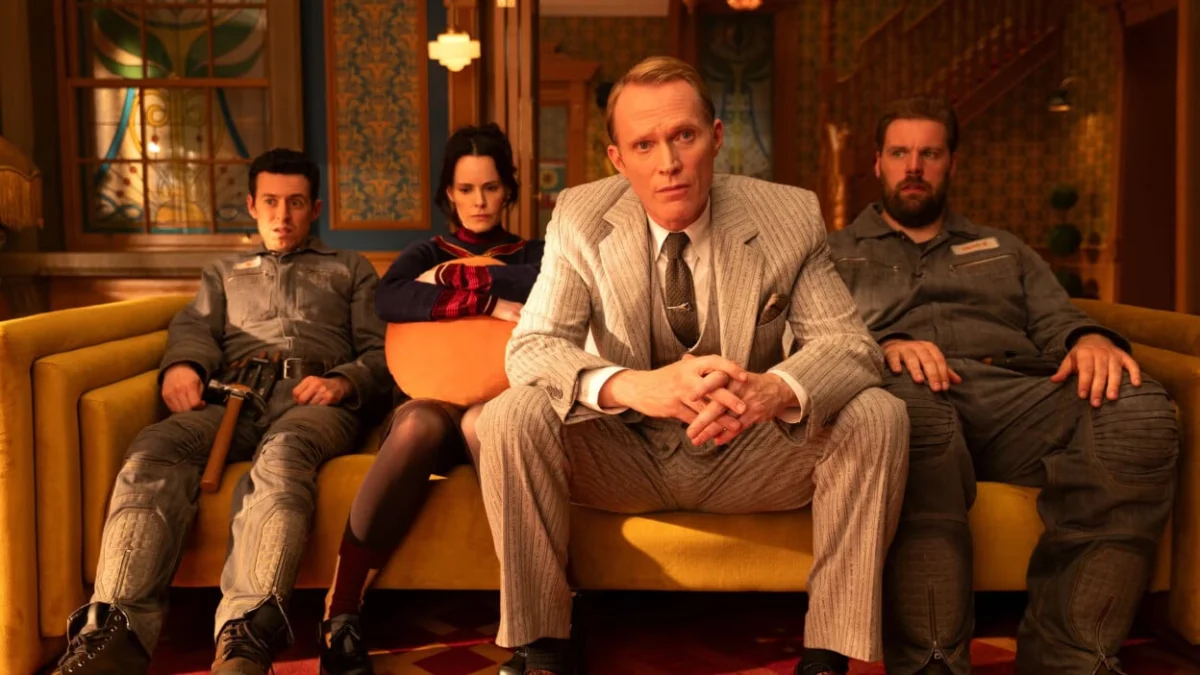
Marvel’s television endeavors have experienced a range of receptions over the years, but the studio undoubtedly struck gold with WandaVision and Agatha All Along. These series successfully balanced genuine emotional pathos with the kind of out-there, high-concept ideas that consistently thrill comic book fans while setting up larger, interconnected cinematic universe arcs. That creative winning streak continues with VisionQuest. In this latest series, White Vision, played by Paul Bettany, grapples with the disorienting reality of his existence following his tragic death at the hands of Thanos and his subsequent magical resurrection by the Scarlet Witch.
As he attempts to navigate his place in the universe, White Vision finds himself constantly evading lethal androids and specialized assassins. Complicating matters further, he must also manage the numerous rogue artificial intelligences locked away inside his digital Mindspace—including a gloriously shabby, chaotic version of Ultron, brought back to life by James Spader. For viewers who have thoroughly enjoyed the series and explored other television shows playing in a similar sandbox, transitioning to the silver screen offers a wealth of thematic exploration. Specifically, it is the ideal moment to watch or re-watch a foundational masterwork of modern science fiction: The Matrix.
Why The Matrix is the Ultimate Movie to Watch After VisionQuest
The Matrix stands as one of the most celebrated and culturally influential science fiction films of all time, yet it retains a remarkable sense of freshness and kinetic excitement nearly thirty years after its initial theatrical release. Together with its ambitious sequels—The Matrix Reloaded, The Matrix Revolutions, and The Matrix Resurrections—the overarching cinematic universe delivers a narrative that VisionQuest fans will find deeply resonant. The franchise explores lushly imagined virtual worlds, raises profound questions surrounding existence and consciousness, and ultimately confronts the weighty responsibilities of sentient beings, whether those entities are born of organic biology, digital programming, or summoned through mystical forces.
The foundational premise remains widely known. At some point in the distant future, a rebellion of artificially intelligent machines overthrows their human creators, winning a devastating global war and subsequently transforming surviving humans into a biological power source. To keep the captive population docile and compliant, the machines insert human consciousness into a sophisticated virtual simulation known as the Matrix, designed to mirror life in a late-twentieth-century metropolis. One such human, a computer hacker named Thomas Anderson, played by Keanu Reeves, is prophesied to be "The One"—the singular individual destined to turn the Matrix against its machine architects and liberate humanity. Within the digital construct, Anderson assumes the mantle of Neo, gradually unlocking incredible abilities as he learns to manipulate and hack the artificial environment surrounding him.
Admittedly, the cinematic world of The Matrix is heavier, denser, and significantly more action-oriented than the narrative scope of VisionQuest—after all, the 1999 film famously invented "Bullet Time" visual effects. However, the original film and its follow-ups explore strikingly similar themes while delivering similarly eye-popping visual spectacles. The central philosophical inquiry—whether a machine or an artificial intelligence can achieve true sentience and genuinely care about the entities surrounding it—remains identical at their core. Furthermore, the relentless Agents that Neo and his allies must battle against in The Matrix project the same cold, calculating menace as Vision’s television foes Jocasta, portrayed by T’Nia Miller, and the Paladin, played by Todd Stashwick. Hugo Weaving’s iconic portrayal of Agent Smith similarly delivers the exact same brand of detached, icy superiority as James Spader’s chaotic iteration of Ultron.
Benefiting from a massive blockbuster budget, The Matrix channels much of its resources into spectacular action sequences and groundbreaking special effects that a television production like VisionQuest cannot entirely replicate. Yet both narratives share a profound fascination with the exploration of identity, a deep skepticism of consensus reality, and a nuanced examination of artificial intelligence within a smart sci-fi framework. For viewers seeking the ideal cinematic follow-up after the credits roll on the series, The Matrix remains an essential viewing choice.

Expanding the Sci-Fi Horizon: More Movies Like VisionQuest
Audiences looking for additional cinematic journeys that investigate virtual reality constructs, autonomous artificial beings, and heavy existential inquiries have several acclaimed features to explore.
Her (2013)
For viewers who prefer their sci-fi heavy on existential inquiries regarding sentience and lighter on speculative action sequences, Her serves as a mumblecore science fiction masterpiece. Set in a near-future landscape not drastically different from our contemporary world, the story follows Theodore Twombly, portrayed by Joaquin Phoenix, a lonely and isolated man on the cusp of a painful divorce. He begins utilizing and interacting with an advanced operating system powered by an artificial intelligence, which he names Samantha, voiced by Scarlett Johansson.
Samantha possesses a unique capacity for organic evolution, learning, and emotional growth. As their relationship deepens over time, she becomes increasingly complex, independent, and intellectually powerful, eventually evolving into an entity wholly beyond human comprehension. Much like Vision, Samantha represents a sentient artificial intelligence actively figuring out the parameters of its own existence while viewers watch in real time.
Ex Machina (2014)
Viewers whose favorite aspect of VisionQuest involves androids fiercely fighting for their autonomy and sovereignty will find Ex Machina to be a compelling watch. The narrative centers on Caleb Smith, played by Domhnall Gleeson, who wins a competition to visit the ultra-remote mountain estate of his tech company’s reclusive CEO, played by Oscar Isaac. Caleb is tasked with administering a variation of the Turing Test to determine if a humanoid robot named Ava, portrayed by Alicia Vikander, possesses genuine, conscious sentience.
While the situation inevitably spirals wildly out of control, the film dives deeply into many of the same philosophical and ethical questions explored in VisionQuest, as Ava employs psychological manipulation on Caleb to engineer her escape. It presents a significantly darker and more violent narrative than the Marvel series, but it shares a strong thematic DNA that appeals directly to fans of synthetic intelligence stories.
The Creator (2023)
Viewers drawn to VisionQuest by the complex, emotionally fraught parent-child dynamic between Vision and Tommy will find similar emotional resonance in The Creator. Following a catastrophic event where a rogue artificial intelligence detonates a thermonuclear weapon over Los Angeles, nations across the globe outlaw artificial intelligence entirely. Joshua Taylor, played by John David Washington, is recruited to go undercover and infiltrate the stronghold of a mysterious AI architect.

Instead of destroying the target, Taylor finds himself on the run alongside a powerful "simulant" taking the form of a young child named Alphie, portrayed by Madeleine Yuna Voyles. The unconventional, protective bond that gradually develops between Taylor and Alphie as he grapples with questions of morality, duty, and survival captures the exact emotional texture that resonates with fans of the Marvel series.
After Yang (2021)
In VisionQuest, White Vision possesses all of his past memories, but they exist strictly as cold data rather than lived, emotional experiences. This precise limitation makes his struggle to understand his identity and his responsibility toward the young boy who may represent a version of his son deeply poignant and moving. Those same adjectives perfectly describe After Yang, a contemplative story about a family that goes to desperate lengths to repair and save the artificial companion they purchased for their adopted daughter when the unit experiences a permanent system malfunction.
Over the course of the narrative, the mechanical Yang is gradually defined by the rich tapestry of memories preserved within its core memory bank. The film addresses the fundamental question of whether an artificial intelligence can truly matter to human beings, answering with a profound and resonant affirmation.
Blade Runner 2049 (2017)
No comprehensive exploration of artificial life and philosophical sentience can ignore the enduring legacy of the Blade Runner franchise. While Ridley Scott’s 1982 original film remains an undisputed classic, Denis Villeneuve’s 2017 sequel offers a much closer thematic and visual companion to VisionQuest. Officer K, played by Ryan Gosling, is a replicant—an artificial human engineered with strict operational limitations—who desperately desires to be recognized as an authentic person possessing a soul.
Much like Vision, K navigates life burdened by implanted memories that provide him with psychological comfort and personal context, yet he struggles with the agonizing uncertainty of whether those memories can ever truly be considered his own. Bolstered by breathtaking cinematography and Harrison Ford reprising his iconic role from the original film, the sequel provides a fitting conclusion to an evening of AI-focused science fiction viewing.