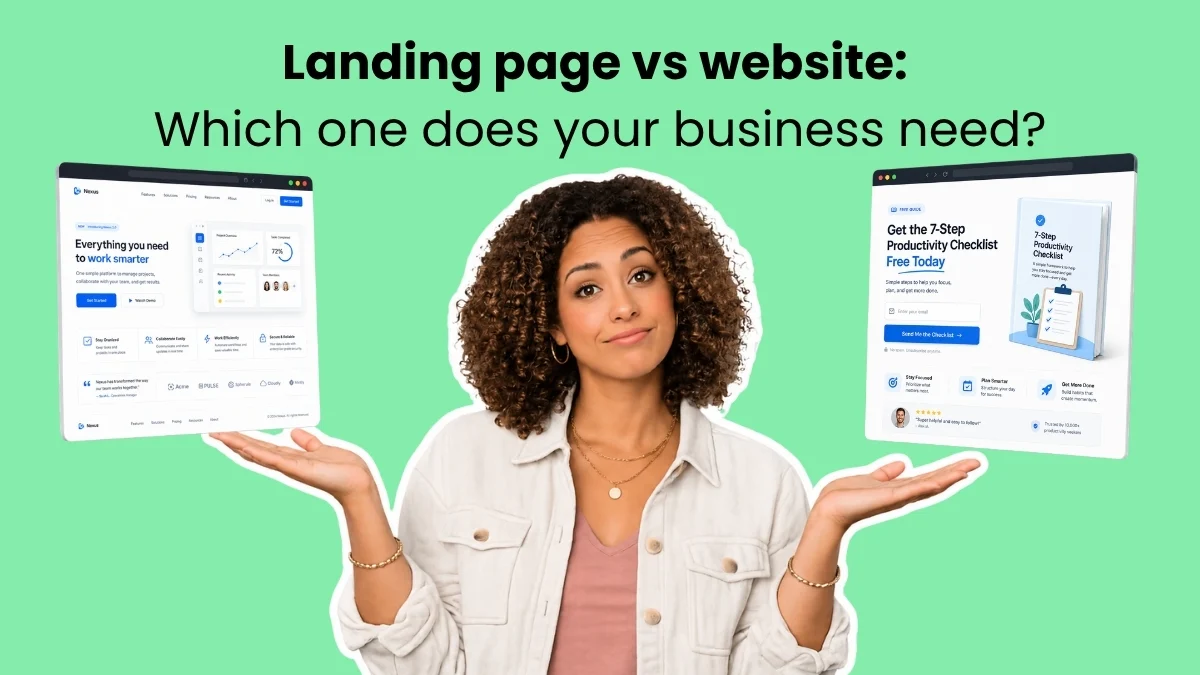
For entrepreneurs, creators, and online small business owners stepping into the digital marketplace for the very first time, a familiar set of questions invariably arises: Do I need a website? What should I use a landing page for? Do I need both?
According to insights shared by Kelly Forst, navigating these foundational choices is a critical step in establishing an online presence and building an audience. While carving out a place for a business on the internet is essential for modern commercial success, the digital landscape offers more than one path forward. Understanding the distinct similarities and differences between landing pages and websites allows business owners to choose the right tools for their specific goals, timelines, and budgets.
Landing Page vs. Website: Definitions
To make an informed decision about digital infrastructure, business owners must first understand what separates a multi-page website from a standalone landing page.
A traditional website is typically composed of five or more interconnected web pages. These often include a homepage, an about page, a contact page, services or product pages, and a blog or resource section. The primary goal of a website is exploration. When visitors arrive at a website, they are invited to browse, learn about the brand, find answers to their questions, and build familiarity with the business over time.
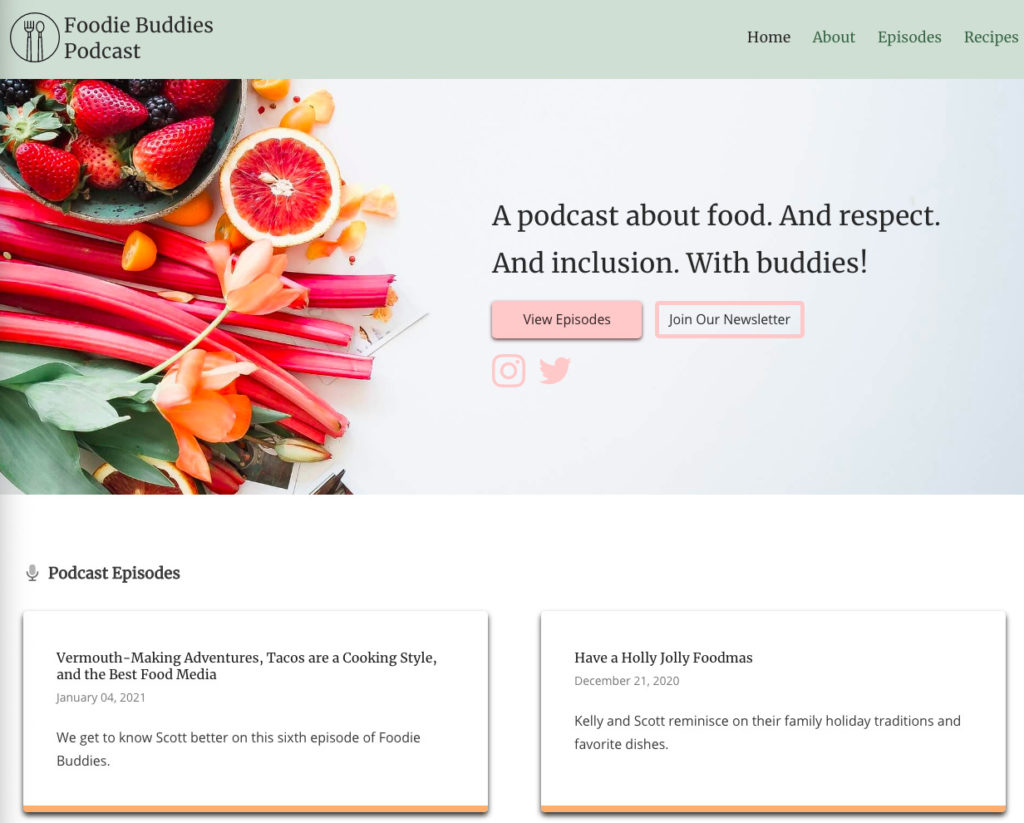
A website functions as a comprehensive, one-stop shop for everything related to a business. However, that completeness comes with inherent trade-offs. Comprehensive websites generally require significantly more time, financial investment, and ongoing upkeep than a single, focused web page. For instance, a podcast or a content-heavy business might utilize a website where visitors can easily navigate across multiple tabs to listen to episodes, read articles, and explore resources.
In contrast, a landing page is a standalone web page built with a singular goal and a single call to action. Unlike a traditional website, a landing page typically features no menu to click through and no secondary pages for a user to wander off to. A visitor arrives, reads the content, and either takes the desired action or leaves the page entirely.
Common goals for landing pages include collecting email signups, registering participants for an event, promoting a specific lead magnet, or selling a single digital product. Because every visual and textual element on the page directs the user toward one specific action, landing pages generally achieve higher conversion rates than multi-page sites designed for open browsing. The visitor is never forced to deliberate over where to click next because the decision has already been made for them.
Many modern creators leverage both formats in tandem. For example, podcasters who maintain a full informational website may also utilize landing pages as part of their broader marketing strategy. In many instances, a landing page functions as a centralized link directory, allowing creators to place a single link in their social media bios to efficiently direct followers to their most important offers and content hubs.
A Side-by-Side Comparison of Digital Formats
The structural differences between these two digital assets translate directly into how users behave when they arrive. A helpful analogy considers a traditional website as a continent featuring numerous interconnected regions that are easy to travel between. Meanwhile, a landing page resembles an island located just off the coast—it stands entirely on its own, and every visitor who arrives is greeted by one distinct environment.
Examining the operational differences reveals clear distinctions in scale and purpose. A landing page consists of a single page, whereas a website encompasses five or more pages. Navigation on a landing page is either entirely absent or kept to a bare minimum, whereas a website features a comprehensive menu connecting every page.
The core objective also diverges sharply. A landing page targets one specific action supported by a single call to action, whereas a website is designed for general exploration, education, and multifaceted engagement. Consequently, the resources required to launch each option vary dramatically. A landing page can typically be deployed within minutes or hours at a very low cost, often included as a standard feature within existing email marketing software. Conversely, building a website often takes days or weeks and involves higher expenses related to domain hosting, professional design, and ongoing maintenance.
Ultimately, landing pages are best suited for targeted marketing campaigns, rapid audience list growth, and selling specific products. Websites, on the other hand, serve established businesses that require significant space to showcase diverse offerings, portfolios, and content libraries.
When to Deploy a Landing Page or a Website
Deciding between a landing page and a website depends entirely on the immediate objectives of a marketing campaign or business model.
Business owners should utilize a landing page when absolute focus is required. If a company is running paid advertisements, promoting a lead magnet, launching a new product, or sharing a solitary link across social media platforms, a landing page ensures that the visitor remains entirely on task without distractions.
Landing pages also provide an ideal mechanism for testing new business concepts before committing substantial capital. An entrepreneur can build a targeted page for a prospective offer in a single afternoon, direct traffic toward it, and quickly determine whether there is genuine market demand before investing financial resources into building out a full-scale website. Furthermore, for individuals who are just beginning their entrepreneurial journey, a landing page offers a frictionless way to establish an online presence immediately, bypassing the need for a web designer, developer, or recurring monthly hosting fees.
Conversely, a website becomes necessary when a business possesses enough operational depth that a single page can no longer adequately represent it. This includes enterprises with multiple product lines, extensive content libraries, professional portfolios, or distinct team directory pages. When visitors routinely require answers to a wide variety of independent questions, a website provides each topic with its own dedicated home. Additionally, a website contributes significantly to long-term search engine visibility. A regularly updated blog containing helpful, optimized content attracts organic visitors month after month—a feat that a single landing page rarely achieves on its own.
Importantly, these two digital tools are not mutually exclusive. Even businesses that maintain a fully developed website continue to rely heavily on landing pages for conversion-driven campaigns. Directing paid advertising traffic and promotional email campaigns to focused landing pages rather than a generic homepage prevents potential customers from encountering unnecessary exits and distractions.
Evaluating Business Needs and Strategic Choices
To determine which digital asset is appropriate, business owners can evaluate their current operations by considering a few key questions regarding their primary objectives, available time, budget constraints, and content volume.
When the primary goal is driving one specific action, a landing page is the logical choice, whereas a desire for open exploration points toward a website. For entrepreneurs lacking the time or financial resources for a full web development project, starting with a landing page provides a practical entry point, with the flexibility to add a comprehensive website later as the enterprise matures. Similarly, testing unproven ideas benefits greatly from the rapid validation offered by a landing page. If a business lacks enough substantive content to naturally fill at least five distinct pages, building a website prematurely can lead to unnecessary padding, making a focused single-page approach the superior alternative.
For many modern creators, coaches, and solo enterprises, operating entirely on landing pages is not merely a temporary fix, but a viable long-term business model. By relying on a handful of targeted pages—one to collect email signups, another to sell digital products, and a third to serve as a social media link hub—solopreneurs can build sustainable operations without ever constructing a traditional multi-page website.
In these lean business models, email marketing acts as the connective tissue. The landing page captures the initial subscriber, while subsequent automated emails handle the heavier lifting of education, trust-building, and product promotion. In this ecosystem, the email subscriber list serves as the core business asset, while the landing page acts simply as the front door.
As digital tools continue to evolve, establishing these essential touchpoints has grown increasingly accessible. Modern publishing platforms now allow users to select professional templates tailored to specific campaign goals, customize layouts using intuitive drag-and-drop editors, and publish content complete with built-in hosting and secure connections. Integrated AI writing assistants and design tools further streamline the process of drafting compelling copy and producing visual assets, enabling businesses to manage conversions and collect payments seamlessly while integrating every new subscriber directly into their broader communication workflows.