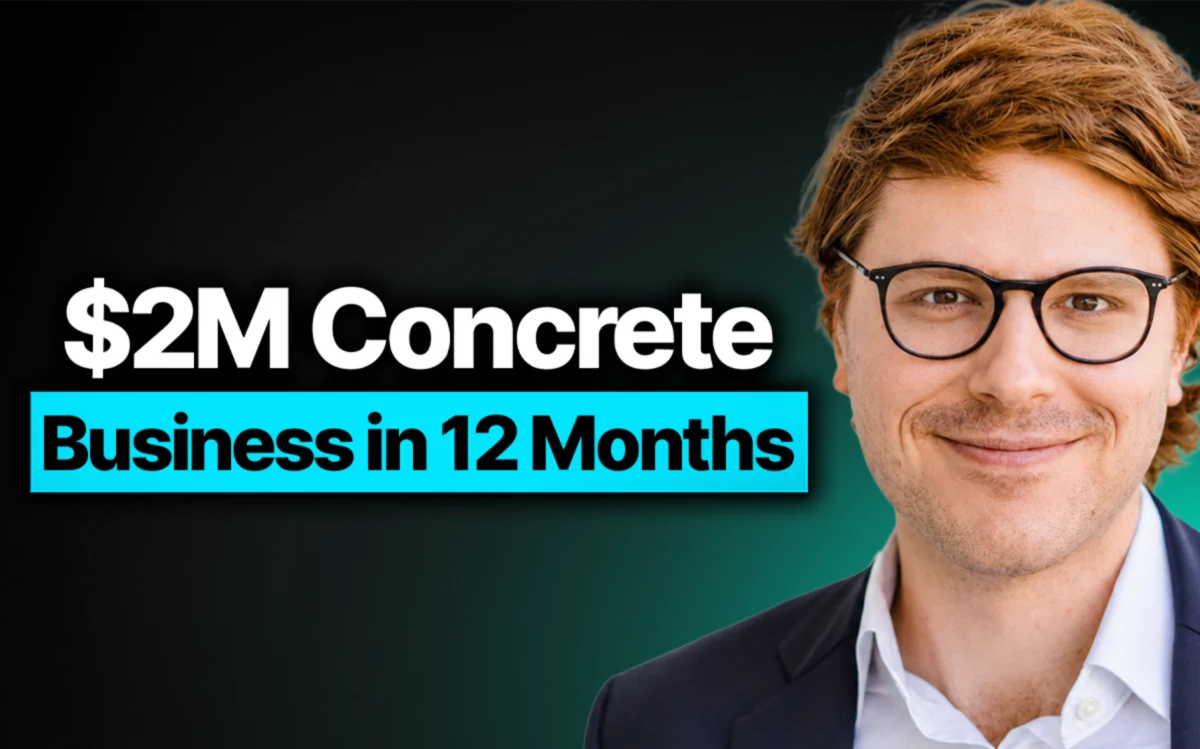
In the fast-paced world of technology and venture capital, the pursuit of the next big software trend often overshadows the foundational industries that literally keep cities standing. Yet, for Jeff Price, trading the high-stakes environment of fintech and venture-backed startups for a "boring" blue-collar business in Houston proved to be a life-changing pivot. In just 12 months, Price built Texas Slab Guys from the ground up into a thriving concrete construction enterprise with a $2 million annual revenue run rate, proving that operational excellence and modern efficiency can transform even the most traditional sectors.
Price’s journey into the heavy construction industry was far from conventional. Before launching Texas Slab Guys, his career was deeply entrenched in corporate strategy, finance, and technology. He founded a fintech company that successfully raised $2 million in capital, earned an MBA from Rice University, and subsequently worked at a Series B startup that had secured more than $30 million in funding. Although entrepreneurship had always been his primary ambition, his initial tech venture did not achieve the financial milestones he had envisioned. Rather than diving back into the volatile startup ecosystem, Price deliberately chose to explore business ownership within a completely different, tangible market.
His entrance into the concrete industry began not with a sudden flash of inspiration, but through a rigorous, methodical acquisition search. For months, he evaluated numerous blue-collar businesses against a strict set of criteria, reaching out to thousands of owners. Although he narrowed his sights down to a handful of potential acquisitions, the deal ultimately fell apart. However, that failed negotiation exposed him to the immense market demand for concrete services in Houston—a sprawling metropolitan area that boasts more concrete per capita than any other city in the Americas. Recognizing the immense potential, Price decided to build a concrete company from scratch instead.
The initial phase of the business was far from an overnight success. Price finished his first partial operational period with less than $200,000 in revenue, candidly admitting that he stumbled through nearly every mistake possible during those opening months. While mastering the technical side of concrete work presented its own hurdles, finding dependable subcontractors proved to be the ultimate bottleneck. Success, he quickly realized, hinged less on specialized technical knowledge and more on finding reliable partners who could show up consistently, execute the physical labor to a high standard, and maintain professional accountability. Once he successfully assembled a dependable team, the business began gaining significant operational momentum during the first half of the year.
Rather than relying on complex marketing gimmicks or outspending competitors on advertising, Price discovered his greatest competitive advantage in simply executing the basics exceptionally well. In the local service industry, many prospective customers struggle to get contractors on the phone or deal with missed appointments. Texas Slab Guys capitalized on this widespread frustration by prioritizing responsiveness, punctuality, and transparent communication. By reliably answering inquiries, showing up on time for estimates, and delivering high-quality craftsmanship, the company earned strong word-of-mouth recommendations. Satisfied residential clients frequently became a bridge to lucrative commercial opportunities, allowing the business to expand its footprint through reputation rather than aggressive sales tactics.

A crucial driver of this efficiency was Price’s strategic integration of artificial intelligence. Eschewing the notion that AI should replace human labor, he utilized technology to eliminate administrative friction and repetitive tasks that typically bog down small business owners. Using natural language prompting tools like Replit, Price built a custom quoting system designed to pre-qualify leads before burning valuable time and resources driving across Houston for unpromising estimates. While the system did not eliminate in-person site visits entirely, it sharply reduced wasted trips and enabled him to focus his energy on high-intent prospects.
The time-saving benefits compounded steadily over weeks and months, offering a realistic alternative to the exaggerated claims often associated with tech adoption. Among his most impactful technology investments was an AI voice agent costing approximately $100 per month. Operating around the clock, the system answers incoming calls that would otherwise be missed, collects essential customer details, summarizes the conversations, and delivers immediate text recaps to Price.
The practical value of this automation was demonstrated vividly when a customer named Dwayne reached out after failing to connect with five other local concrete companies. The AI voice agent handled the initial interaction seamlessly, gathered the necessary project parameters, and converted the missed call into a $15,000 project. With direct costs estimated at just $3,000, the job delivered exceptional profit margins that would have otherwise slipped through the cracks had the phone gone unanswered. By treating AI as a force multiplier rather than a replacement for human capability, Price demonstrated how basic automation can solve persistent labor and communication gaps for local service providers, from plumbers and electricians to general contractors.
Beyond operational efficiency, Price differentiated his company through premium positioning rather than competing in a race to the bottom on price. Texas Slab Guys installs high-performance 5,000 PSI concrete, a material choice that allows homeowners to drive vehicles over their new driveways much sooner than standard installations permit. This focus on superior materials and minimal disruption resonated deeply with customers who valued their time and convenience over finding the cheapest bid. This premium approach not only supported healthy profit margins but also generated organic referrals, such as a residential client who subsequently hired the company to handle concrete work for a commercial dental practice.
The financial results of this strategy have been striking, propelling the business to a $2 million annual revenue run rate just over a year after its inception. Yet, for Price, the true measure of entrepreneurial success has evolved significantly since his early days in corporate finance and startups. While financial stability remains important, he now defines achievement through the lens of personal autonomy—having the flexibility to coach his children’s sports teams, share afternoons with his family, and retain control over his daily schedule. Ultimately, his transition from the high-tech startup world to the heavy-duty realities of the concrete industry highlights a timeless truth: extraordinary opportunities often lie hidden in plain sight, waiting for the right combination of reliability, smart automation, and disciplined execution.