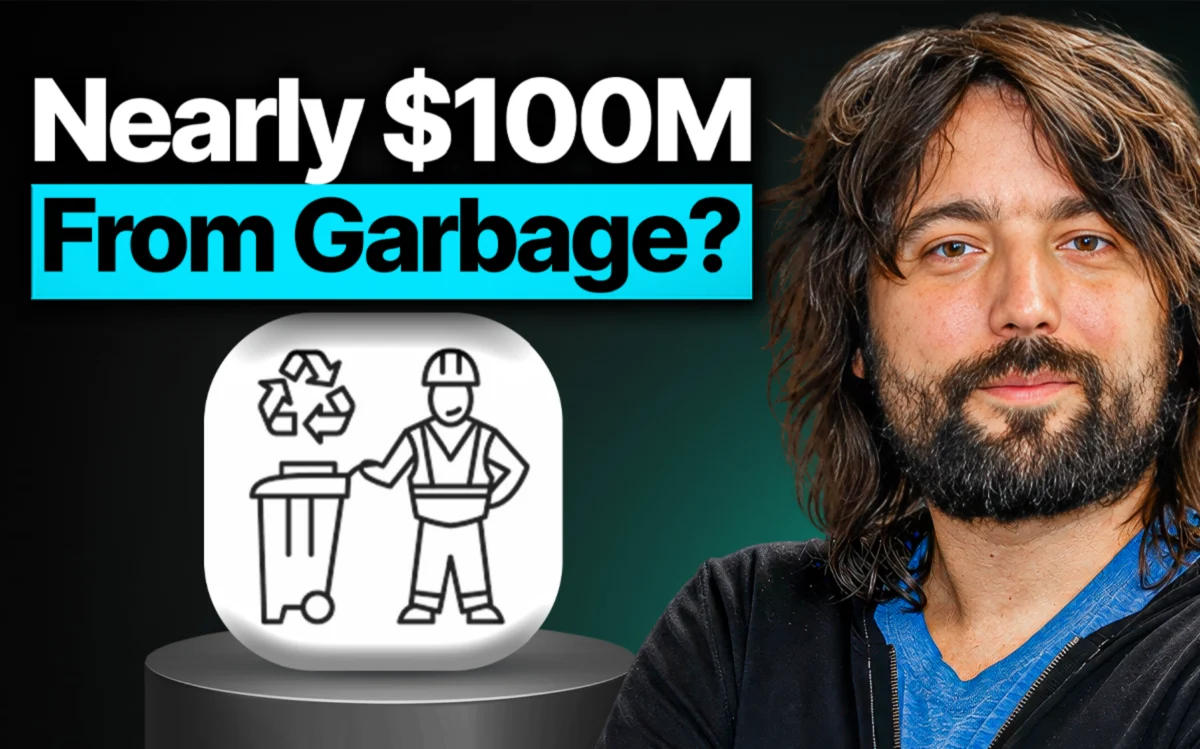
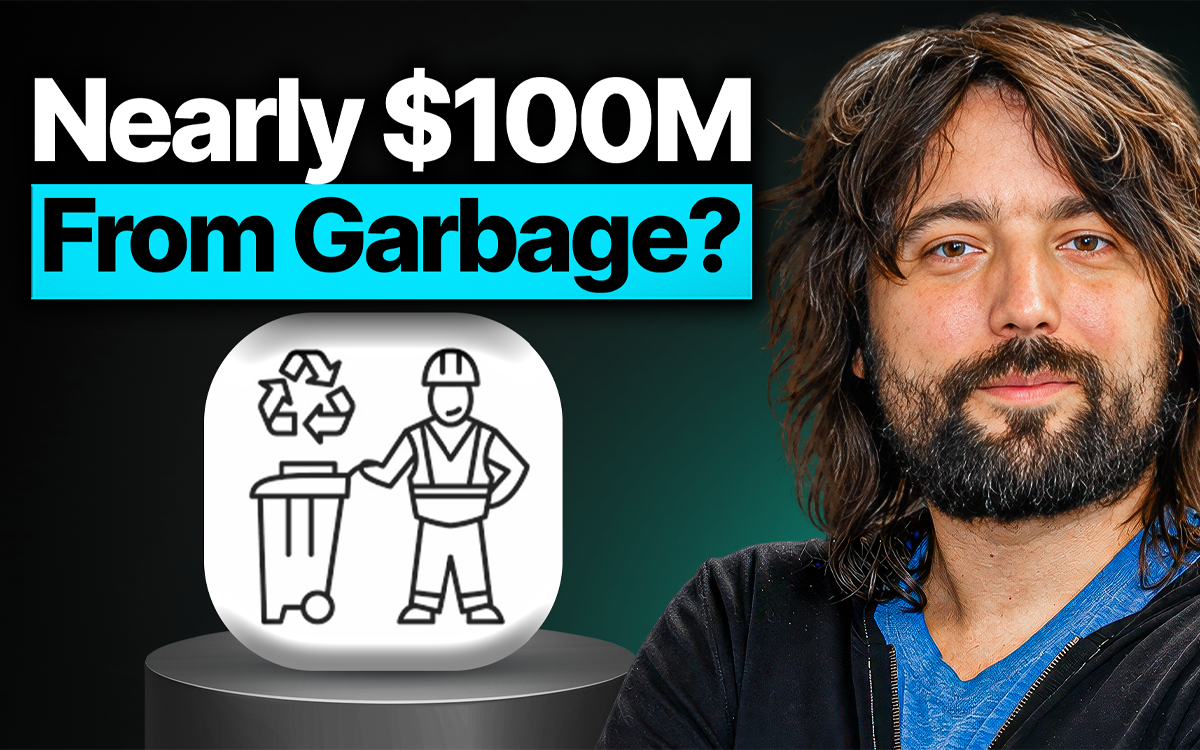
In a recent episode of the Niche Pursuits podcast, entrepreneur Tom Szaky sat down to discuss the remarkable evolution of TerraCycle, detailing how he transformed a modest college dorm room concept into a global powerhouse boasting nearly 500 employees and annual revenues approaching $100 million. The conversation offered a deep dive into the art of building enterprises around deeply overlooked problems, uncovering untapped commercial value where others see only insurmountable obstacles, and leveraging non-traditional growth strategies to scale internationally.
Szaky’s entrepreneurial journey began nearly 25 years ago during his freshman year at Princeton University. However, his business acumen had surfaced long before his Ivy League days; by the age of 14, he had already founded a website development business that employed a staff member and generated five-figure revenues. Upon entering college, Szaky sought to channel his commercial ambitions into ventures that could generate sustainable profits while concurrently addressing significant societal challenges. That ambition ultimately directed his focus toward the universal and persistent issue of waste.
A simple yet profound observation served as the catalyst for the entire enterprise. Szaky noted that garbage is virtually unique as a material because individuals and organizations are actively willing to pay someone else to remove it from their possession. This economic reality sparked a fundamental question: if waste possesses inherent financial value for the entities collecting it, could an enterprising business model be constructed around materials that the broader market completely ignores?
The initial incarnation of TerraCycle emerged from casual conversations with friends who were experimenting with worm composting. Szaky began gathering organic waste, processing it through worm digestion, and packaging the resulting worm castings into reused soda bottles to sell as a natural fertilizer. Though humble in its origins, this grassroots beginning exposed a much larger, systemic commercial opportunity within the broader waste management and consumer packaging sectors.
Reframing Waste Through an Economic Lens
Many entrepreneurs approach difficult industries under the assumption that operational hurdles simply require better technology. Szaky, however, discovered a vastly different reality. As TerraCycle expanded its scope far beyond organic fertilizer, the company conducted extensive research into why certain common materials could be recycled economically while the vast majority of consumer goods could not.
The underlying answer proved to be strikingly straightforward. The barrier to recycling was rarely a technical challenge; rather, it was fundamentally an economic one. Traditional recycling infrastructure operates on strict margins, processing only those materials where the recovered commodity value exceeds the combined costs of collection, sorting, and processing. This economic reality explains why items like aluminum cans, corrugated cardboard, and specific rigid plastics are routinely recycled, while complex, multi-material items such as coffee capsules, discarded cigarette butts, toothbrushes, and intricate cosmetic packaging are routinely discarded.
According to Szaky’s analysis, approximately 95 percent of all consumer products are not economically viable to recycle through conventional municipal systems. This critical insight established the core foundation of TerraCycle’s innovative business model. Instead of asking how to physically recycle difficult materials, TerraCycle began asking who would benefit sufficiently from the diversion of those materials to subsidize the recycling process. Potential funding partners and stakeholders included major consumer packaged goods brands, municipal governments, retailers, and environmentally conscious corporations seeking to fulfill corporate sustainability mandates.
Rather than depending on the fluctuating market value of recycled commodities to generate a profit, TerraCycle pioneered a model that charges corporate stakeholders for the comprehensive collection and processing services required to solve their specific waste liabilities. This structural shift enabled the company to pioneer entirely new recycling categories for items previously deemed unrecyclable. Today, TerraCycle operates globally as an industry leader in recycling notoriously difficult-to-manage product lines.
Engineering Demand and Negative Cost Marketing
A central theme of the podcast discussion focused on the strategic importance of creating markets that do not yet exist, rather than merely competing in established spaces where consumer demand is already mature. Szaky emphasized that identifying a problem is only the first step; sustainable commercial viability requires giving established corporations a compelling economic incentive to participate in the solution.
For instance, approaching a multinational manufacturing conglomerate with the observation that its product packaging frequently ends up in landfills may secure an initial conversation. However, demonstrating how an integrated recycling initiative can directly drive customer acquisition, enhance brand loyalty, improve consumer retention, or increase retail store traffic transforms the discussion into a high-value commercial proposition. Szaky noted that corporate decision-makers are primarily motivated by concrete business outcomes. Environmental benefits serve to open the door, but tangible commercial value closes the deal. This strategic distinction has provided TerraCycle with a profound competitive advantage throughout its history.
Marketing strategy at TerraCycle has similarly defied conventional corporate playbooks. While most consumer-facing companies allocate massive budgets to paid advertising, Szaky prioritized designing a business model inherently compelling enough to organically attract media attention. The results of this approach have been extraordinary. TerraCycle routinely receives dozens of distinct media pitches and feature stories daily, accumulating roughly 250shi,000 media mentions worldwide, including approximately 150,000 in the United States alone.
Rather than purchasing ad space to function as a brand vehicle, the company mastered what Szaky describes as negative cost marketing. By creating initiatives and narratives so newsworthy that publishers, television networks, event organizers, and industry partners actively seek to cover them, TerraCycle bypassed traditional advertising expenses entirely. Szaky noted that modern journalists operate under intense pressure to produce continuous content with increasingly limited resources, meaning companies that streamline the reporting process and provide compelling, ready-to-use stories frequently secure disproportionate media coverage.
Expanding Into Adjacent Markets Through Strategic Continuity
After spending well over a decade forging deep commercial partnerships with the world’s largest consumer brands and retail chains, TerraCycle identified a natural evolution for its business model. Rather than focusing exclusively on end-of-life recycling, Szaky and his leadership team asked a more fundamental question: was traditional recycling genuinely solving the waste crisis at its source?
This inquiry led directly to the conceptualization and launch of Loop, a major adjacent business platform focused on circular reuse rather than terminal recycling. Rather than establishing Loop as an entirely disconnected startup, Szaky built the venture as a direct extension of TerraCycle’s existing operational infrastructure and deeply established corporate relationships.
The mechanics of Loop are designed to mimic historical milk-delivery models on a modern scale. Consumers purchase everyday grocery and household products housed in durable, reusable packaging, paying a small, refundable deposit at the point of sale. Once the product is consumed, the empty packaging is returned through designated drop-off locations or pickup services. Loop refunds the consumer’s deposit and manages the centralized cleaning, sanitization, and return of the containers to manufacturers for refilling and redistribution.
Today, more than 200 global consumer brands participate in the Loop platform, making hundreds of reusable products available to shoppers in international markets. Szaky explained that the rapid market penetration and ultimate success of Loop were directly attributable to the foundational assets TerraCycle had spent decades cultivating. Because the company had already built high-level trust and working relationships with major manufacturers, the path from conceptualization to commercial execution was drastically shortened compared to launching a new enterprise from scratch.
This strategic expansion mirrors classic corporate pivots, such as Netflix transitioning from physical DVD rentals to digital streaming by willingly disrupting its own established business model before external market forces could render it obsolete.
Navigating Capital, Growth, and Corporate Incentives
Reflecting on the financial history of TerraCycle, Szaky offered candid insights regarding venture capital and outside investment. While the company ultimately achieved sustained profitability—operating in the black for over a decade—Szaky noted that, with the benefit of hindsight, he would have raised significantly less capital during the earliest formative years. Early-stage fundraising typically commands much larger ownership dilution because enterprise valuations are necessarily modest. As businesses mature and de-risk their operations, securing substantial capital requires relinquishing far less equity.
In its mature phase, TerraCycle utilizes capital strictly to accelerate strategic growth, fund targeted acquisitions, and expand product lines rather than to cover operational deficits. Recent corporate development efforts include the strategic acquisition of specialized enterprises, such as a Connecticut-based light bulb recycling operation. By integrating acquired entities into TerraCycle’s expansive global ecosystem, the company immediately extends enhanced service offerings to existing enterprise clients.
Throughout the discussion, Szaky underscored the critical importance of aligning business strategies with fundamental human and corporate incentives rather than relying solely on stated intentions. By recognizing that corporate partners are consistently driven by market share, cost efficiency, and customer retention, TerraCycle successfully positioned environmental stewardship not merely as an ethical obligation, but as a powerful driver of commercial success.
Concluding the conversation, Szaky emphasized that entrepreneurial resilience requires reframing failure not as a terminal setback, but as an essential educational investment. By treating costly operational missteps as valuable tuition that informs future strategic decisions, business leaders can foster a culture of continuous improvement, transforming overlooked challenges into enduring global enterprises.