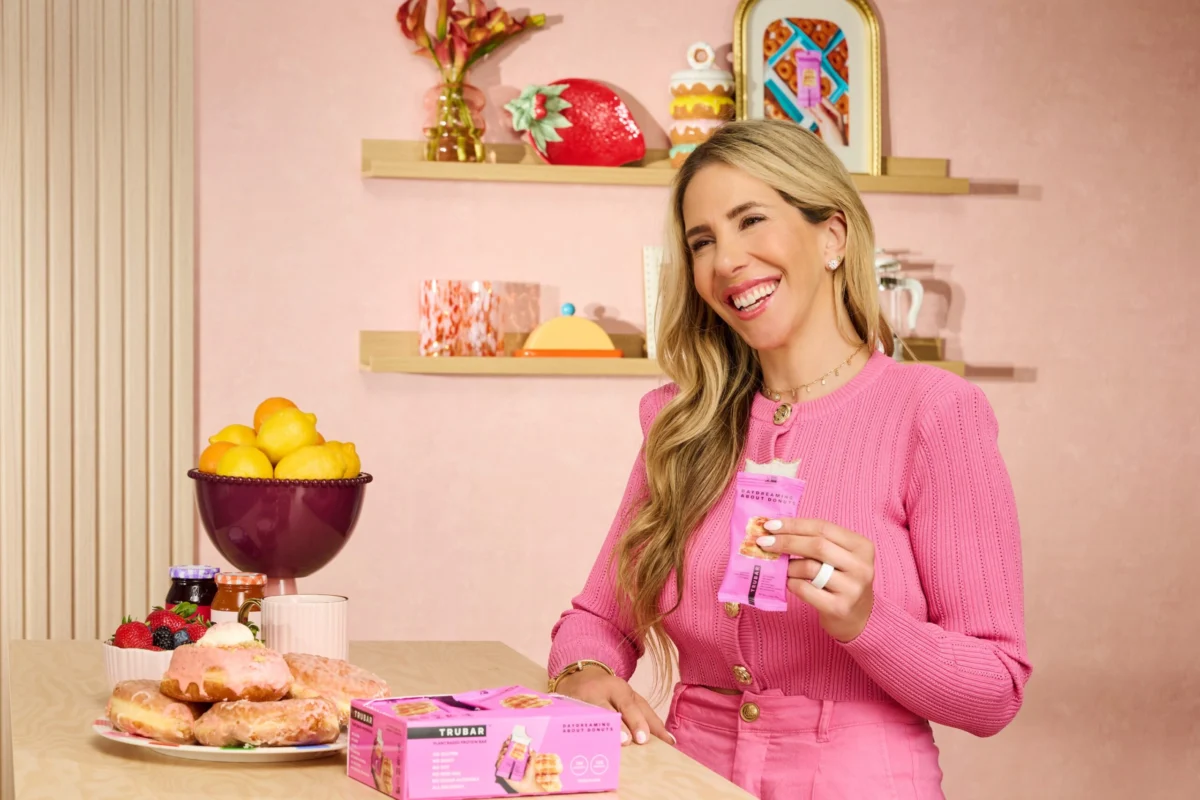
Erica Groussman started her business journey with a wooden tray purchased from Bed Bath & Beyond, a small handful of protein bars, and a straightforward proposition for local businesses: Put these on the counter, and see if your customers buy them.
The local shop owners agreed to the test. The customers bought the bars, and soon, those same small businesses were placing larger recurring orders.
That scrappy, grassroots experiment laid the operational and philosophical foundation for Trubar, the better-for-you snack company that Groussman ultimately expanded into roughly 32,000 retail locations across the United States. The company’s trajectory has been marked by early retail wins, a difficult and financially draining partnership, a stint under the corporate umbrella of a public holding company, and an eventual $173 million acquisition. Demonstrating massive market penetration, Trubar shipped nearly 46 million protein bars in 2026 alone, following a stellar 2025 where the business grossed approximately $100 million in sales.
Reflecting on the grueling journey from a stay-at-home mother to the chief executive of a multi-million-dollar acquisition, Groussman maintains that the core ingredient of her success is fundamentally unglamorous: relentless, grueling hard work.
"I think that one of the biggest secrets is working your butt off," Groussman says, emphasizing the importance of active, direct engagement. "Really getting it into every hand that you can possibly get it into."
The Origins of a Better Protein Bar
Groussman’s path to the food industry did not follow a traditional corporate blueprint. Growing up, her mother gave her a newspaper route, instilling early lessons regarding financial independence, accountability, and the daily grind of showing up for work.
As an adult, Groussman studied communications at the University of California, Los Angeles (UCLA), before building a career in film finance and real estate. Eventually, she married and started a family, transitioning into the role of a stay-at-home mother raising two children. It was during this domestic chapter that the spark for Trubar was ignited.
The concept was born out of personal discomfort during a family vacation to Disney. Groussman had packed a variety of snacks for the trip, including a protein bar manufactured by an established, well-known brand. While the bar tasted acceptable at the time, the physical aftermath left her feeling miserable.
"I remember just feeling very ucky," she recalls, describing how her belly became distended and uncomfortable. "That was my epiphany. There has to be a better way."
Her ambition extended far beyond simply formulating a protein bar with clean ingredients or a health-forward nutrition label. She established a much higher and more difficult standard for the product: it had to genuinely satisfy the palate like a dessert, while entirely avoiding the heavy, unpleasant digestive aftermath she had experienced with competing products on the market.
To bring this vision to life, Groussman collaborated with a professional food scientist, leveraging industry research, cold outreach, and connections within her personal network to find the right technical partner. Her approach to product development remains deeply sensory and iterative. Rather than relying solely on abstract nutritional data, she evaluates prototypes through direct tasting sessions, closely analyzing texture profiles and diagnosing residual aftertastes.
"We’ll taste the bar, and I’ll say what I taste," she explains, detailing the rigorous sampling process. "What am I getting afterwards? What’s the aftertaste? What do I want to see more of? Do I want more crunchy?"
Getting Products Into Customers’ Hands
Armed with a finalized concept and initial financial backing raised from family and friends, Groussman partnered with a food scientist and a co-manufacturer to launch Trubar in 2018, stepping into the role of chief executive officer.
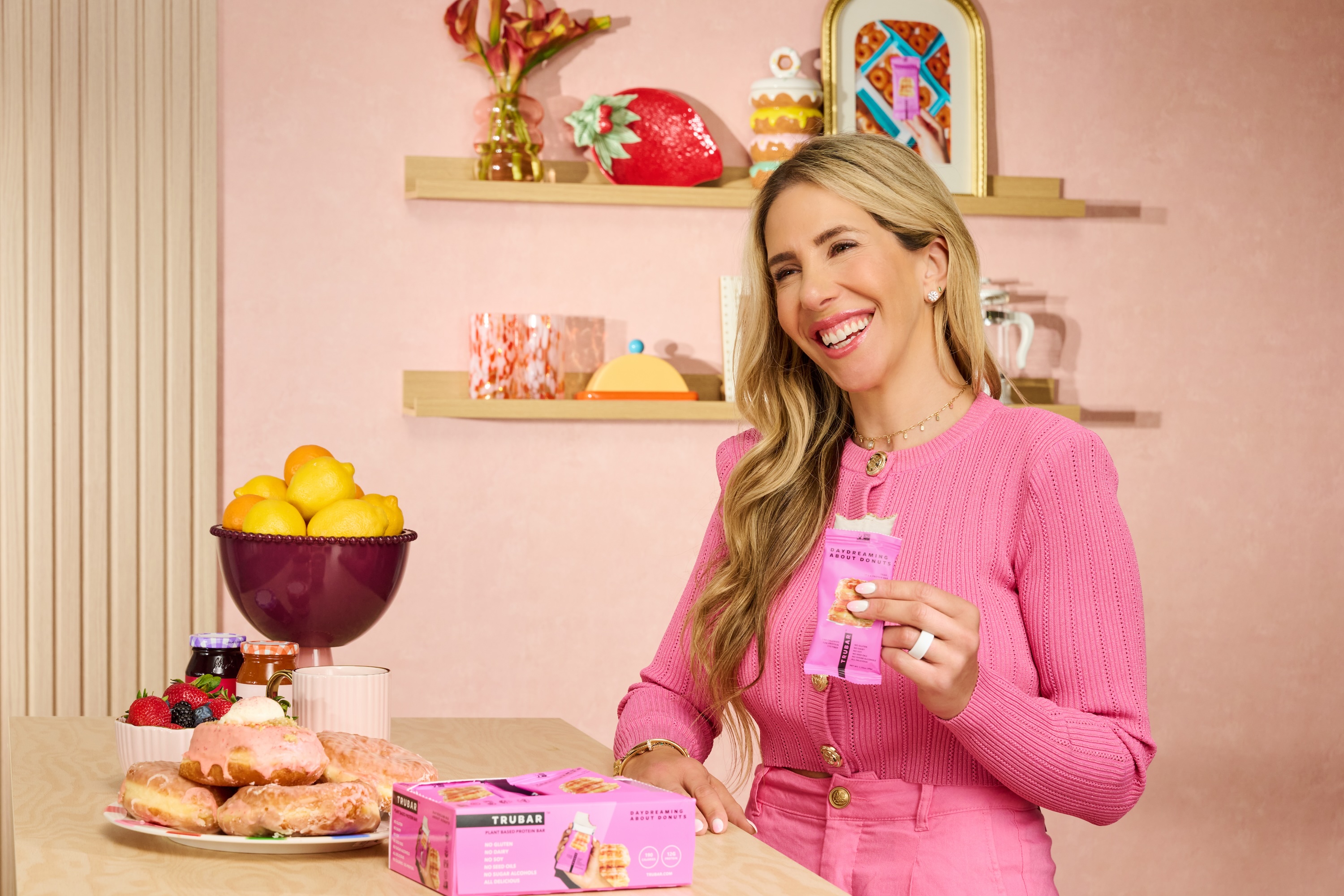
The brand’s initial product line featured inventive, dessert-inspired flavors including Daydreaming About Donuts, Oh Oh Cookie Dough, Saltylicious Almond Love, and Smother Fudger Peanut Butter. Among these early offerings, the cookie dough flavor quickly emerged as a breakout bestseller, resonating strongly with consumers looking for indulgence without the dietary guilt.
To prove market demand, Groussman relied on sheer hustle, placing her bars on checkout counters wherever local merchants would permit it. Independent juice bars, neighborhood delis, beauty salons, and local specialty stores formed the bedrock of her initial distribution network.
"I put it on any counter I could possibly get, and I would just be like, ‘Here, sell these,’" she recounts.
The participating shops established their own retail pricing—typically ranging between $3 and $4 per bar—and consistently reordered inventory once the initial batches sold out. For Groussman, this organic, customer-driven loop served as the ultimate validation of her product’s viability.
"That’s how I knew it was good because they were selling," she notes. "People were buying them and then asking to buy more."
Making a Costly Mistake
Encouraged by early momentum, Groussman felt compelled to scale the business beyond independent local shops and enter broader retail markets. Seeking guidance, she brought in an individual she believed possessed deeper, more advanced experience in running and expanding a protein bar enterprise. At the time, she was attempting to balance the intense demands of scaling a fledgling startup with raising her children and managing a household.
Although Groussman retained her title as CEO, the operational arrangement proved disastrous. The partner’s unchecked spending rapidly outpaced the company’s early revenue generation. In hindsight, Groussman realizes she severely underestimated her own business instincts and capabilities.
"I knew more than I thought I knew," Groussman reflects. "We always doubt ourselves."
According to Groussman, the outside operator effectively mismanaged the enterprise, leaving Trubar saddled with $7 million in debt. While the company had secured modest early sales through independent retailers, those figures were completely dwarfed by the massive liabilities accumulated during that period.
Faced with mounting financial pressure, Groussman’s husband urged her to walk away and write off the venture as an expensive lesson. However, she found herself emotionally and professionally incapable of abandoning the brand.
"It’s a part of me," she recalls telling him. "I really want to keep it going."
Expanding Into Whole Foods and Costco
Refusing to let the company collapse, Groussman deployed scrappy, hands-on tactics to secure distribution in major national retail chains. A critical turning point occurred with Whole Foods around 2020. Through persistent outreach to a contact via LinkedIn, she successfully secured a regional product trial across 30 store locations. Operating without any dedicated marketing budget, Trubar quickly became the top-selling bar within those test stores, holding its own against entrenched, heavyweight competitors like RXBAR and Kind.
Costco presented a different set of challenges and lessons. Trubar’s initial entry into the retail giant occurred in Canada with a single truckload during the disruptions of the Covid-19 pandemic. That Canadian rollout struggled significantly, hampered by a lack of brand awareness in the region and potential pricing disadvantages stemming from its status as an imported U.S. brand.
The subsequent U.S. rollout, by contrast, achieved massive commercial success. For consumer packaged goods (CPG) founders, the experience underscored a vital lesson: a difficult launch in one specific market does not invalidate the underlying product. Successful expansion requires careful calibration of distribution strategies, brand familiarity, precise price positioning, and proper timing.
Becoming the CEO of a Public Company
Even as Trubar secured placement in larger retail chains, corporate changes were unfolding behind the scenes. In 2021, Trubar was acquired by a publicly traded holding company as part of a wider corporate restructuring. Groussman agreed to the transaction because it provided the capital necessary for continued expansion while allowing her to remain at the helm as CEO without incurring personal debt.
The holding company maintained a diverse portfolio that included a skincare line and a CBD business. Over time, however, the other subsidiary brands struggled and ultimately failed, leaving Trubar as the clear financial engine and strongest asset within the corporate group.
Groussman describes that era as a frustrating chapter. She notes that revenue generated by Trubar was frequently siphoned off to sustain the struggling sister companies in the portfolio, even as her own brand experienced rapid growth and scaling momentum.
Despite the operational turbulence, the situation ultimately redefined her corporate standing. Having remained the founder and CEO of Trubar since its inception, Groussman took on an even larger leadership role in 2024. Following a corporate name change and reorganization centered around her flagship brand, she was named CEO of the entire publicly traded parent company, which now formally anchored its business around Trubar.
"I was the only one standing," she reflects on the consolidation. "I was a CEO of a publicly traded company."
A Hands-on CEO
Today, Trubar operates with a lean team of approximately 28 employees. Groussman maintains a management style that is deliberately and intensely hands-on. Eschewing the detachment of a high-level corporate executive, she remains deeply embedded in day-to-day operations, strategic product choices, and immediate crisis management.
She encourages her staff to seek her out whenever they encounter roadblocks, striving to lead by active example rather than remote edicts. "I will not ask you to do something that I wouldn’t do myself," she states.
That operational philosophy was vividly demonstrated during a recent product rollout for Walmart. When a crucial shipment faced severe delays that threatened to derail the strict delivery timeline, Groussman bypassed normal protocol. She personally contacted external packaging suppliers outside the company’s regular network, successfully identifying a provider capable of completing the entire job within a two-week window.
"I like to make sure the wheels are moving," she explains. "When anything is slightly going wrong, I’m like mama bear. What do I gotta do? Who do I need to talk to?"
In another instance, the company faced a packaging emergency involving mislabeled product boxes. While the underlying protein bars and ingredient lists were entirely accurate, a front-facing design element mistakenly swapped references between cashews and almonds. Rather than panicking or halting distribution, the team quickly sourced green circular stickers from local Staples office supply stores and manually applied them to the boxes on-site, correcting the error before the delivery trucks departed.
While immediate crisis response is critical, Groussman places equal emphasis on accountability and root-cause analysis after the fire is put out. "The next week after we fixed it all and it’s all okay, that’s when you go back, and you say, ‘Where did this mistake happen?’" she says. "What is broken in our path?"
Advice for CEOs
Groussman’s overarching leadership philosophy prioritizes swift action and problem-solving over paralyzing perfectionism. She observes that founding teams frequently become immobilized by an obsessive desire to have every minor detail perfected before taking action—a psychological trap that can cripple early-stage growth.
"Just get 80%, just go," she advises. "Just start, just do what you can do and just start etching away and moving in the direction."
Her perspective on hiring is similarly pragmatic and direct. "You interview for your resume; you hire for chemistry," Groussman says. Within the fast-paced, high-pressure environment of a scaling snack company, she looks for candidates who demonstrate autonomy, quick decision-making, initiative, and cultural alignment.
"I want my team to be able to make decisions and to grow," she adds. "If they come up with an idea, try it. What’s the harm?"
Scaling After an Acquisition
Following its impressive growth trajectory, Trubar reached a major corporate milestone when it was acquired by Eti Gida, a prominent Turkish snack manufacturing company, for $173 million. Groussman continues to serve as CEO, maintaining direct oversight of daily operations. Crucially, her core management team remained intact throughout the transaction—a condition she considered non-negotiable during buyout negotiations.
Rather than signaling a final destination, Groussman views the acquisition as a launchpad for the next phase of global growth. Building on the introduction of Trubar Kids and Trubar Pro, she sees substantial opportunity to expand the brand into entirely new product categories.
With her team by her side and robust international backing, Groussman is firmly focused on the future. "It was always known that they wanted to keep me as well as my team," she says. "I’m not done. It’s my baby."