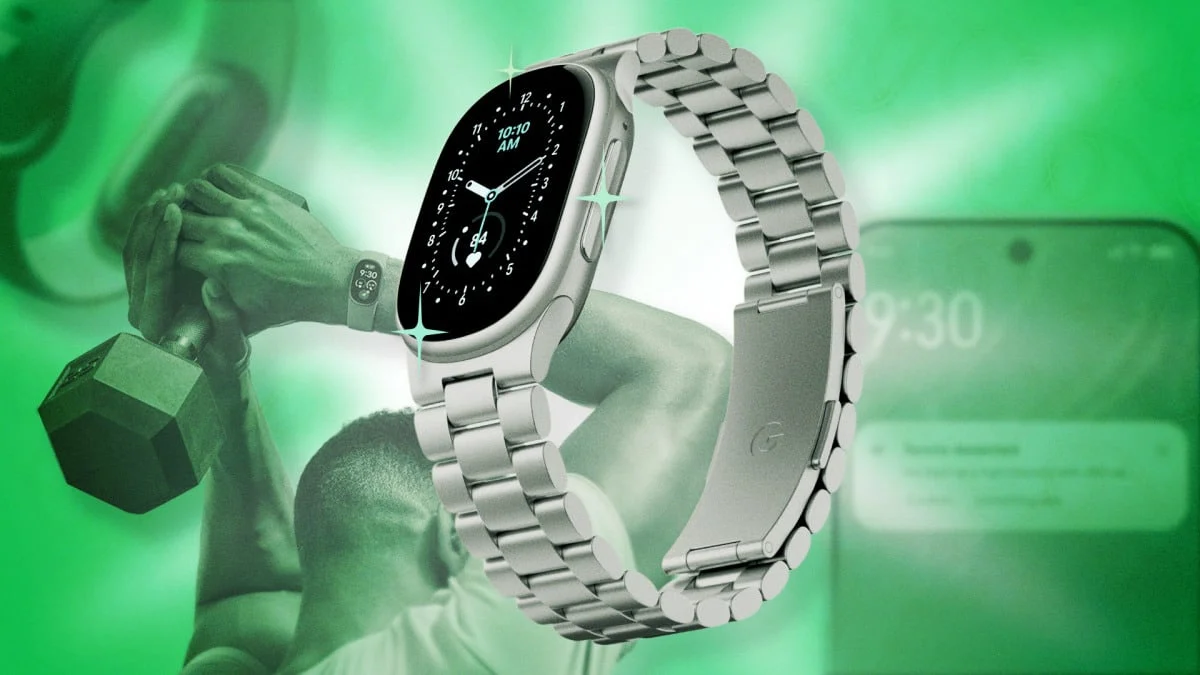
The Fitbit Edge has quickly established itself as a compelling option for consumers looking for a minimalist fitness tracker that retains a functional screen for timekeeping and workout metrics. Positioned as a device that bridges the gap between basic band-style trackers and more complex smartwatches, it appeals to users who want essential health monitoring without the bulk. However, navigating the device’s full potential requires looking beyond the default out-of-the-box settings. Owners and tech analysts have begun highlighting a series of lesser-known adjustments, customization options, and troubleshooting methods that can significantly alter the daily user experience, addressing everything from interface visibility to battery preservation.
Setting Up a Watch Face Wardrobe From Your Phone
One of the more nuanced aspects of the Fitbit Edge interface involves managing its visual presentation. While the default settings provide a straightforward introduction to the device, the companion app on a connected phone unlocks a much wider array of aesthetic choices and functional layouts. Users looking to refresh their device’s appearance can bypass the standard menus by interacting directly with the watch face carousel. A simple long-press on the center of the display initiates a preview of previously selected designs, while a concluding prompt in the interface directs users straight to the broader digital library stored within the mobile application.
From the application settings, owners can access the full catalog of available clock faces. Once a preferred design is installed, an embedded customization menu allows for individualized color schemes and the selection of specific complications, such as daily step counts or live weather updates. Although certain sharing features within this menu currently direct users to legacy web infrastructure rather than functional social sharing links, the robust personalization options ensure that the primary interface can be tailored closely to individual aesthetic and informational preferences.
Flipping Orientation to Prevent Accidental Button Presses
Hardware design often relies on generalized assumptions about human anatomy, typically favoring a right-sided button placement. For individuals who wear multiple pieces of jewelry, traditional wristwatches, or position their fitness tracker lower on the forearm, this standard configuration can occasionally lead to unintended inputs caused by the natural flexing of the hand. To accommodate different wearing styles, the Google Health platform includes an orientation adjustment within its device preference menus.
By navigating to the core device settings on a paired smartphone, users can modify the tracker orientation to shift the physical button from the right side of the housing to the left. Because this software-level change reverses the display orientation, owners must physically detach the device from its band and invert it. This simple physical adjustment eliminates accidental button activations during rigorous physical activity or everyday tasks, ensuring a more seamless interaction model for those with unique accessory habits or lower wrist placements.
Regulating AI Insights Without Losing Advanced Assistance
Artificial intelligence integration has become a central pillar of modern health ecosystems, yet automated coaching prompts can sometimes cross the line from helpful encouragement to digital noise. Within the Google Health application, the AI-powered Health Coach functions as both a powerful resource and a frequent source of unprompted notifications. To address this, developers have introduced granular controls that allow users to suppress background summaries and automated alerts while retaining access to on-demand intelligence.
By accessing the coaching sub-menu through user profile settings, individuals can disable continuous insights completely. This adjustment silences the persistent conversational summaries throughout the day without stripping away the core functionality. Whenever a user requires specific guidance, food logging assistance, or workout categorization, the manual query features remain instantly accessible via dedicated interface buttons, striking a balance between automated data tracking and user-controlled intervention.
Broadcasting Heart Rate to Strava for Advanced Mapping and Laps
While the native workout application built into the Fitbit Edge offers a streamlined and simplified approach to tracking physical exertion, external third-party platforms often provide deeper analytical tools for dedicated athletes. Recognizing this, the hardware supports real-time telemetry sharing with established ecosystems like Strava. By accessing the quick-settings menu on the tracker and activating the heart-rate broadcast feature, the device opens a continuous data stream compatible with nearby mobile devices.
When paired with the Strava application during an active session, the smartphone utilizes the Fitbit’s optical sensor to capture precise cardiovascular data while leveraging its own interface for comprehensive route mapping, lap splitting, and historical pacing comparisons. This integration allows users to maintain a lightweight, minimalist wrist profile during runs or cycling sessions while still benefiting from the robust navigational and analytical mapping features offered by specialized athletic communities.
Mitigating Step Count Inflation Through Dominant Wrist Settings
Step-counting algorithms across the wearable technology market have long grappled with the challenge of distinguishing between genuine ambulation and general upper-body movement. Hand gestures, gesticulation during conversation, and routine daily tasks can sometimes inadvertently inflate daily activity metrics. To counteract this tendency, Fitbit software incorporates a sensitivity adjustment based on wrist placement preferences.
For individuals who wear the tracker on their dominant hand, configuring the device setting to reflect this choice dampens the algorithm’s sensitivity to sporadic arm motions. Furthermore, some users who prefer non-dominant placement deliberately configure the software to assume dominant-hand wear as a method to slightly undercount ambiguous movements, creating a more conservative and potentially accurate reflection of actual travel distance and step volume over the course of a day.
Preserving Battery Life Through Strategic GPS Management
Location tracking is notoriously demanding on mobile power reserves, and the Fitbit Edge addresses this by offering flexible routing for its global positioning system. By default, the hardware intelligently determines whether to rely on its internal GPS hardware or leverage the connected smartphone’s positioning capabilities depending on environmental conditions and current connection status.
Users who routinely carry their phones during outdoor excursions can manually force the tracker to rely exclusively on the mobile device’s GPS, significantly extending the battery life of the wrist-worn hardware. Conversely, individuals who prefer exercising without a phone can configure the watch to utilize its built-in receiver. Depending on the generational age of the paired smartphone, this manual override can also yield more consistent pace and distance tracking, allowing users to prioritize either maximum battery conservation or standalone precision.
Seamless Integration With Multi-Device Ecosystems
Modern fitness tracking habits frequently extend beyond a single piece of hardware, with users often alternating between formal timepieces, specialized athletic bands, and casual accessories depending on the occasion. Recent updates to the supporting mobile software architecture accommodate this fluid lifestyle by allowing multiple Fitbit and Pixel devices to sync seamlessly under a single profile.
Owners who prefer a minimalist screenless band for certain environments can switch effortlessly to the Edge or compatible alternative models without going through tedious reconnection or pairing procedures. The underlying software infrastructure automatically aggregates health and activity data across whichever device is actively worn, removing friction for consumers who maintain a rotation of wearables tailored to different daily scenarios.
Utilizing Magnification for Improved Display Legibility
The compact physical footprint that makes minimalist trackers appealing also introduces inherent challenges regarding text size and interface legibility, particularly for users with visual impairments or those attempting to read metrics at high speeds during a workout. To mitigate this, system accessibility settings include a dedicated screen magnification feature.
Once enabled through the primary device preferences, a rapid triple-tap gesture with a single finger enlarges the active display area. Users can then pan across the magnified interface to examine specific complications, such as detailed numeric readouts beneath step counters or heart rate indicators. A secondary triple-tap smoothly returns the display to its standard scale, offering a practical solution for interacting with compact screens without permanently compromising the layout of the watch face.
Optimizing Power Management Through Rapid Micro-Charging
Battery anxiety remains a persistent hurdle for wearable technology enthusiasts, but rapid-charge engineering has dramatically altered typical charging routines. The charging architecture designed for the Fitbit Edge supports exceptionally fast power delivery, enabling significant battery recovery in mere minutes. A brief five-minute connection to the charger provides enough energy to sustain a full day of standard operation.
This efficiency allows users to break away from traditional multi-hour charging sessions. By integrating micro-charging habits into daily routines—such as placing the device on its dock briefly while showering or preparing for the day—owners can maintain sufficient power levels indefinitely. Even users who prefer resource-heavy configurations, such as continuous always-on display modes, can easily manage their power needs with brief, regular charging intervals, bypassing the need to remove the tracker for extended periods.
Bridging Offline Workouts With AI Activity Logs
Tracking non-traditional exercise routines or maintaining detailed training journals often involves logging data across separate specialized applications or physical notebooks. To help consolidate these records within a unified health dashboard, the system allows users to feed external workout data directly into the AI assistant for historical archiving.
By utilizing the coach interface within the mobile application, individuals can upload screenshots from lifting apps like Hevy or photographs of handwritten training logs, pairing them with natural language instructions specifying the correct temporal context. The analytical assistant processes the visual data and incorporates the exercises into the designated historical logs, ensuring that offline training sessions are accurately represented within the user’s broader fitness history without requiring manual data entry for every individual set and repetition.