Over the past week, technology circles, legal departments, and product design teams have buzzed with a mixture of confusion and panic over impending "huge fines," "drastic measures," and "sweeping new AI rules" across the European Union. Headlines have painted a picture of an insurmountable regulatory landscape that could upend how digital products are built and deployed.
In reality, the regulatory framework taking shape is far more targeted, narrow, and sensible than the initial wave of alarm suggested. At its core, the mandate is designed to ensure that artificial intelligence is unmistakably transparent when transparency genuinely matters—particularly regarding AI-generated content that could easily be mistaken for human work.
Starting August 2, 2026, formal AI labeling becomes a strict legal requirement for any company serving EU citizens. Much like the European Accessibility Act (EAA) and the General Data Protection Regulation (GDPR) before it, this mandate is not limited strictly to organizations based within the EU. It applies globally to any enterprise worldwide with operations in the European market, provided their artificial intelligence output is consumed or utilized by people residing within the bloc. Understanding the parameters of this legislation is critical for product managers, UX designers, and developers alike.
What Actually Needs Labelling
The fundamental objective of the EU’s AI labeling provisions is to help everyone exposed to digital content to recognize, in a clear and distinguishable way, whether that content has been artificially generated or manipulated.
According to Article 50(4) of the broader EU AI Act, these transparency obligations apply to specific categories of output. Both providers—those who build or supply the underlying AI systems—and deployers—those who utilize these tools in customer-facing applications—carry direct legal responsibilities. Much like compliance structures found in other major European regulations, a business cannot evade Article 50 simply by licensing an external, off-the-shelf AI tool from a third-party vendor.
However, a common misconception is that every single instance of AI-assisted work must be explicitly flagged with a badge or warning. That is far from the case. The vast majority of everyday AI utilization falls outside the scope of these new transparency rules. Most notably, the disclosure obligation does not apply where AI-generated text has undergone substantive human review and editing, with a named individual or legal entity taking formal editorial responsibility for the final output.

Some ambiguity has circulated regarding what constitutes the "public interest" and where those boundaries lie. In legal terms, the public interest refers to domains such as health, safety, the environment, the economy, finance, politics, science, or culture. If AI-generated product claims or marketing assertions touch upon these sensitive areas, the disclosure rules apply with full force.
Legal experts and various advisory firms recommend labeling realistic AI-generated illustrations, photographs, or composite images as a precautionary measure for advertising, public relations, marketing, and other commercial materials. AI-generated product posters, marketing photos, and illustrations explicitly require a disclosure notice if they closely resemble a real person, physical place, tangible object, or historical event.
The Fine Line Between Edited and AI-Generated Content
A central question facing product teams is determining the exact threshold where edited AI content ceases to be classified as artificial generation. For instance, if a user interface form is pre-filled using generative AI, but a human user subsequently edits the text fields, does the output retain its AI classification?

Guidance from the European Commission on this matter leaves room for interpretation. Minor, assistive edits—such as automated spellchecking, grammar corrections, basic formatting, image cropping, color adjustments, and machine translation—do not qualify as AI generation. These functions are viewed as standard utility features that enhance productivity rather than synthesize novel media.
Conversely, AI-generated summaries, composite imagery, substantial textual rewrites, and the automated addition or removal of primary elements from an image are firmly classified as AI generation. In practical terms, fine-tuning a sentence originally written by a human is generally permissible without a label, but generating an entirely new sentence from scratch using a language model requires a clear disclosure.
Furthermore, superficial oversight does not meet the legal threshold. The notion that a human simply "skimmed" a document before publication is insufficient. The European Commission is explicit that editorial review must be substantive, backed by a named person who assumes full accountability for the content.

The fine line ultimately rests between intentional manual intervention and automated generation, with the latter requiring explicit disclosure in almost all circumstances, save for specific, closed business-to-business environments.
Why AI Sparkles Are Likely Not Enough
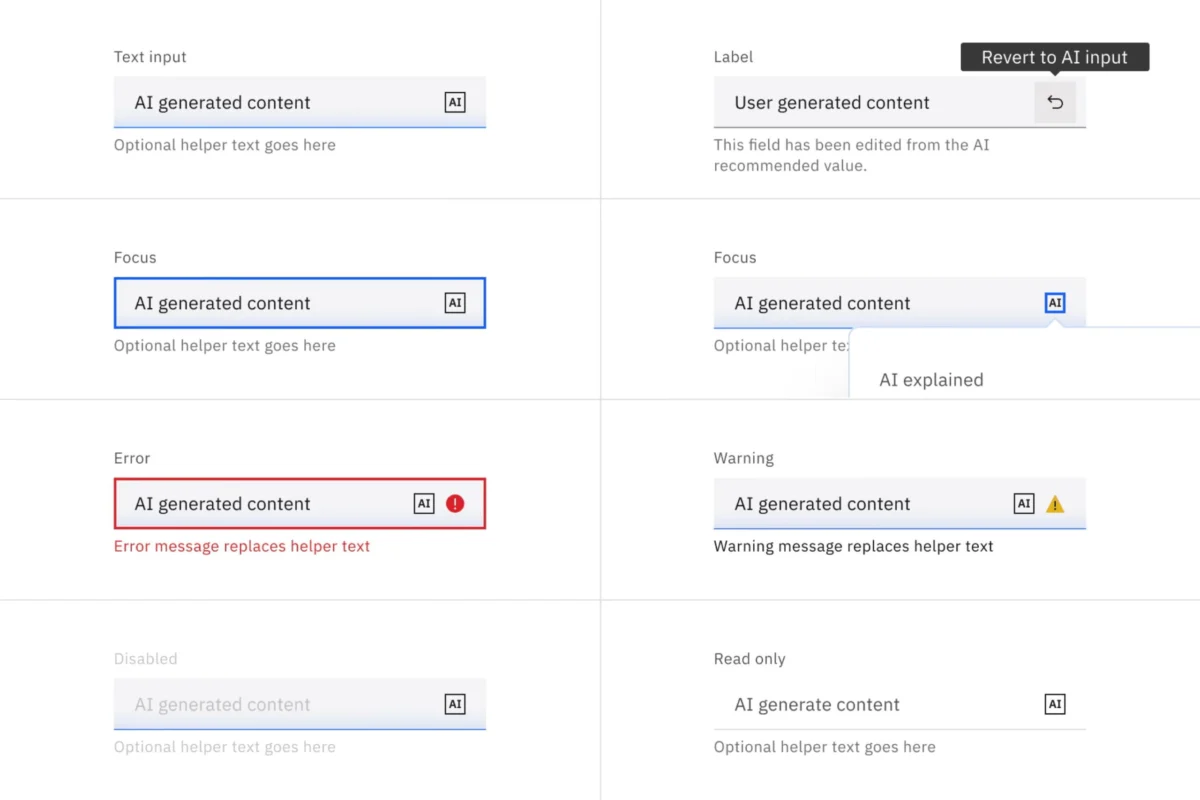
As part of its broader Code of Practice, the European Commission has introduced an official EU AI icon set. This includes a specific, standardized "AI" mark rather than the generic, amorphous sparkle symbols that many consumer software products have adopted to indicate artificial intelligence features. The regulatory signal must be clear, unambiguous, and easily distinguishable.
The ubiquitous sparkle icon is often considered too ambiguous to signal AI-generated content effectively. Because the icon has traditionally been used across the software industry to denote any AI-powered feature—ranging from smart search filters to automated summaries—it fails to communicate whether a specific piece of content was actually created by a machine. This lack of specificity is precisely what the new European guidelines aim to correct.

The European Commission has made it clear that merely slapping an icon onto an interface does not establish legal compliance by itself. A barely visible icon, a disclaimer buried in a terms-of-service footer, or a label that flashes for a fleeting second before disappearing will not pass regulatory scrutiny.
Icons must be prominently displayed, accompanied by plain-language text, and made fully accessible to assistive technologies used by individuals with disabilities. A safe compliance strategy involves pairing any visual icon with explicit plain-text descriptors, such as an "AI-generated" tag that persists even if the underlying asset is downloaded, shared, or republished externally.
A Global Shift Toward AI Transparency
While these mandates arrive via European legislation, they are part of a broader global pattern rather than an isolated regulatory hurdle. Similar transparency requirements and disclosure frameworks have begun emerging worldwide.

In the United States, various state-level and federal regulations are taking shape, focusing heavily on synthetic human performers, political advertising, and specific high-stakes commercial AI applications. Similar legislative discussions and policy frameworks are advancing in other major international jurisdictions.
These developments indicate that transparency mandates are becoming a standard design pattern for software development globally. Technology companies shipping artificial intelligence features are finding it increasingly necessary to evaluate their product architectures early to determine precisely which user-facing components require labeling and which do not.
Ultimately, these emerging transparency rules are broader than many localized US laws, but they rest on a straightforward principle taking root globally: when artificial intelligence content can easily be mistaken for human work, creators and platforms must state so clearly and unambiguously. Interface elements driven by generative AI must be identified as such.

Rather than instigating panic, these regulations encourage design clarity. By establishing a clear distinction between authentic human work and machine-generated output, these rules help users navigate digital spaces with greater confidence, benefiting both creators and consumers alike.