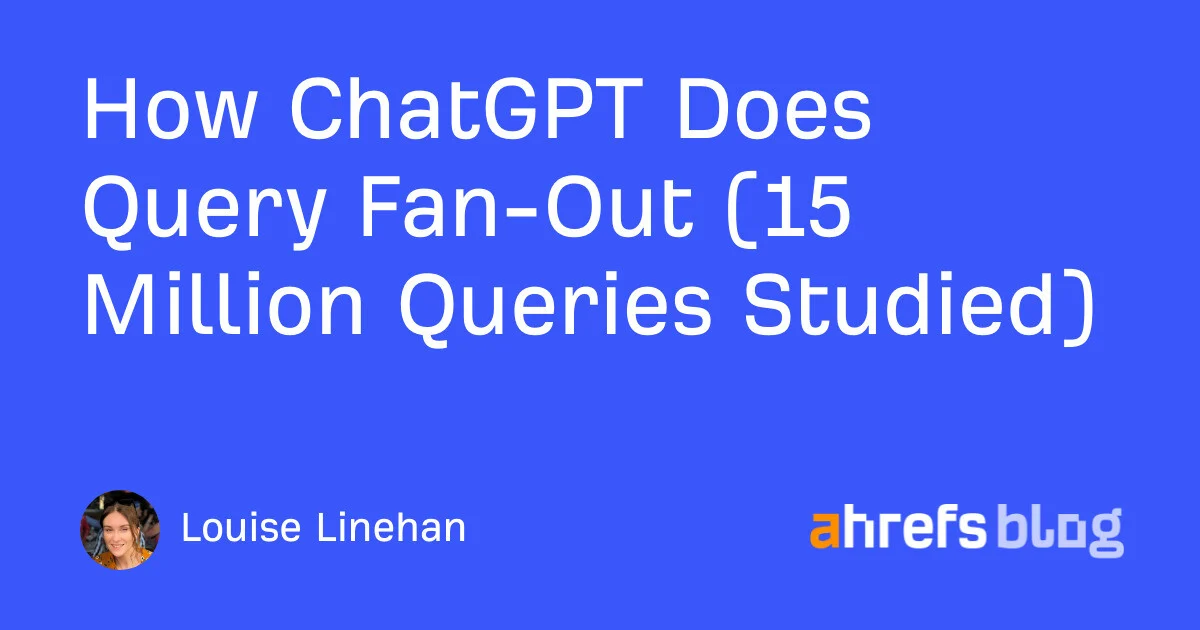
The Search Engine Optimization (SEO) industry has spent the past several months intensely dissecting ChatGPT to understand how the artificial intelligence searches the web, retrieves information, and selects its sources. To gain a clearer picture of this evolving digital landscape and what it means for modern AI visibility, researchers recently analyzed 66.6 million free, logged-out GPT-5.6 Luna responses alongside their 15 million fan-out queries collected across August and September.
Free user sessions offer the most accurate reflection of everyday usage patterns. According to Olivier de Segonzac, co-founder of RESONEO, writing in Search Engine Land, more than 90% of ChatGPT’s weekly users rely on the free tier. Furthermore, logging out during the data collection process successfully stripped away individualized chat history and memory functions. This methodological choice ensured that the observed behavior represented ChatGPT’s default retrieval mechanics rather than answers shaped by any single user’s past conversations.
Only 1 in 7 ChatGPT Responses Contain Fan-Out Queries
An examination of the massive dataset revealed that only 14.4% of the 66.6 million ChatGPT responses contained fan-out queries. For context, these specific responses averaged about 1.6 fan-out queries each.
Because the AI initiates a search for only a fraction of queries, and typically relies on fewer than two specific search phrases when it does, a brand’s web page must precisely match one of those select searches to be considered. If a website fails to align with those parameters, ChatGPT never even registers its existence during the retrieval phase.
Brand Sites and Official Sources Dominate ‘Site:’ Searches
Of the 15 million fan-out queries analyzed, 6.8% utilized the specialized site: search operator to target a single, specific website. Within the approximately 160 most-searched domains, three out of every four searches targeted a direct brand site.
In this context, a brand site refers to a primary corporate web property—such as apple.com or ikea.com—as opposed to general third-party retailers, government portals, online forums, or consumer review platforms. Meanwhile, traditional retailers like Amazon, Walmart, and Costco accounted for 11.9% of these searches, while major community platforms like Reddit and Facebook combined for a modest 1.9%.
An analysis of the specific terminology embedded within these fan-out queries further underscores this heavy focus on official, first-hand information. Following the year "2026," terms like "official" and "price" emerged as the most common keywords, registering steady month-over-month growth. For instance, queries referencing the year 2026 jumped from 17.6% in August to 22.9% in September, while searches containing the word "official" rose from 10.1% to 13.1%. References to "price" also climbed significantly, moving from 6.0% to 8.9% over the same period.
These findings indicate that when users seek precise product specifications, costs, or foundational data, a brand’s official web domain serves as the most logical and frequently targeted destination. However, when an inquiry lacks a single definitive answer, ChatGPT is notably more inclined to look beyond official channels.
A separate test examining 20,000 distinct U.S. prompts demonstrated that 84.4% of factual questions concerning pricing, product features, or company details cited at least one official source. By comparison, that figure dropped to 68.3% for open-ended comparison questions, such as head-to-head product evaluations. For straightforward factual questions, official websites accounted for 63.4% of all citations, whereas comparison queries saw official site citations drop to 46.4%, with the majority of traffic shifting toward alternative web properties. Consequently, ChatGPT relies most heavily on primary sources for baseline facts, while leaning more extensively on secondary and third-party sites when evaluating competing options.
Consumer Brands and Official Portals Lead the Most-Searched Domains
The specific web domains that ChatGPT targets most frequently via site: queries are overwhelmingly dominated by major consumer brands. While these rankings reflect a specific dataset and prompt collection, they incorporate roughly one million site: queries, providing a robust indicator of the domains the AI leans on most heavily. Because these organizations manufacture and sell consumer goods, their brand websites naturally serve as the primary authorities for pricing and technical specifications.
Government domains also feature prominently in the data. Portals such as Brazil’s gov.br, the United Kingdom’s gov.uk, France’s service-public.fr, alongside agencies like the National Highway Traffic Safety Administration (NHTSA), the Food and Drug Administration (FDA), and the Securities and Exchange Commission (SEC), all secured positions within the top 150 domains. This trend mirrors observations made by Lily Ray, founder of Algorythmic, who noted that ChatGPT consistently favors official sources when handling Your Money or Your Life (YMYL) queries.
At the same time, Reddit maintained its position as the ninth most-searched domain using the site: operator. This aligns with findings from Suganthan Mohanadasan, co-founder of Snippet Digital, who observed that ChatGPT continues to fetch content from Reddit when seeking authentic user opinions and real-world feedback, even as its direct citation rates fluctuate.
Partner Publications Experience Shifting Citation Shares
Among the 17 media publishers and platforms that currently maintain formal AI content licensing deals with OpenAI, Reddit stands out as the sole representative within the top 150 most-searched domains using the site: operator. One plausible explanation is that ChatGPT already possesses pre-loaded data and direct integrations for its official media partners, reducing the need for explicit search queries during runtime.
However, while site: searches reveal what the AI looks up during its query fan-out process, they do not necessarily reflect what it ultimately decides to cite in its final responses. Domain citation metrics tell a markedly different story, with partner publications seeing substantial visibility. Data from Brand Radar indicates that partner publications among ChatGPT’s 200 most-cited domains more than doubled their combined share of citations, climbing from 7.5% in March to 15.8% in July, before stabilizing at 12.5% in late September. This steady presence suggests that securing earned media coverage within these licensed partner publications offers significant advantages for AI search visibility.
The Rapid Rise of Price and Review Fan-Out Terms
The specific keywords that ChatGPT dynamically introduces into its fan-out queries offer valuable clues regarding the types of web pages the AI seeks to retrieve. Between August and September, an increasing share of fan-out queries focused directly on pricing, product specifications, and reviews, while references to definitions and conceptual meanings experienced a slight decline.
Although a shift of one or two percentage points might initially appear modest, these terms started from a relatively low base, making their relative month-over-month growth quite stark. Queries incorporating the word "price" surged from 6.04% to 8.88% of total fan-outs, representing a relative increase of nearly 47% in just a single month. Similarly, searches involving "reviews" grew by approximately one third, while "specifications" broke into the top 50 search terms for the very first time. Conversely, queries containing "meaning" and "definition" each dropped by about a fifth, though analysts view this dip as a minor fluctuation rather than a definitive long-term trend.
Reddit and Wikipedia Citations Experience Steep Declines
In tandem with fan-out query analysis, researchers tracked the evolution of the specific websites that ChatGPT chooses to cite. Utilizing a separate dataset covering U.S. citations from March through September 2026—which encompassed between 2.4 million and 3.8 million answers per month—the study mapped a dramatic transformation in source attribution.
Previous research by Snippet Digital highlighted an 86% drop in Reddit citations within ChatGPT during August, while insights shared by Aleyda Solís, founder of Orainti, demonstrated that social media platforms, general reference sites, and news outlets experienced substantial losses in citation share between July and August. Brand Radar data confirmed this sharp contraction across Reddit, Wikipedia, and YouTube.
In March, approximately one out of every five ChatGPT answers cited Reddit, but by late September that ratio had plummeted to roughly one out of every 43 answers. Over the same timeframe, Wikipedia’s citation rate fell from one in every 7 answers to one in 35. YouTube experienced a similar downward trajectory, shifting from roughly one in 370 answers to one in 500. While these platforms remain among ChatGPT’s most frequently cited domains overall, their relative share of citations has shrunk rapidly.
ChatGPT Shifts From Aggregators to Original Sources
The citation share surrendered by platforms like Reddit, Wikipedia, and YouTube was largely captured by research institutions, regulatory bodies, direct brands, and hands-on product testers, while general explainer and aggregator sites saw their visibility recede.
Among the most dramatic rank changes within ChatGPT’s 200 most-cited domains, PubMed climbed sharply from 64th to 4th place, while the FDA entered the rankings directly at 8th place. Meanwhile, health-related content sites that merely summarize primary medical research—such as WebMD and Verywell Health—experienced downward momentum.
To verify that these shifts were not merely an artifact of introducing new prompts into the tracking database, researchers analyzed approximately 25,000 prompts that appeared consistently among the highest-volume queries in both March and September. Every single domain tracked in the comparative analysis moved in the exact same directional path across those identical prompts.
This consistent pattern indicates that ChatGPT is actively prioritizing original, authoritative sources over intermediary sites that merely summarize or aggregate previously published information. Consequently, content creators and brands whose strategies rely primarily on regurgitating information first published elsewhere face a growing risk that the AI will bypass them in favor of the primary source. The web properties holding up best against this algorithmic shift are those offering unique value that cannot easily be replicated, such as original research, hands-on product testing, and direct manufacturer specifications.
Analyzing Fan-Out Queries Across Industries
Conducting a bulk analysis of fan-out queries allows digital marketers and SEO professionals to uncover the exact information ChatGPT evaluates before recommending a brand within a specific industry, illuminating the precise content gaps that need to be addressed.
Evaluating fan-out queries across AI platforms like ChatGPT and Perplexity reveals distinct behavioral patterns depending on the vertical market. For instance, analyzing search behavior around running shoes within the United States demonstrates how query intents can diverge sharply from broader baseline data. While official brand terms dominate general consumer goods queries, running shoe prompts frequently trigger third-party evaluations, with terms like "best" and "review" appearing extensively alongside head-to-head comparison markers. For brands operating in such categories, earned media placement in expert review publications and comprehensive comparison pages holds substantially more weight than relying solely on manufacturer product descriptions.
Comparing Findings with Broader AI Research
The insights uncovered by this extensive dataset align closely with broader industry research regarding the general trajectory of ChatGPT’s retrieval mechanisms: a clear pivot toward official primary sources, an increased reliance on site: operator searches, and a decreasing overall rate of third-party citations.
The primary distinction between this study and other industry analyses lies in the sheer scale and breadth of the prompt universe. While many specialized studies rely on commercial prompts designed specifically to trigger brand lookups, the dataset in this research originated from broad, natural search demand spanning thousands of topics and geographic markets. Furthermore, by focusing exclusively on free, logged-out sessions, the analysis captured default search frequencies that differ from those of paid tiers or advanced reasoning models.
Because OpenAI continuously refines how ChatGPT retrieves and processes information, these metrics represent a snapshot of model behavior during a specific operational window. Continual monitoring of fan-out queries and citation trends remains essential for organizations seeking to maintain visibility within generative search engines as underlying algorithms continue to evolve.