Medical affairs teams today face an increasingly complex mandate. As they operate within one of the most highly regulated sectors of the healthcare industry, medical science liaisons (MSLs) and medical information teams are tasked with a high-stakes balancing act: providing healthcare providers (HCPs) with precise, real-time clinical data while simultaneously harvesting critical insights from the field. These insights—ranging from patient adherence barriers to subtle trends in adverse events—are essential for pharmacovigilance and strategic planning. However, as the volume of medical evidence continues to explode, traditional workflows are struggling to keep pace. The integration of artificial intelligence (AI) has emerged as a potential solution, but industry experts warn that success depends entirely on the quality and integration of the underlying data architecture.
The urgency for transformation is driven by a stark reality: physicians are seeking information at an unprecedented rate. According to industry data, approximately 93% of physicians search for medical information several times per week. When an HCP requires clarification on a dosage regimen or needs to verify information to avoid a potential adverse event, every second counts. Despite this, the current infrastructure often fails to deliver. Studies indicate that 58% of HCPs who avoid contacting medical information call centers do so simply because the process is too time-consuming. This friction point represents a significant missed opportunity to support clinical decision-making and patient safety.
To close this gap without compromising on regulatory rigor, pharmaceutical organizations are looking to redefine their operating models. The challenge is broad, encompassing everything from MSLs managing grant submissions and authoring manuscripts to medical information specialists fielding inquiries. By focusing on two primary pillars—streamlining the delivery of answers to HCPs and systematically capturing field insights—medical affairs teams can begin to leverage AI as a strategic partner rather than a peripheral tool.

Establishing a Unified Data Foundation
The modern medical affairs landscape is significantly more evidence-dense than it was a decade ago. With the rapid proliferation of content per indication, teams often find themselves siloed, working across disparate systems that prevent a holistic view of the provider relationship. A typical breakdown occurs when an HCP contacts a medical information team for a standard query, only to have a subsequent meeting with an MSL who remains completely unaware that the inquiry ever took place.
Implementing an AI agent at a single point of failure is insufficient. An AI model is only as robust as the data that feeds it; if the data is disconnected, the AI will merely generate an incomplete or siloed response with greater velocity. A truly effective transformation begins with a unified data foundation. By harmonizing data through integrated cloud-based platforms, organizations can create a single source of truth. When data from disparate systems is synthesized, every team member and every AI agent functions with the same context, ensuring that responses are grounded in accurate, comprehensive information.
Integrating AI Directly into Clinical Workflows
For AI to provide genuine value, it must be embedded directly into the daily workflows of medical affairs professionals rather than functioning as an additional, disconnected layer. The objective is to assist teams within the digital environments they already inhabit, such as collaborative messaging platforms or specialized cloud-based dashboards.
The initial phase of this transition requires a meticulous mapping of business workflows to identify specific bottlenecks. Once these friction points are identified, AI agents can be deployed to reduce noise and enhance productivity. For example, when a medical information specialist is engaged in a live consultation with an HCP, an AI agent can surface and draft compliant, pre-approved responses in real time. This allows the specialist to focus on the nuance of the conversation rather than manually searching for documentation. Critically, this model preserves the "human-in-the-loop" necessity. In a field governed by strict regulations, the human professional maintains final authority over all outgoing communication, ensuring that the AI’s primary function is to perform the heavy lifting of information retrieval and synthesis.
Prioritizing Compliance and Safety in AI Responses
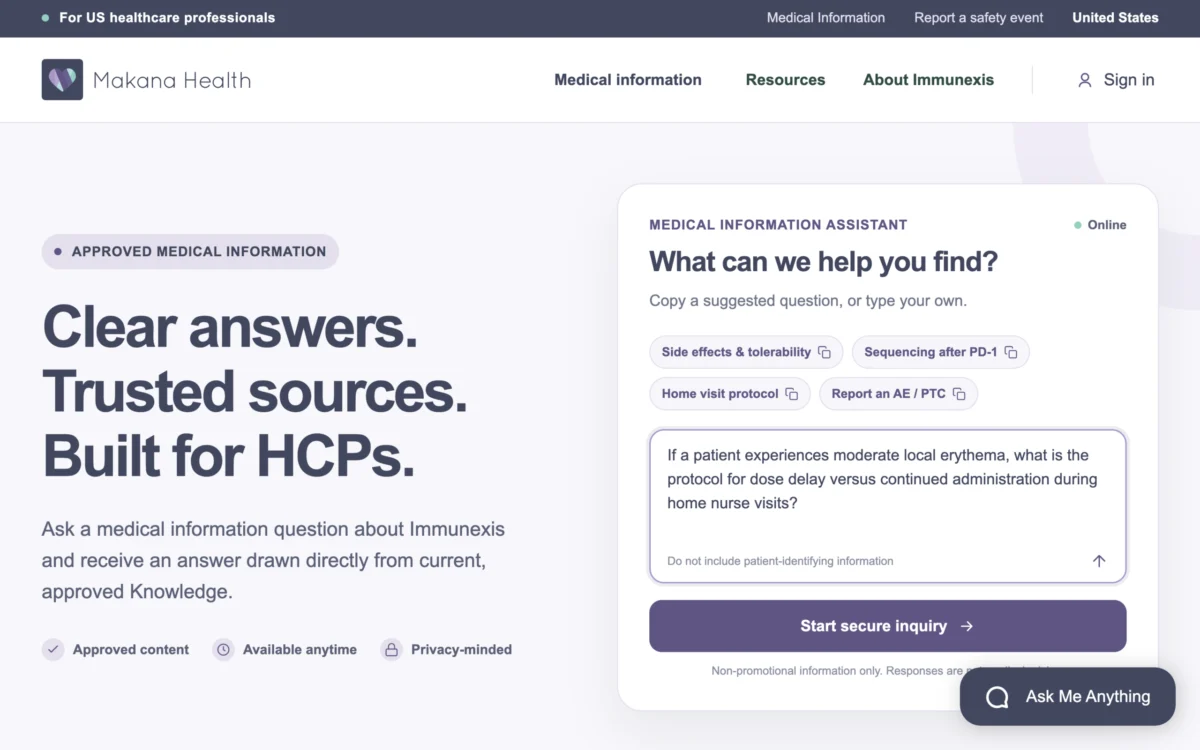
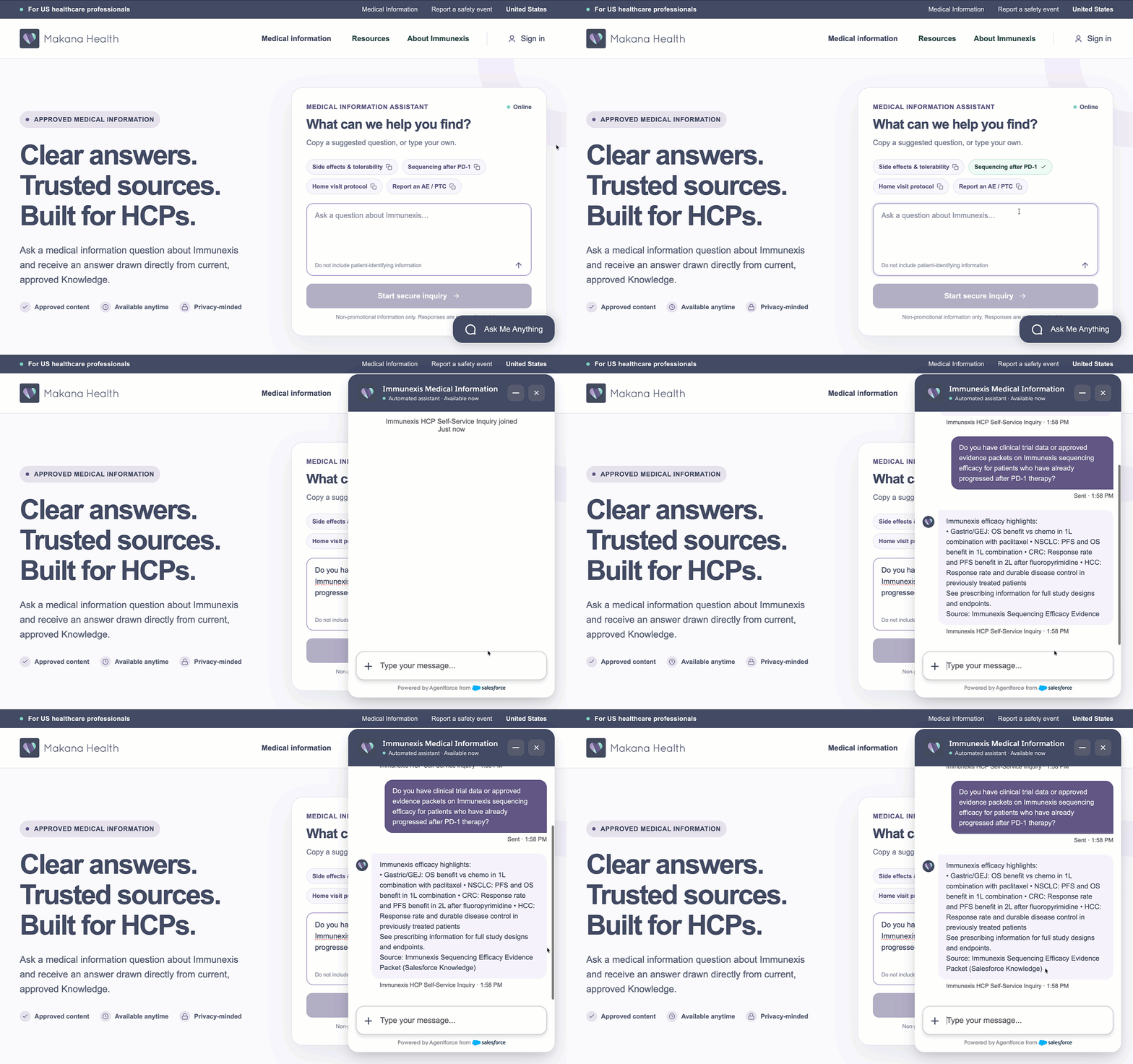
Speed is a critical metric for HCP engagement, but in the life sciences, it is secondary to safety and regulatory compliance. Any AI initiative must be designed to deliver answers that are universally accurate and approved. This is achieved through the use of deterministic controls—rigorous, rule-based systems that function predictably rather than relying on the probabilistic nature of generative models. By ensuring that an agent draws exclusively from a repository of approved medical content, organizations can eliminate the risk of off-label speculation.
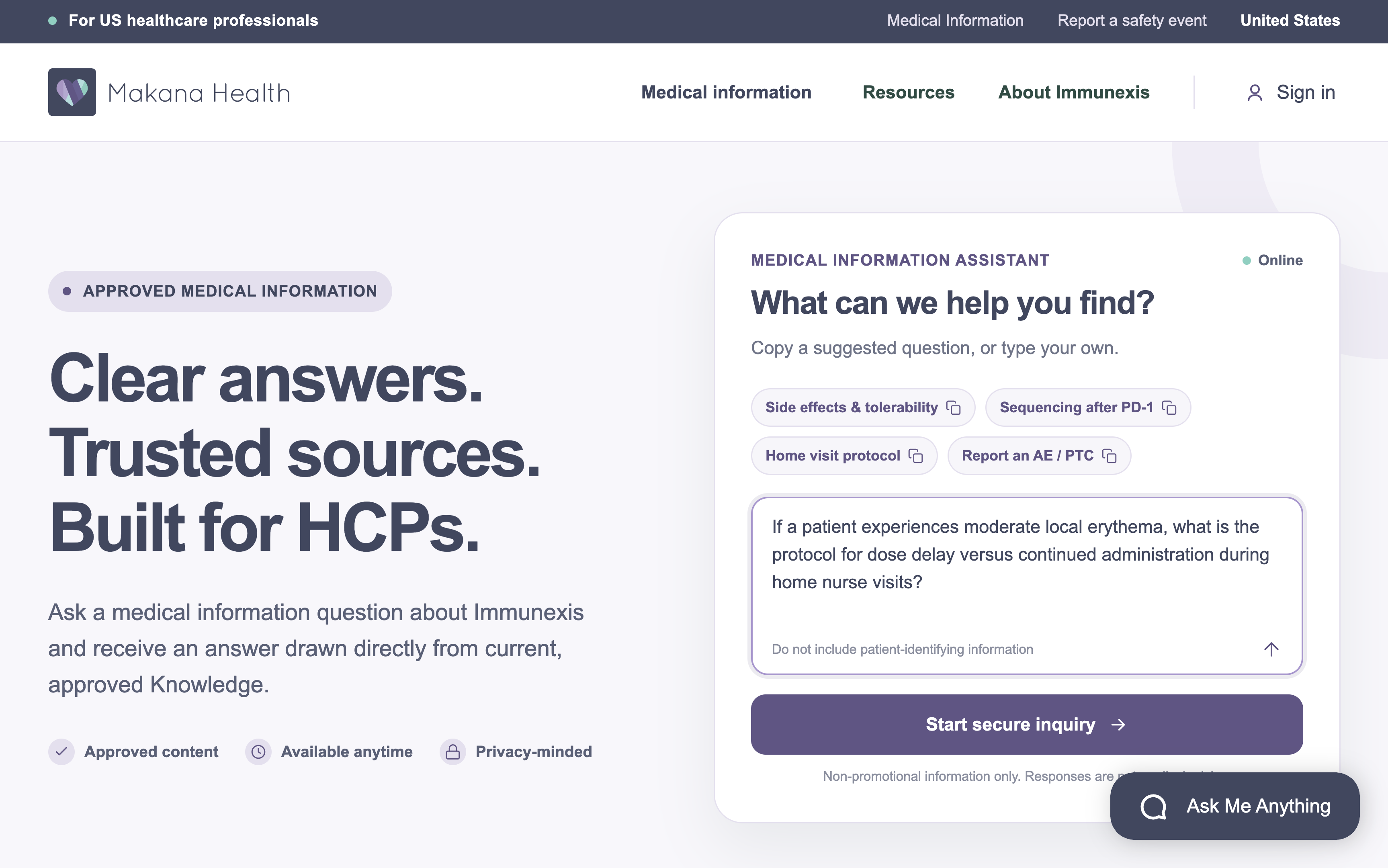
This approach also opens the door to effective self-service models. If an HCP has a query after hours or during a busy clinical day, a secure, rule-bound AI agent can provide an immediate, accurate answer, bypassing the need for a callback or a hold time. By building these guardrails directly into the agent’s architecture, companies can meet the expectations of modern providers while maintaining the stringent safety standards required by global regulators.
Capturing and Converting Insights at Scale
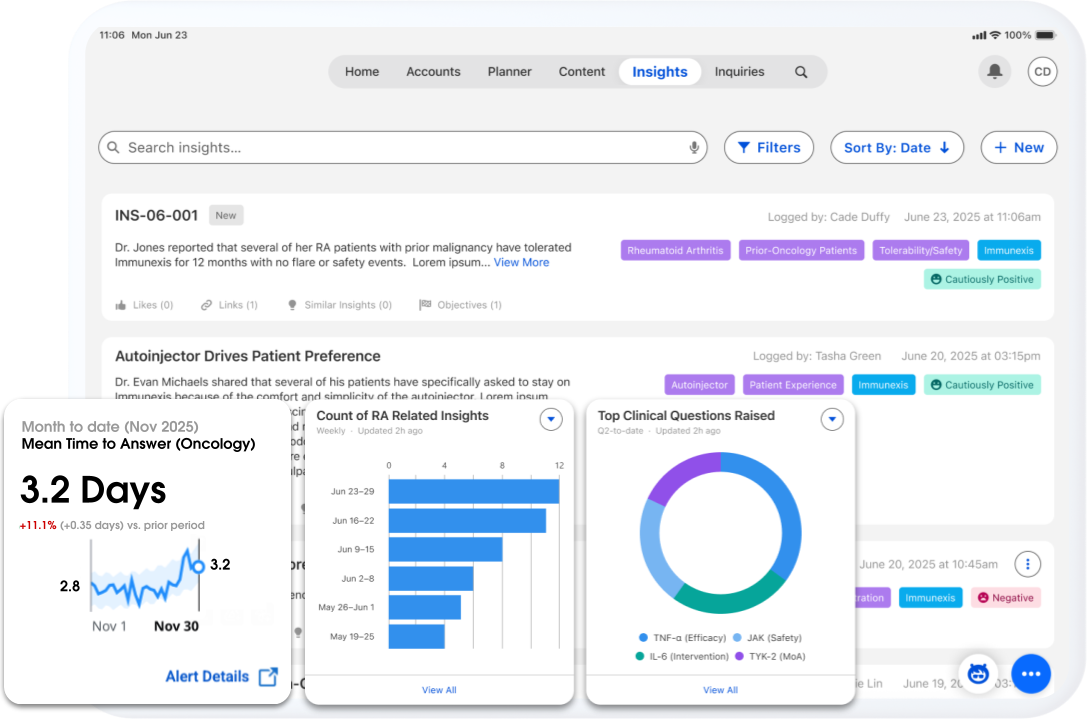
Perhaps the most significant long-term benefit of AI in medical affairs is its ability to extract value from the conversations themselves. Historically, the insights shared by KOLs—what they are seeing in practice, the challenges they encounter, and the questions they raise—often vanish into unstructured, free-text notes that remain siloed and unanalyzed for weeks.
Modern AI tools are transforming these interactions into structured data points. By automatically synthesizing themes and trends from field interactions, teams can transition from a reactive stance to an anticipatory one. When every interaction becomes a piece of actionable intelligence, leadership can identify which topics are trending in real-time, allowing for a more agile approach to evidence planning and content development.
Shared Visibility Across the Enterprise
Ultimately, the goal of an AI-enabled medical affairs strategy is to foster shared visibility across the entire organization. When all teams operate from a 360-degree view of the HCP, the quality of engagement improves across the board. A unified record that tracks past conversations, medical insights, and recent interactions ensures that each role—whether it be an MSL, a medical information specialist, or a strategic lead—has the context necessary to add value.
When medical information teams see the full history of an HCP’s inquiries, they can spend less time searching for background information and more time addressing complex clinical questions. Similarly, when field teams have access to the insights generated by those interactions, they can pivot their own strategies to address the specific needs and pain points identified by the providers they serve. As medical affairs continues to act as the front door for the patient care journey, this unified approach to data and AI promises not only to improve the efficiency of information delivery but to foster stronger relationships with the medical community, ultimately contributing to better patient outcomes. The future of the field lies in this integration: moving toward a model where technology and human expertise work in concert to navigate the increasing complexity of modern medicine.