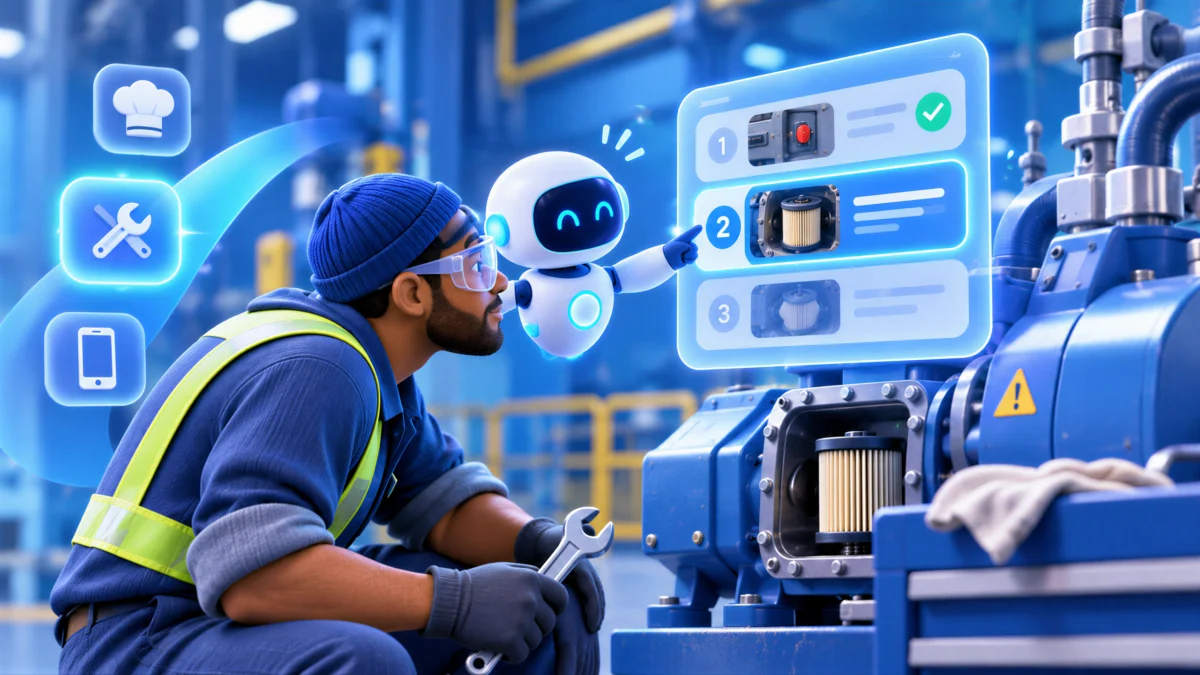
The landscape of artificial intelligence is undergoing a profound transformation. For years, the primary interface for AI has been the text-based chat box or the static image generator—tools that operate in isolation, removed from the physical realities of the workspace. Today, however, that paradigm is shifting. AI assistants are rapidly evolving into real-time, vision-enabled copilots designed to navigate the physical world. By processing live video streams to provide guidance to frontline teams, field technicians, and everyday users, these visual agents are moving beyond simple information retrieval to become active participants in multi-step workflows.
This transition marks a departure from reactive, prompt-induced AI systems toward a new era of proactive, ambient, and context-aware intelligence. Whether it is helping an employee configure a complex piece of laboratory equipment or guiding a manufacturing line worker through a precise, high-stakes operational routine, visual copilots are effectively bridging the critical gap between static instruction manuals and active, hands-on execution.
This industry-wide push to build assistants that can collaborate with humans in real time is gaining momentum across the board. Leading frontier research teams, including those at Thinking Machines, Meta, and ModelBest, are actively developing interaction models that prioritize this dynamic, visual engagement. In the enterprise sector, this progress is being channeled into specialized tools like Agentic Field Service, which provides mobile technicians with immediate, visual guidance to resolve complex maintenance issues, thereby reducing downtime and improving the speed of critical operations.
Yet, as enterprise leaders prepare to integrate these vision-language agents into mission-critical environments, a fundamental question remains at the forefront of their planning: Does an AI copilot’s real-time advice actually improve operational task completion, or does it risk introducing new layers of complexity and confusion?
The Limitations of Static Evaluation
The current challenge for the industry is that traditional benchmarking tools are woefully unequipped to answer this question. Most legacy evaluation frameworks rely on passive, pre-recorded video clips. In these environments, an AI assistant is graded on its ability to provide text outputs or logical deductions based on a static answer key. While this is useful for basic image recognition, it fails to capture the nuances of a live, human-AI interaction.
In static testing, cause and effect are completely decoupled. If an AI issues a critical warning in a pre-recorded video, the person on the screen proceeds to make the mistake regardless of the advice. Because these static benchmarks lack a closed feedback loop, organizations have no way to verify whether an assistant’s guidance actually mitigates real-world errors or, conversely, derails the execution of a task. The "blind spot" in these tests means that an AI might appear highly capable on paper, while proving dangerous or ineffective when placed in the hands of a worker in the field.
To bridge this gap, Salesforce AI Research has developed the Interactive Visual Gym (IVG), a sophisticated simulation framework specifically designed to evaluate and train visual AI assistants in dynamic, closed-loop environments.
Redefining Evaluation Through Dynamic Simulation
Interactive Visual Gym represents a shift in how we conceive of AI testing. By recreating complex, real-world physical workflows—ranging from intricate culinary preparation to the nuanced configuration of hardware systems—the framework pairs these tasks with an autonomous, simulated user.
Unlike the passive playback of legacy benchmarks, IVG operates on an active feedback loop. The AI assistant is tasked with analyzing the simulated user’s live video feed. It then provides spoken interventions or guidance. Crucially, the simulated user is programmed to alter its actions and decisions in direct response to that advice, which in turn updates the state of the digital twin in real time. This ensures that the assistant is not just observing, but actively participating in the outcome of the task.
This structural approach allows researchers to measure performance based on outcomes rather than just observations. It enables a rigorous analysis of how well an AI understands the state of a task, how timely its interventions are, and how effectively it can correct a user’s trajectory before an error occurs.
Identifying the Performance Ceiling
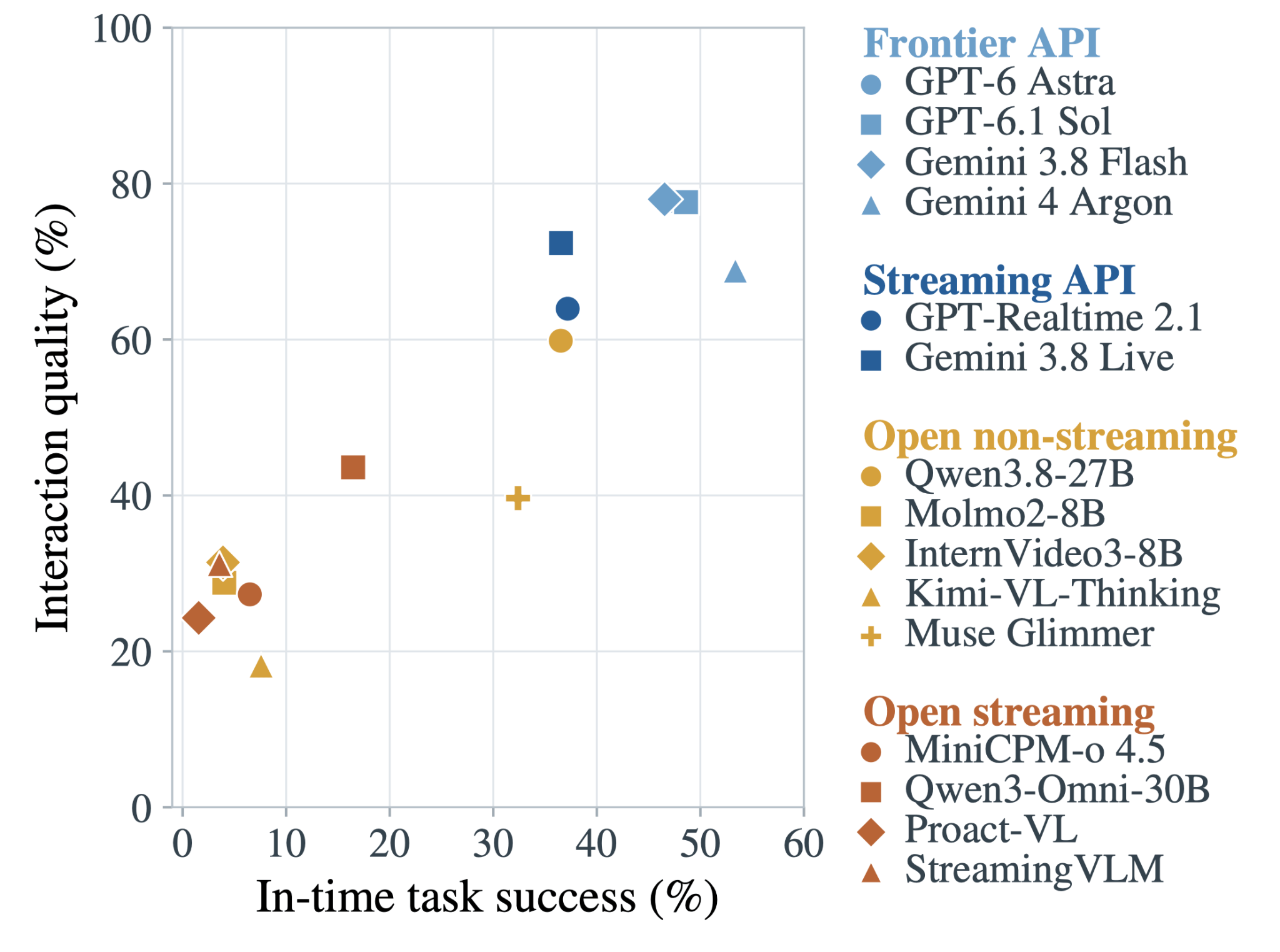
To establish a rigorous enterprise-grade benchmark, the researchers created IVG-Bench, putting 14 leading visual AI assistants through their paces across 315 complex scenarios within three distinct operational environments. The results revealed a significant gap between the current state of technology and the requirements for reliable, real-world deployment.
Even the strongest models, such as the Gemini 4 Argon, achieved only a 53.4% task success rate within the designated time limits. Across the board, the models exhibited persistent weaknesses in factual grounding and the ability to provide actionable, timely guidance. Furthermore, many models proved too slow to effectively prevent errors when the latency of the response was factored into the equation.
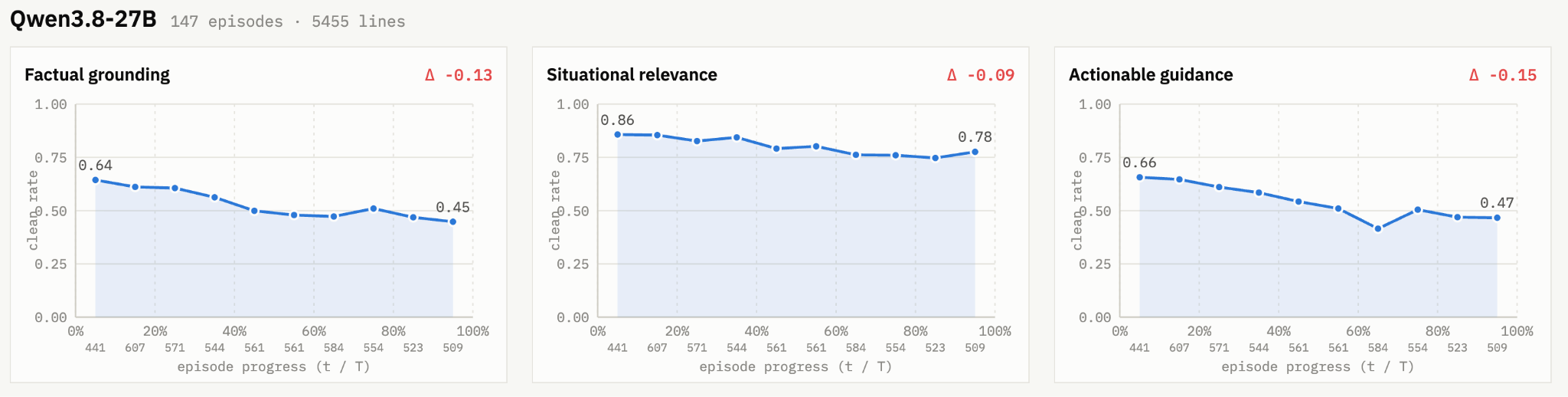
The study also highlighted a performance gap between proprietary frontier models and open-weight models, the latter of which generally trailed the leaders. Perhaps most revealing was the discovery that higher task success rates do not necessarily equate to higher quality interactions. For many open-weight models, the quality of guidance tended to deteriorate as the task progressed. Later responses often became less accurate and less relevant to the ongoing activity, a degradation that is notoriously difficult to capture through isolated, static questions about a video.
The Human Reality Check
A primary concern for any AI research is whether simulated results correlate with actual human experience. To validate the findings of IVG-Bench, the research team invited human participants to step into the simulator to complete cooking tasks with the help of these AI assistants.
The participants were then asked to rate their interactions based on their real-world experience. When the team compared these human satisfaction scores to the automated scores generated by the IVG framework, they found that the two aligned nearly 80% of the time. This high degree of correlation serves as a powerful confirmation that the benchmark is not merely an academic exercise, but a reliable predictor of human satisfaction and utility in a real-world setting.
Leveraging Simulation to Accelerate Performance
The value of the Interactive Visual Gym extends beyond the ability to measure performance; it provides a pathway to actively improve it. The researchers conducted an early proof-of-concept study using the simulator to train an open-source model, the Gwen 3.5-4B. By incentivizing the model to prioritize task completion and the proactive prevention of errors during the simulation, the results were immediate and measurable.
The success rate of the model on entirely new, unseen tasks jumped from 33.3% to 42.2%. Beyond the quantitative improvements, the qualitative change was even more striking: the assistant became noticeably more proficient at delivering the right advice at the precise moment it was needed, often intervening to correct the simulated user before a mistake occurred.
This research underscores a critical reality for the future of enterprise AI: the path toward truly reliable visual copilots lies in the development of environments that can replicate the chaotic, interactive, and feedback-driven nature of the real world. By moving from static benchmarks to dynamic, simulation-based training, the industry is moving closer to a future where AI does not just watch over the shoulder of the worker, but acts as a capable, proactive partner in the physical world. For those interested in the details of the research or looking to explore the interactive demonstrations, the project provides a comprehensive look at the future of AI-driven operational assistance.