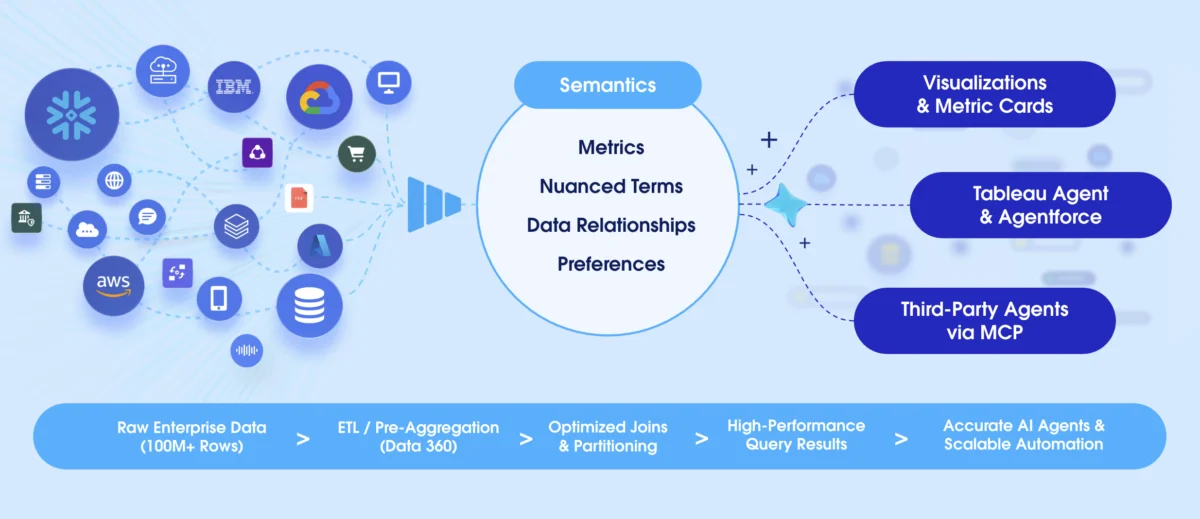
As enterprise data architectures expand in both scale and complexity, the chasm between raw data stores and the business users who need to act on that information has become a critical bottleneck for modern organizations. Businesses are drowning in data, yet they often struggle to extract consistent, actionable insights. To address this, Tableau has introduced Tableau Semantics, a new capability within Tableau Next that serves as a bridge, natively built on Data 360 to translate raw database schemas into a shared business language. By defining metrics, data relationships, and business preferences in a governed, unified layer, Tableau is aiming to ensure that every person, AI agent, and third-party application interprets the organization’s data in exactly the same way.
The necessity of this evolution stems from a simple reality: every organization relies on a shared understanding of its core metrics. Whether it is defining revenue, identifying a "strategic account," or quantifying risk, inconsistency in these definitions can cripple decision-making. A governed semantic layer solves this by acting as a single source of truth. When data definitions and business context are consistent, that consistency flows through everything—from self-service dashboards and ad-hoc reports to the increasingly vital realm of AI-powered insights. Whether an employee is asking a question in Slack or an autonomous agent is operating through Salesforce’s Agentforce or any third-party framework via the Model Context Protocol (MCP), the semantic layer ensures they are all speaking the same language.

This shift marks a significant departure from legacy business intelligence (BI) architectures. Traditionally, BI tools have often "locked" calculations inside individual reports, leading to a phenomenon known as "logic drift," where the same metric—such as "churn rate"—might be calculated differently in two different departments. Tableau Semantics fundamentally changes this by decoupling business logic from presentation. By defining a metric once within the semantic layer, it becomes securely consumable across the entire enterprise. This eliminates duplication, reduces the risk of conflicting reports, and provides a stable foundation for autonomous agents to perform their work without needing to understand the underlying, messy database structure.
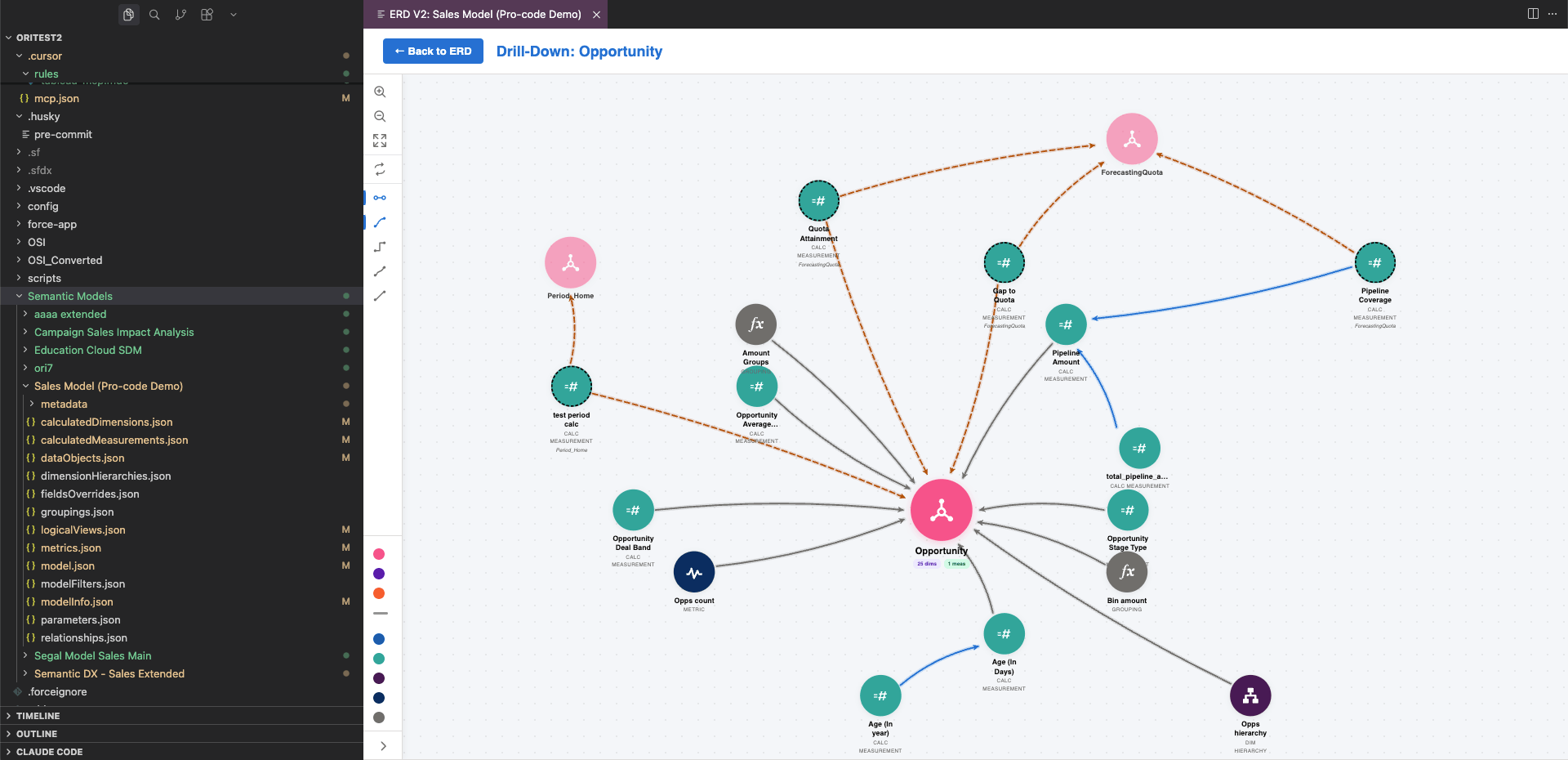
At the heart of this innovation are semantic models, which function as the central nervous system for organizational data. However, building these models is an architectural undertaking that goes far beyond simply connecting tables. The design of these models is paramount to achieving the necessary performance, governance, and scale required by modern enterprises. For many organizations, the prospect of building these models from the ground up can be daunting. To mitigate this, Tableau provides a significant head start through the Salesforce Customer 360 Semantic Model. For users within the Salesforce ecosystem, Data 360 includes this pre-built, out-of-the-box model, which is already configured around standard business entities like Accounts, Contacts, and Opportunities. Because it arrives pre-loaded with standard business preferences and metrics, it is essentially AI-ready from day one, while remaining flexible enough for organizations to customize it to their specific needs.
For data stewards, architects, and analysts, the transition to this new way of working requires a shift in mindset. Experts suggest that the most effective way to approach semantic modeling is to adopt a business-driven philosophy. Instead of mirroring the structure of a backend database—which is often designed for storage efficiency rather than human or AI consumption—models should reflect the actual operations of the business. Modeling strictly around raw schemas often leads to overly complex relationships that confuse users and force the system to run inefficient, sluggish queries. By focusing on how the business operates, teams can create models that are intuitive and performant.
This process should always begin with conceptual modeling. While the urge to immediately jump into configuring joins or running initial queries can be strong, the time invested in planning the structure of the model upfront pays significant dividends. Refactoring a complex, live model that is already in production is exponentially more time-consuming than adjusting a conceptual plan during the design phase. By mapping out how data objects relate to one another before any technical implementation takes place, architects can avoid the pitfalls of circular dependencies or poorly defined relationships that only become apparent once the data starts flowing.
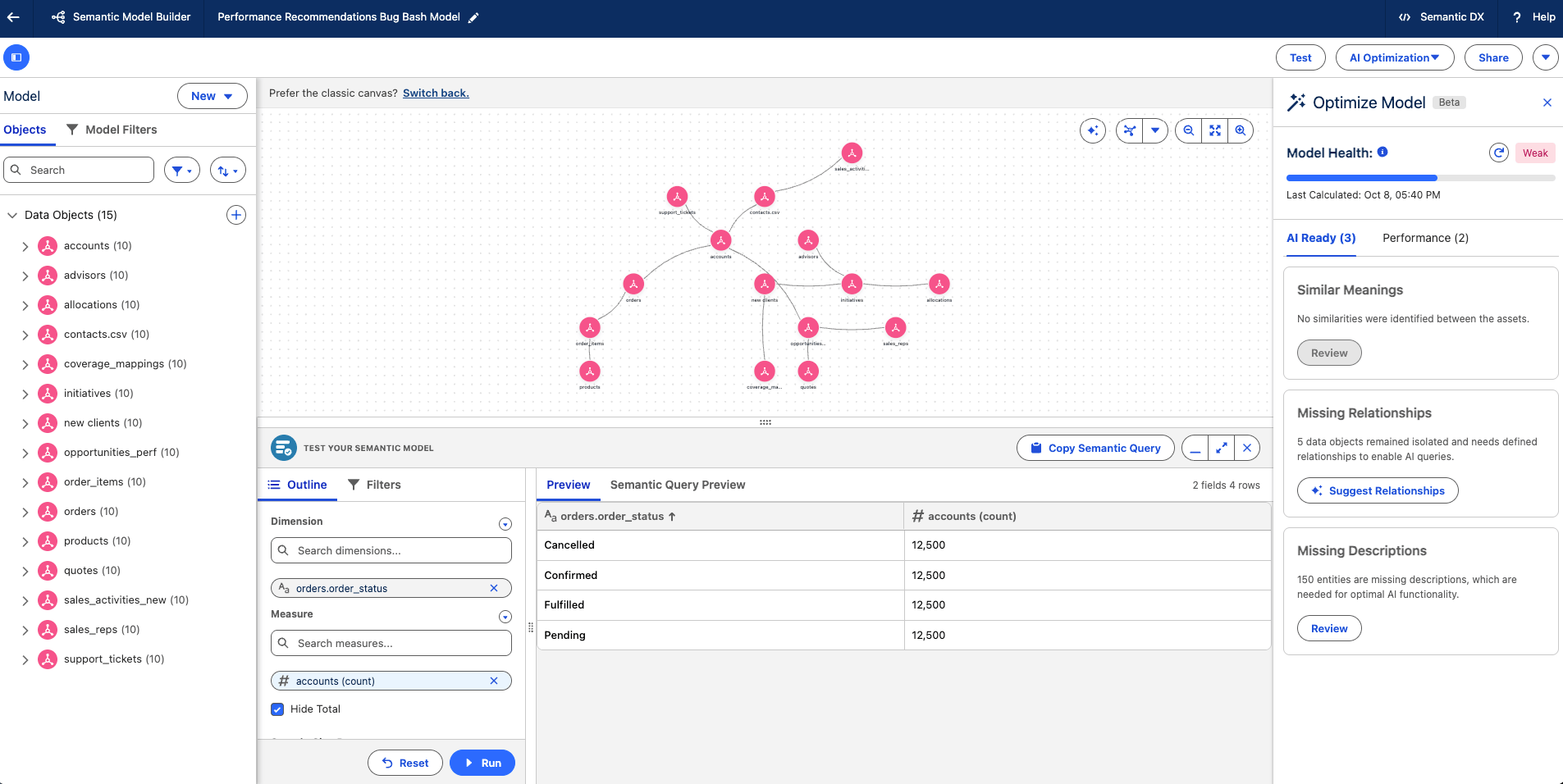
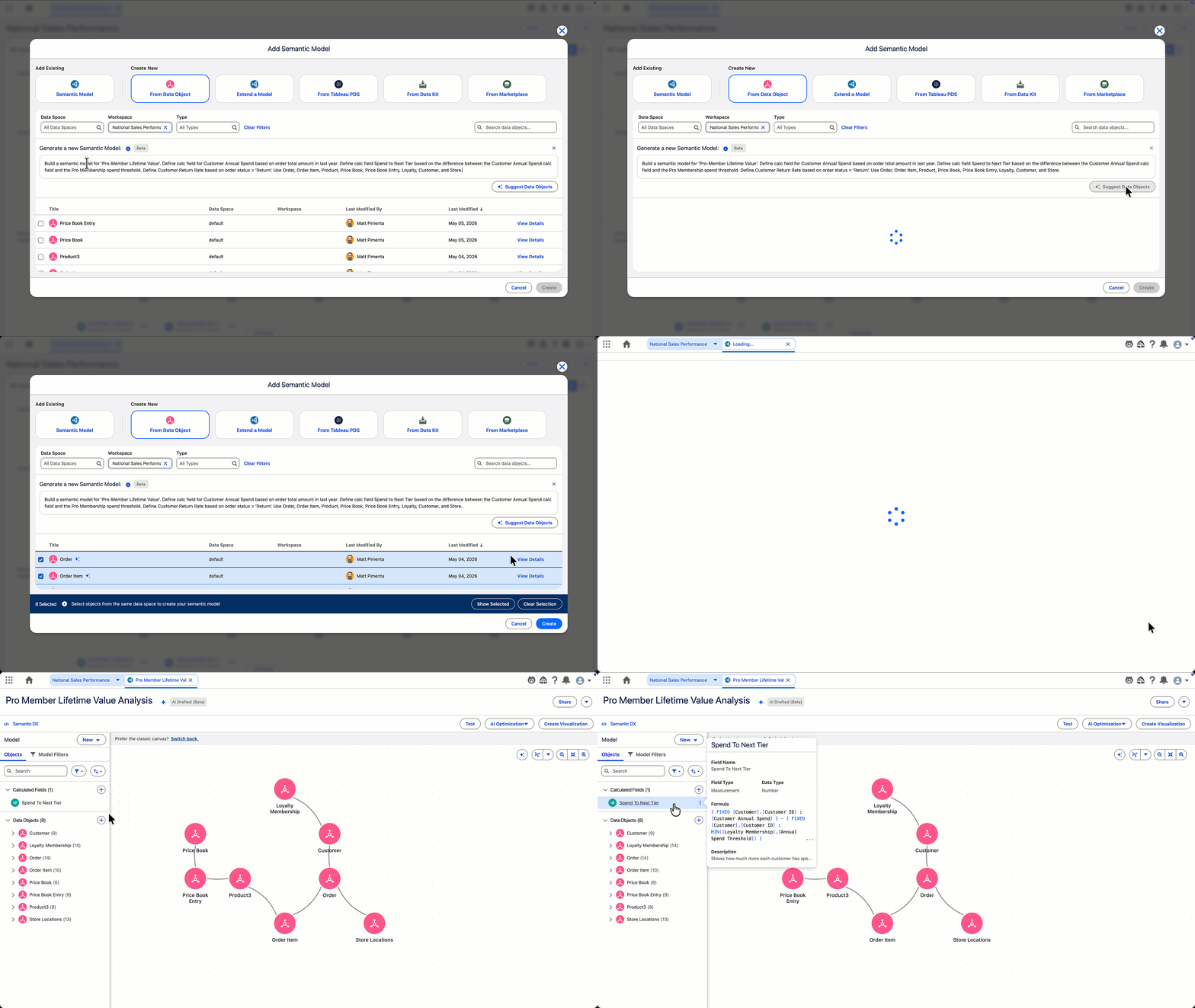
Tableau Semantics is designed to be flexible, offering three distinct paths for building models to accommodate different technical environments and user comfort levels. This modularity allows teams to choose the approach that best fits their existing architecture, whether they prefer a more hands-on technical build, a visual interface, or AI-assisted modeling through tools like the Tableau Agent. In the latter case, the agent can parse natural language prompts to suggest which data objects to use and automatically configure the necessary relationships, significantly lowering the barrier to entry for building complex models.
Once a model is built, the focus must shift to iterative implementation and testing. Validating logic early and often is the only way to ensure that subtle calculation errors or issues like join fan-outs do not slip into end-user results. Testing the model against a preview of data allows developers to catch discrepancies before they impact the business. This iterative approach is particularly important when designing for performance. In an enterprise environment, where datasets often exceed 100 million rows, performance is not merely a feature—it is a necessity. Query latency directly impacts whether business users will actually adopt the tool, and it determines the responsiveness of AI agents. A well-designed semantic model optimizes how data is retrieved, ensuring that complex queries return results in seconds rather than minutes.
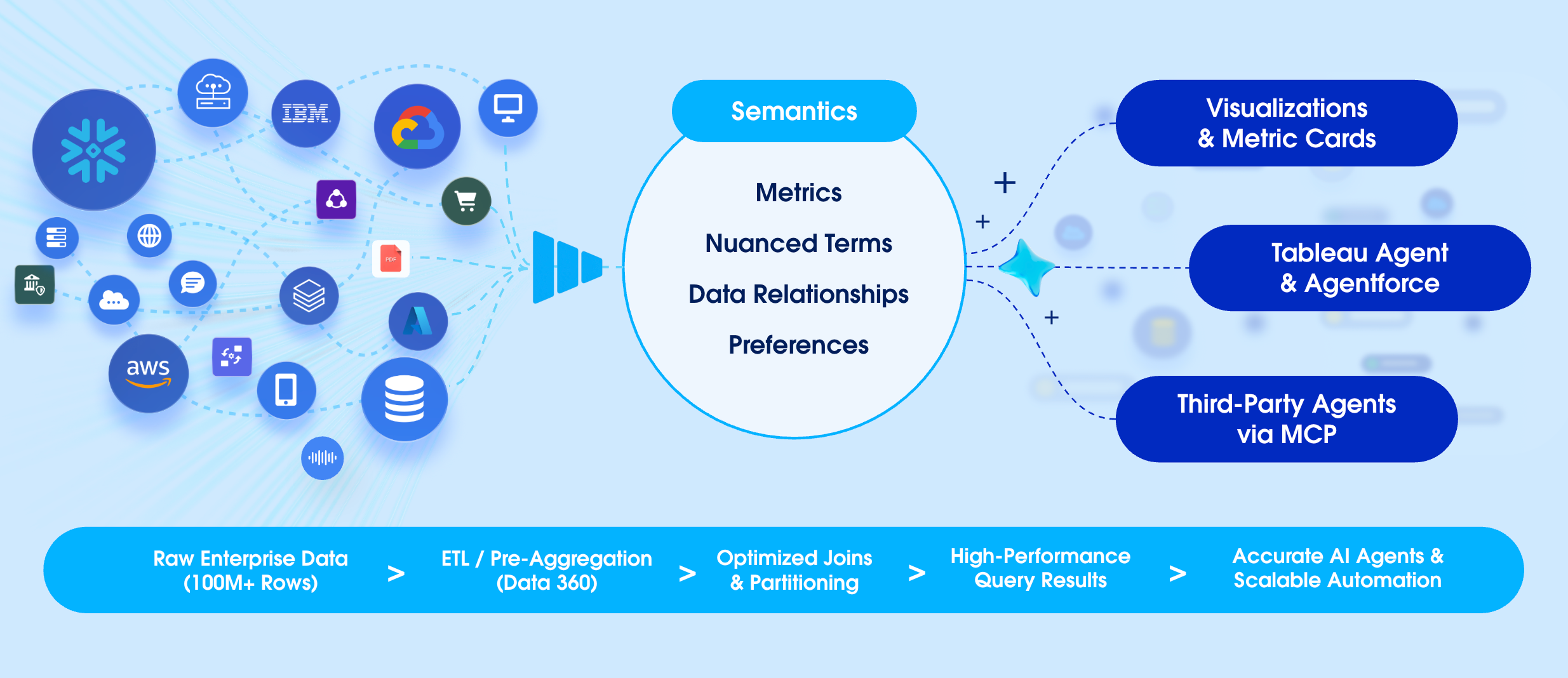
Governance and security are the final, non-negotiable pillars of this architecture. A semantic model that makes data easy to access is only valuable if that access is secure. By centralizing security and governance within the semantic layer, organizations can ensure that sensitive information is protected at the source, regardless of how the data is being consumed. This centralization also helps in scaling the model. Building for scale means aligning individual models with broader enterprise standards rather than allowing them to exist as isolated data silos. By standardizing definitions across the organization, companies can ensure that their data infrastructure grows in lockstep with their business needs.
Finally, architects must remember that the environment in which a model is developed is rarely identical to the environment in which it will live. A model that performs flawlessly in a sandbox environment with a limited dataset may behave very differently when exposed to the high-concurrency, high-volume demands of a production system. Stress testing under production-level loads is a critical final step. This ensures that the architecture is not just logically sound, but physically capable of supporting the business’s data demands.
As organizations continue to integrate AI into their decision-making processes, the role of the semantic layer will only grow in importance. By providing a common, governed, and high-performance language for data, Tableau is positioning itself to help enterprises move away from fragmented, siloed reporting and toward a future where data is a unified, accessible, and intelligent asset. Whether through the use of built-in models or custom-engineered structures, the move toward a semantic-first architecture represents a significant step forward in the maturation of enterprise data strategy. Those looking to deepen their expertise in this area can access resources such as the dedicated Tableau Semantics module on Trailhead, which provides further context for teams looking to implement these best practices. Through these efforts, the goal remains clear: to ensure that when business leaders or AI agents ask a question of their data, they receive an answer that is consistent, accurate, and immediate.