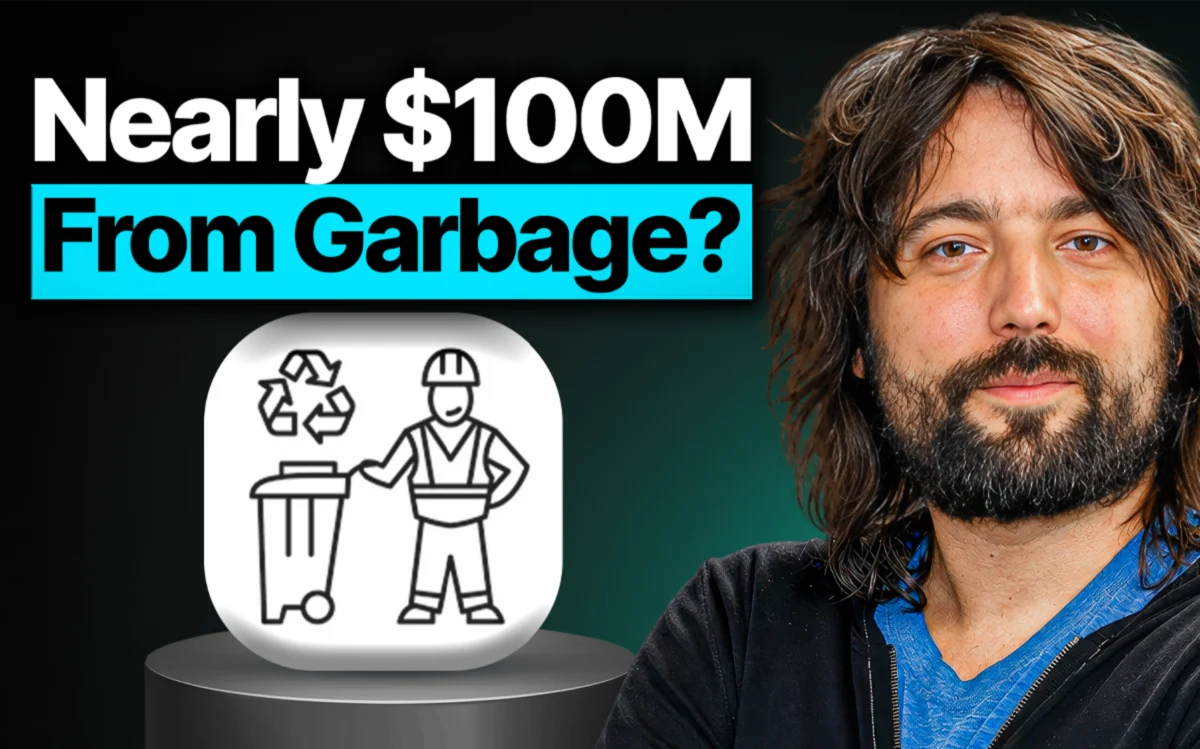
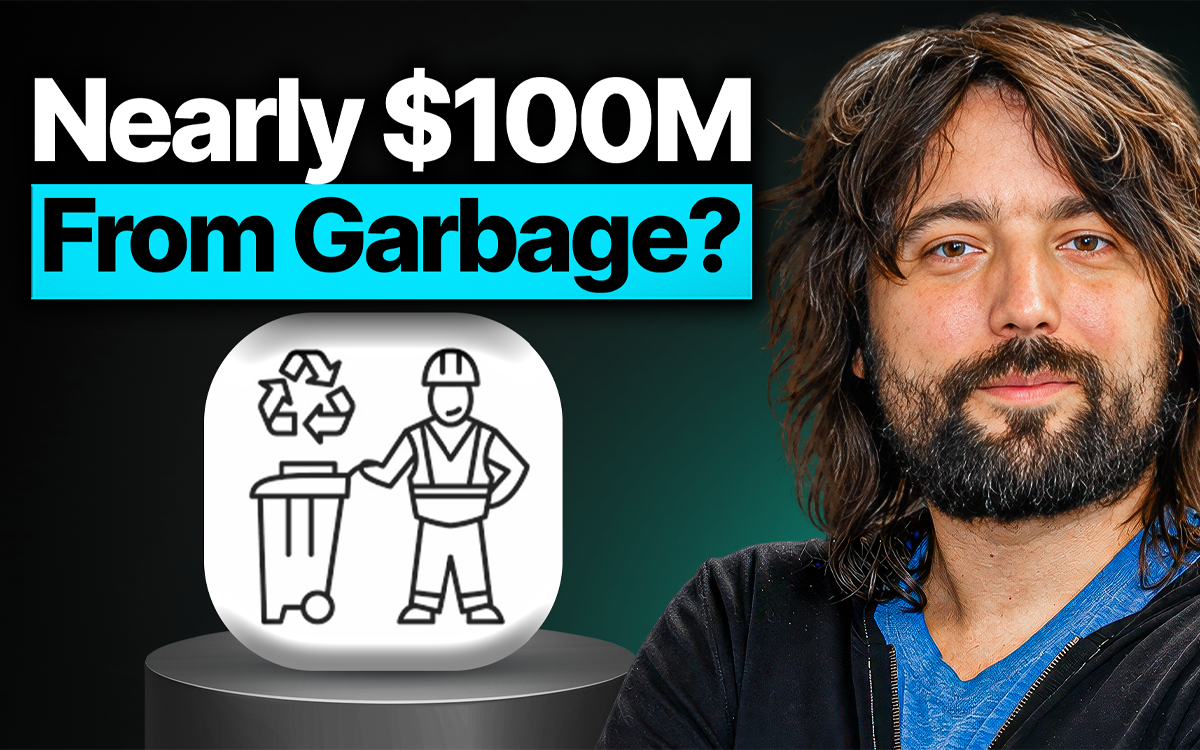
In a recent episode of the Niche Pursuits podcast, entrepreneur Tom Szaky sat down to discuss the remarkable trajectory of TerraCycle, detailing how he scaled a modest college dorm room concept into a global powerhouse with nearly 500 employees and annual revenues nearing $100 million. The conversation delves deep into the art of building enterprises around overlooked economic problems, proving that massive market opportunities often hide in places where traditional competitors refuse to look.
Throughout the discussion, Szaky reveals how TerraCycle successfully accumulated roughly 250,000 media mentions worldwide, turning earned media into a primary engine for growth, and explains the strategic impetus behind launching Loop, an innovative adjacent venture. His journey offers valuable insights for founders and business leaders aiming to scale sustainable enterprises with long-term viability.
See Opportunity Where Other People See Problems
TerraCycle’s origins date back nearly 25 years to Szaky’s freshman year at Princeton University. Even before arriving at college, Szaky demonstrated an early aptitude for commerce, having launched a website business at the age of 14 that generated five-figure revenues and employed at least one person. Once at university, his ambition shifted toward establishing commercial ventures capable of delivering financial returns while simultaneously addressing significant systemic problems. That line of inquiry ultimately directed his focus toward the vast and universal issue of waste.
A fundamental observation catalyzed the entire enterprise: garbage remains one of the exceedingly rare materials that ordinary people are actually willing to pay someone else to haul away. This dynamic sparked a straightforward yet profound question. If waste possesses intrinsic value to the entities collecting it, could an enterprising individual construct a profitable business model around materials that society routinely discards and ignores?
An informal conversation with peers who were experimenting with vermicomposting—worm composting—provided the spark for TerraCycle’s original prototype. Szaky began collecting organic waste, feeding it to specialized worms, and packaging the resulting worm castings into reused soda bottles to sell as a natural fertilizer.
Although modest in scale, this initial endeavor illuminated a much larger commercial landscape. It demonstrated that unconventional inputs could be transformed into marketable goods if the underlying collection mechanics were properly aligned.
Build a Business Around an Economic Problem
Many aspiring entrepreneurs operate under the assumption that industries resistant to change simply lack advanced technology. However, Szaky’s experience with TerraCycle pointed toward a different reality. As the company expanded its operations beyond organic fertilizers, his team examined why certain consumer goods could be readily recycled while the vast majority could not. The answer proved to be remarkably straightforward, rooting itself not in technical limitations, but in raw economics.
Traditional recycling infrastructure relies entirely on materials that generate a higher market value once recovered than the total cost required to collect and process them. This fundamental economic equation explains why commodities like aluminum cans, corrugated cardboard, and specific grades of plastic are universally recycled, whereas items such as coffee pods, discarded cigarette butts, toothbrushes, and complex cosmetic packaging typically are not.
According to Szaky, approximately 95 percent of all consumer goods lack the economic viability required for processing within traditional municipal recycling systems. This critical insight formed the bedrock of TerraCycle’s operational model. Rather than attempting to solve the technical riddle of how to recycle difficult materials without regard for cost, TerraCycle investigated who might derive enough strategic value from the recycling process to subsidize it. Potential funding partners included consumer goods manufacturers, corporate sponsors, and municipal entities seeking verifiable sustainability solutions.
Rather than depending on the intrinsic commodity value of the recycled material to generate a profit margin, TerraCycle charges interested stakeholders for the collection and processing services required to resolve a specific waste stream. This structural pivot enabled the company to pioneer entirely new recycling categories. Today, TerraCycle operates as a global authority in managing hard-to-recycle products, bridging a critical gap in the modern consumer economy.
Create Demand Instead of Waiting for It
A central theme of the podcast discussion focused on the necessity of engineering markets that do not yet exist, rather than merely chasing established consumer desires. While many business founders search for existing demand to capture, Szaky deliberately sought out acute market needs that lacked a functional commercial framework.
Identifying an unmet need was only the initial step; the true challenge lay in giving established corporations a compelling, pragmatic reason to participate. Informing a major manufacturer that its product packaging routinely ends up in municipal landfills may capture temporary attention, but demonstrating that a targeted recycling initiative can directly drive customer acquisition, improve brand retention, enhance public reputation, or increase retail store traffic transforms the dynamic entirely.
Szaky explained that corporate decision-makers are primarily motivated by measurable business outcomes. Environmental benefits may serve to open the corporate door, but commercial value is what ultimately closes the agreement. This distinction has established itself as one of TerraCycle’s most potent competitive advantages, proving that sustainable initiatives thrive when aligned directly with corporate self-interest.
Marketing at TerraCycle has similarly broken conventional molds. While typical consumer brands allocate massive budgets to traditional advertising campaigns, Szaky prioritized designing a business model inherently compelling enough to inspire organic storytelling across external media channels. The approach has yielded extraordinary dividends.
TerraCycle routinely attracts dozens of media features daily, accumulating approximately 250,000 media placements globally, with roughly 150,000 originating within the United States. By rejecting heavy paid advertising in favor of what Szaky describes as negative cost marketing, the company positions its operations as inherently newsworthy, prompting journalists, television networks, and event organizers to cover the enterprise voluntarily.
This strategy relies heavily on understanding the modern media landscape. With journalists operating under intense pressure to produce continuous content with constrained resources, companies that actively simplify the reporting process naturally secure broader coverage. By providing timely data, accessible experts, and compelling visual narratives, TerraCycle secured its status as an industry leader in earned media.
Expand Your Business Without Losing Focus
Years of cultivating deep commercial relationships with the world’s largest retail brands and consumer goods manufacturers eventually positioned TerraCycle to explore broader horizons. Rather than simply figuring out ways to recycle additional materials, Szaky and his leadership team confronted a more fundamental question: whether recycling alone could adequately resolve waste issues at the source.
This inquiry led directly to the conceptualization and launch of Loop, an initiative designed to champion reuse over recycling. Rather than spinning up an entirely disconnected startup, the team built Loop as a direct extension of TerraCycle’s established institutional strengths and existing B2B relationships.
The operational premise of Loop is straightforward. Consumers purchase everyday goods housed in durable, reusable packaging, paying a modest, refundable deposit upon purchase. Once the product is consumed, the empty packaging is returned through designated channels, the deposit is refunded to the consumer, and TerraCycle manages the specialized cleaning and sanitization required to return the containers to manufacturers for subsequent use.
Today, over 200 global consumer brands participate in the platform, offering hundreds of reusable products to shoppers in select international markets. Szaky noted that this ambitious expansion succeeded precisely because it leveraged foundational assets that TerraCycle had spent more than a decade meticulously developing, thereby dramatically shortening the developmental runway.
Expand Into Adjacent Markets at the Right Time
Deciding when to pivot into adjacent market sectors remains one of the most formidable challenges facing growing enterprises. According to Szaky, timing is equally as critical as the underlying merit of the expansion concept itself.
By the time Loop made its commercial debut, TerraCycle had spent well over a decade collaborating closely with multinational manufacturers and major retailers. Those established partnerships served as an invaluable competitive asset, as prospective partners already possessed a high degree of operational trust in the organization. Furthermore, Loop did not cannibalize TerraCycle’s core business; instead, it expanded the company’s footprint across the exact same supply chain.
Szaky likened this strategic progression to the historical pivot executed by media streaming giants that successfully disrupted their own legacy models before market competitors forced their hand. For business owners evaluating potential expansions, building upon established trust and aligning with existing supply chain partners can mitigate the risks inherent in entering adjacent markets.
Measure Marketing Beyond Traffic
Evaluating the return on investment for earned media campaigns has long challenged traditional marketers, and Szaky acknowledged the inherent difficulties of quantifying public relations efforts. However, TerraCycle evaluates its marketing efficacy by looking far beyond raw web traffic metrics or simple article counts, focusing instead on whether media visibility translates into substantive commercial performance.
The organization closely monitors how sustained media coverage influences corporate partnerships, stakeholder engagement, and long-term brand equity. This visibility is clearly demonstrated when consumers search for specific waste-management terms, where TerraCycle routinely captures top search positions and prominent digital summaries without expending capital on paid search advertising. For modern enterprises, building institutional authority through organic public relations often generates enduring dividends that traditional paid campaigns struggle to replicate.
Raise Capital Only When It Creates Opportunity
Reflecting on TerraCycle’s financial history, Szaky discussed the complex tradeoffs associated with outside capital. Looking back, he noted a preference for having raised less capital during the fragile earliest years of the enterprise, when low corporate valuations demanded giving up disproportionately large ownership stakes.
As the company matured and achieved sustained profitability—maintaining profitable operations for more than a decade—subsequent capital-raising efforts shifted away from covering operating losses and toward funding strategic growth initiatives, targeted acquisitions, and product development. Recent corporate moves, such as the integration of regional recycling operations into TerraCycle’s broader service network, demonstrate how strategic capital can be deployed to enhance overall service offerings without diluting the core business model.
Focus on Incentives Instead of Intentions
In concluding his reflections, Szaky emphasized that entrepreneurs should focus less on the stated ethical intentions of organizations and more on the structural incentives driving their decisions. Consumer brands fundamentally operate to acquire customers, retain market share, and optimize operational costs. By framing sustainability initiatives around these core corporate motivations, TerraCycle successfully secured enduring partnerships with the world’s largest commercial enterprises.
Ultimately, Szaky’s journey with TerraCycle underscores a timeless entrepreneurial lesson: enduring enterprises are rarely built merely by entering crowded, conventional markets. Instead, extraordinary commercial opportunities frequently emerge from engaging directly with complex problems that the broader market has long since accepted as intractable.