The e-commerce landscape is undergoing a rapid technological evolution, driven by advancements in artificial intelligence, shifting consumer discovery habits, and tighter integrations between merchants and logistics providers. This week’s roundup of new services and platform updates highlights a wave of innovation tailored for merchants, covering everything from generative website builders and agentic commerce to same-day delivery pilots and advanced supply chain security frameworks.
As digital storefronts look for competitive edges in an increasingly crowded marketplace, technology providers are rolling out automated tools designed to streamline operations, optimize product data for AI visibility, and simplify complex multi-channel management. Whether brands are scaling their creator partnerships, testing innovative returns programs, or adopting sophisticated multi-channel inventory solutions, the common thread across this week’s announcements is the integration of intelligent automation directly into everyday workflows.
New Tools for Merchants
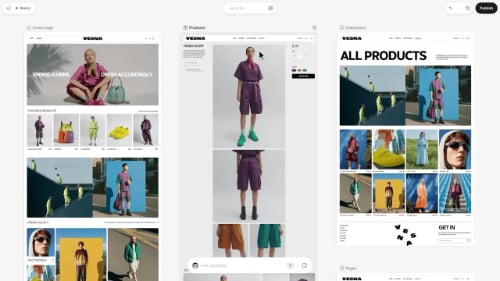
Platform design and store building are seeing significant paradigm shifts, led this week by Shopify. The company has officially introduced Canvas, an innovative design surface where merchants can build and iterate on their digital storefronts using Sidekick, Shopify’s proprietary AI agent. Canvas fundamentally changes how store layouts are conceptualized, allowing merchants to view high-level page layouts and understand their store’s overall aesthetic and user experience before zooming in to refine granular details.
Within this interface, merchants have the flexibility to click directly on individual elements to make immediate changes or collaborate dynamically with Sidekick through an integrated chat interface. As the AI agent assists in building the store, it actively validates and reviews screenshots generated on Canvas to ensure design integrity. This blend of visual control and agentic AI assistance aims to lower the technical barriers of custom store design.

Logistics and fulfillment continue to merge closer with major marketplace ecosystems. ShipStation, a widely utilized shipping and logistics platform catering to small and mid-sized businesses, has launched "Ship with Walmart" for U.S. domestic shipments. This direct integration gives Walmart Marketplace sellers unprecedented access to heavily negotiated shipping rates directly within the familiar ShipStation platform. Sellers can now purchase shipping labels, leverage specialized seller protections, and oversee Marketplace orders without ever leaving their centralized shipping workflow.
The Rise of Agentic Commerce and AI-Powered Marketing
Artificial intelligence is quickly graduating from basic chat assistants to full-fledged agentic commerce platforms capable of driving discovery, answering complex inquiries, and executing transactions autonomously. TikTok is leading this charge by unveiling a suite of agentic commerce shopping experiences designed to support both product discovery and seamless in-app transactions.
The initiative launches with two primary features: Buy Direct and Shopping Assistant. Buy Direct provides an in-app checkout mechanism that enables visitors to purchase products instantaneously and directly from a brand’s presence on the platform. Meanwhile, Shopping Assistant functions as a conversational AI agent that offers real-time guidance to prospective buyers, handling inquiries related to product details, shipping times, sizing charts, inventory availability, and final purchases. Additionally, TikTok is rolling out a specialized AI Agent dedicated entirely to lead generation for advertisers.
On the advertising front, Amazon has introduced Ads Agent, an ambitious agentic AI platform designed to unify various campaign types. Ads Agent brings together sponsored ads, full-funnel marketing campaigns, and specialized display, video, and audio advertising formats into a single, highly connected platform. The system is engineered to help advertisers find strategic answers, support critical decision-making processes, and take direct action. Advertisers retain the flexibility to utilize traditional manual campaign-building tools, delegate optimization entirely to Amazon’s advanced AI, or employ a hybrid approach combining both methods.
To help brands understand how these AI systems perceive them, technology solutions are emerging to audit AI visibility. Contentstack has launched Canoe, an AI visibility tool designed to show brands precisely how generative AI search engines describe them and their competitors. Contentstack Canoe scans a brand’s URL to accurately identify the underlying business, its core products, target buyer personas, and up to 10 key competitors. Brand users can review and edit this baseline information before Canoe simulates likely questions from prospective buyers. Furthermore, the tool tags each generated question by its specific shopping stage, ranging from early brand awareness through deep consideration and final purchase decisions.
Similarly, Swap, a comprehensive discovery-to-delivery e-commerce platform, has announced its acquisition of Vizby, a Shopify-native AI visibility tool. This strategic acquisition expands Swap’s operational capabilities into the realm of AI-powered discovery, seamlessly building upon its existing agentic Storefront and Checkout+ architecture.
Fulfillment, Delivery, and Logistics Innovations
Logistics providers are similarly leaning into speed and convenience to solve long-standing friction points in the retail journey. In a notable operational development, the U.S. Postal Service (USPS) and Amazon have partnered to launch a same-day delivery pilot program. Under this operational framework, Amazon packages arriving at participating USPS facilities between 12 p.m. and 1 p.m. local time are rapidly sorted and handed off to mail carriers for final-mile delivery between 2 p.m. and 8 p.m. the very same day. To ensure the pilot remains manageable and effective, each USPS location participating in the trial is subjected to a strict limit of 200 packages distributed across three designated delivery routes.
Returns management is also receiving a major infrastructure upgrade through a partnership between UPS’s Happy Returns and TikTok Shop. The collaboration introduces a convenient, box-free and label-free returns service for participating U.S. sellers on TikTok Shop. This frictionless returns experience is available to eligible sellers regardless of whether they choose to fulfill orders independently or outsource their logistics operations directly through TikTok Shop’s integrated network.
Global shipping software provider Easyship is expanding its export infrastructure to support U.K. eBay shipping at scale. The expansion provides eBay sellers with advanced hub processing, bulk label generation, rigorous compliance screening, specialized carrier integrations, and comprehensive customs documentation designed for high-volume marketplace order flow. Consequently, U.K. eBay sellers can now seamlessly ship products to 195 countries and territories, with every single parcel cleared for international export via Easyship’s established fulfillment infrastructure spanning the U.K., Canada, and the United States.
Addressing broader supply chain vulnerabilities, UPS has unveiled UPS Secure Commerce, a specialized suite of supply chain tools engineered for proactive shipping and e-commerce risk mitigation. The comprehensive offering combines InsureShield Shipping Insurance for robust shipment protection and streamlined claims recovery, Parcel Pro for handling high-value and specialty shipments, and CommerceShield technology for advanced risk mitigation. According to UPS, these integrated tools provide businesses with a holistic view of their entire supply chain, empowering them to make smarter, data-driven decisions before, during, and after a package is delivered.
Expanding Multi-Channel Management and Creator Platforms
Managing multi-channel inventory and digital storefronts is becoming increasingly streamlined through advanced platform integrations and outsourced management solutions. uParcel, a Singapore-based e-commerce fulfillment and same-day delivery company, has launched a comprehensive service called Complete Marketplace Outsource Solutions. Designed to run a seller’s marketplace business end-to-end, the service builds and optimizes brand storefronts across major platforms like Shopee, Lazada, and TikTok Shop, manages daily listings, orders, promotions, on-platform advertising, and customer service, while simultaneously handling warehousing, packing, and final-mile delivery from uParcel’s own facilities and delivery fleet.
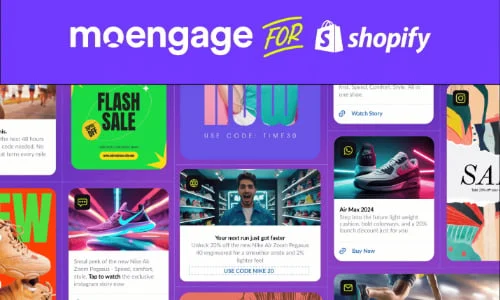
For Shopify merchants, MoEngage has announced MoEngage for Shopify, a native integration that unlocks advanced agentic AI functionality and unifies a merchant’s Shopify data across a wide array of communication channels. These channels include email, SMS, app and web push notifications, WhatsApp, and on-site personalization features. Marketing teams can deploy sophisticated automated workflows to handle routine tasks such as drafting marketing campaigns, generating performance reports, and tailoring messaging across multiple regions.
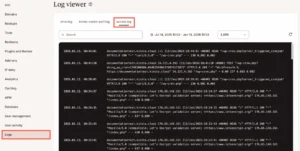
Platform governance for emerging technologies is also taking center stage. miniOrange has introduced its Secure MCP Server for WordPress, a solution built to help businesses securely connect AI assistants and agents to WordPress sites while maintaining strict governance, security, and operational control. The system enables businesses to precisely define which WordPress capabilities AI agents are permitted to access and utilize, apply role-based permissions, require human review for configured actions, and monitor all agent activity through a centralized management dashboard.
Catalog enrichment is receiving a powerful boost for merchants operating on BigCommerce. Commerce, the parent organization overseeing Feedonomics, BigCommerce, and Makeswift, has introduced major data enrichment capabilities for Feedonomics and BigCommerce. These new features are designed to help B2C and B2B merchants transform standard product catalogs into rich, AI-ready product intelligence at scale. Both Feedonomics Enrichment and BigCommerce Catalog Enrichment automatically generate optimized product titles, detailed descriptions, feature bullets, frequently asked questions, search-engine metadata, structured data facts, snippets, and Q&A fields.
Multichannel sellers utilizing Selro’s inventory and order management platform can now leverage an integration with Claude AI. This integration enables sellers to utilize Claude’s advanced language capabilities directly within the Selro platform to rapidly generate high-quality product titles, descriptions, and summary bullet points across multiple sales channels.
In the realm of creator commerce and live shopping, ThredUp has announced plans to significantly expand its presence on Whatnot, a popular live-commerce platform operating across the United States, the U.K., and Europe. The prominent recomverse platform stated it will soon launch live shopping broadcasts directly from its major distribution centers located in Atlanta and Dallas, while also exploring new avenues to empower Whatnot’s broader community of sellers.
To help brands connect more effectively with content creators, Nexa has launched a dedicated creator marketplace. The platform allows businesses and brands to directly discover, evaluate, and hire user-generated content creators and influencers. The marketplace displays creator profiles and rates entirely for free, with Nexa generating its revenue through a brand-side platform fee rather than taking a percentage cut from the creators’ hard-earned revenue.
Additionally, partnrUP has expanded its agentic creator commerce platform with new add-ons designed to tightly integrate creator relationships with direct e-commerce sales. These new capabilities include automated affiliate commission payouts managed through major networks like CJ, Rakuten, and Impact, streamlined Shopify product fulfillment for influencer gifting and seeding programs, creator video syndication directly to Amazon product detail pages, and comprehensive sales tracking across various retail partners.