
The artificial intelligence landscape is experiencing a rapid acceleration of enterprise capabilities, platform interoperability, and international market expansion. This week features significant updates from leading AI laboratories and industry strategists, highlighted by Anthropic unveiling a proactive AI assistant designed for connected workflows, OpenAI expanding its advertising and enterprise footprints globally, and critical operational insights emerging for modern marketing and business teams.
Anthropic Introduces Claude Duet, a Proactive AI Assistant for Connected Workflows
In a major development for productivity and administrative automation, Anthropic has officially introduced Claude Duet, a research-preview AI assistant engineered to manage ongoing, multi-step tasks across connected applications through simple text or voice instructions. Powered by Anthropic’s advanced Claude Opus 5.5 model, the new assistant is designed to operate independently within a secure cloud environment, taking on heavy operational lifting such as preparing daily executive briefings, coordinating complex workflows, conducting background research, and drafting fully editable business documents.
What sets Claude Duet apart from traditional conversational interfaces is its ability to integrate directly with a wide array of productivity suites, business tools, and payment services. This integration allows users to effectively delegate routine administrative and operational responsibilities to the AI. However, to maintain rigorous security and operational control, the system is architected to require explicit user approval before executing sensitive actions or transactions. Currently, Claude Duet is rolling out via invitation exclusively to U.S. Pro and Max subscribers, with Anthropic indicating plans for broader commercial availability in the near future as the research preview matures.
OpenAI Expands ChatGPT Ads and Partners with Google Cloud
Simultaneously, OpenAI is aggressively broadening its global market reach and enterprise infrastructure integrations. The company announced the international expansion of ChatGPT Ads, bringing advertising access to 14 additional countries across Latin America and extending its footprint into new markets throughout Europe, the Middle East, Africa, and Asia. This latest rollout builds directly upon earlier localized launches in Mexico and Brazil, offering commercial entities in newly supported territories fresh avenues to engage target audiences natively within the ChatGPT ecosystem. Advertisers looking to leverage the platform can manage their campaigns seamlessly either through established technology partners or directly via OpenAI’s self-service advertising interface.
In addition to its advertising growth, OpenAI has forged a strategic partnership with Google Cloud to make its cutting-edge AI models and Codex capabilities accessible through Google Cloud’s Model Garden. This high-profile collaboration allows enterprise organizations to integrate OpenAI’s advanced technology stack directly into their existing development environments. Crucially, corporate customers will benefit from Google Cloud’s robust enterprise infrastructure, advanced security controls, and comprehensive data governance features. Businesses will be able to purchase the models directly through the Google Cloud Marketplace, permitting the application of existing cloud spending commitments toward these advanced AI resources. Furthermore, forthcoming integrations with Google Antigravity and Gemini Agent are expected to grant enterprise customers even greater flexibility in constructing and managing AI-powered workflows, with general availability slated for the coming weeks.
Optimizing Internal Operations: Standardizing Workflows and Eliminating Inefficiencies
Beyond platform-level releases, industry practitioners are increasingly focusing on the internal operational challenges of deploying AI within organizations. A common bottleneck for many marketing and business teams involves undocumented processes—the unspoken rules, naming conventions, formatting standards, and sequential frameworks that live entirely inside individual employees’ heads. When campaign naming conventions, UTM link structuring protocols, or email sequence setups are unwritten, organizational workflows frequently suffer from inconsistency, steep onboarding curves for new hires, and institutional memory loss.
AI strategists note that modern language models can bridge this documentation gap through simple comparative analysis. By feeding real historical examples of recurring tasks into platforms like ChatGPT, Claude, or Gemini, professionals can prompt the underlying models to study structural patterns, identify subtle formatting rules, and automatically generate clean, comprehensive step-by-step documentation. This process not only uncovers hidden inconsistencies that human creators often overlook but also transforms the resulting documentation into an actionable instruction set. Once a standard operating procedure is clearly defined and saved, teams can feed the documentation directly back into the AI alongside raw data to automate the execution of those exact tasks in the future.
Navigating the Shift from Search Engines to AI Matchmakers

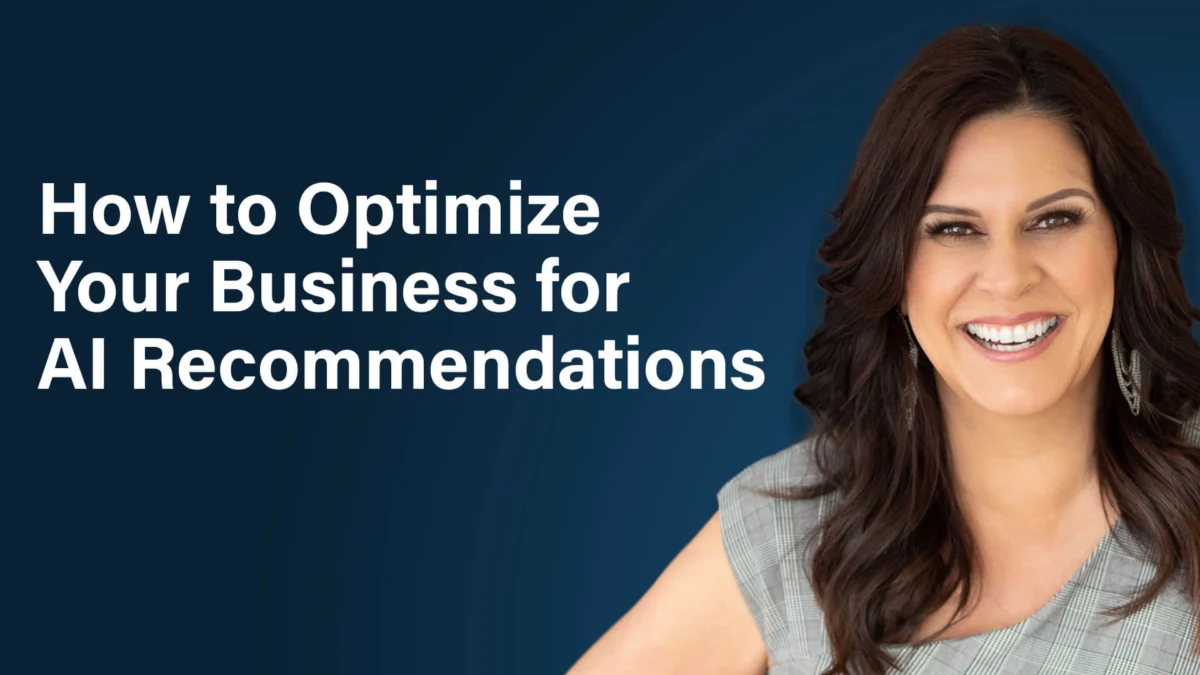
As underlying technology evolves, the ways in which consumers discover brands are also undergoing a structural transformation. Industry experts, such as Vivienne Wagner, an AI marketing strategist and owner of Houndstooth Media Group, point out that potential customers are increasingly turning to generative AI tools for direct recommendations rather than relying on traditional search engine results pages. This shift means that AI platforms are functioning less like traditional indexes and more like sophisticated matchmakers, synthesizing deep context over time to connect users with specialized businesses they might otherwise never encounter through conventional search queries.
This changing discovery landscape requires organizations to rethink how they establish digital authority and positioning. While foundational search engine optimization principles remain relevant, businesses must evaluate how well their external messaging aligns with the actual pain points of their target audience. Experts recommend utilizing AI to critically examine existing website copy, social media channels, and public reviews to identify discrepancies between how a company presents itself and how automated systems perceive its core competencies. Review ecosystems, particularly Google Business Profiles, serve as critical trust signals for AI models evaluating real-world expertise and service delivery, making proactive and thoughtful engagement with customer feedback essential for modern brand visibility.

Ensuring Platform Independence and Workflow Portability
Amid rapid tool proliferation and occasional platform outages, maintaining resilient and portable operational systems has become a top priority for digital strategists. Advisories emphasize that while specific AI models and interfaces may fluctuate in availability or performance, underlying business workflows should be designed to transcend individual applications. Demonstrating this principle, recent industry demonstrations have highlighted how standardized prompts and structured workflows can be moved seamlessly between competing platforms—such as transitioning a complex session from Claude to ChatGPT mid-task—without losing context or progress. Building transferable, platform-agnostic setups ensures that organizations can maintain operational continuity regardless of third-party service interruptions, securing long-term efficiency in an increasingly dynamic technological environment.