As the global artificial intelligence boom strains computing capacity worldwide, semiconductor giant Nvidia has thrown its support behind Indian startup Simplismart in a fresh $14 million funding round. The investment highlights a growing industry-wide bet on specialized software that helps companies run complex AI models more efficiently, and in many cases, with significantly fewer graphical processing units.
Nvidia participated in the all-primary Series B funding round alongside prominent institutional backers Accel, Shastra VC, and Micromax, with Dallas Venture Capital leading the investment. This new infusion of capital values the four-year-old Bengaluru-headquartered startup at approximately $100 million, including the funding secured in this round.
Modern enterprises are spending heavily on expensive GPUs to power an expanding array of artificial intelligence applications. However, deploying and running those resource-heavy models reliably and economically at scale remains a persistent operational challenge. Different enterprise workloads demand distinct, carefully managed trade-offs between processing speed, cost, and overall performance. Furthermore, successfully operating AI models to meet strict business requirements often demands complex infrastructure adjustments. Simplismart asserts that its proprietary software automates much of this demanding work, intelligently tailoring how models run on existing computing infrastructure rather than forcing customers to manually manage complicated hardware configurations themselves.
"Nobody actually needs the fastest or the cheapest inference," said Amritanshu Jain, co-founder and chief executive officer of Simplismart, during an interview discussing the core philosophy behind the startup. He added that modern companies instead need to run their AI models at speeds and cost structures that make pragmatic sense for their specific, real-world applications.
Simplismart’s software layer positions itself strategically between foundational AI models and the underlying computing infrastructure they run on, actively adjusting how models are deployed and managed to meet the exact performance requirements of customers. The startup explains that its technology can optimize critical factors such as how quickly a model responds to inputs, how many concurrent requests it can successfully handle, and how much overall computing power it consumes. This operational efficiency helps companies extract significantly more value out of their existing hardware and GPU stack.
The Bengaluru-based startup offers companies a versatile way to deploy and run AI models either through Simplismart’s own managed platform or directly within their existing cloud environments and on-premises infrastructure. Alongside deployment, the platform provides comprehensive tools to fine-tune models, automatically scale computing resources up or down as demand fluctuates, and continuously monitor performance metrics. Additionally, Simplismart enables cloud infrastructure providers to build and operate their own dedicated AI inference services on top of GPU hardware using the startup’s underlying software stack.
The practical value of this approach is reflected in Simplismart’s growing client roster. The startup reports that it helped AI video-generation platform InVideo slash its GPU serving costs by an impressive 56% using its optimization software. Simplismart also collaborates with other prominent AI video companies such as HeyGen and Higgsfield, as well as enterprise AI startup Ema, among a broader portfolio of clients. Furthermore, Indian cloud service provider Yotta utilizes Simplismart’s technology to power the serverless AI inference service running within its Shakti Studio platform.
Driven by this enterprise adoption, Simplismart’s annualized revenue run rate has grown a remarkable 14-fold over the past six months, reaching an eight-figure sum, Jain told TechCrunch. This metric is calculated based on recent customer usage data rather than strictly contracted recurring revenue, and it purposefully excludes pass-through revenue directed straight to underlying infrastructure providers, according to the company. Jain declined to disclose the exact financial figure publicly. Interestingly, more than half of Simplismart’s total revenue originates from the United States, despite the startup maintaining a larger total volume of customers in its home market of India, Jain noted.
Beyond the financial investment, Nvidia has been actively collaborating with Simplismart on technical integrations, including working closely around Nvidia’s Dynamo inference software, Jain revealed. This technical partnership involves direct cooperation between Simplismart’s engineering teams and Nvidia’s specialized solutions architects. Additionally, Nvidia has actively assisted the startup by introducing it to potential enterprise customers and strategic industry partners, according to Jain.
This strategic alignment presents an intriguing market paradox, as Nvidia, the undisputed dominant supplier of AI hardware chips, is actively backing a software platform that can help companies successfully run certain computational workloads using fewer GPUs. Jain, however, argued that making AI inference more efficient will ultimately benefit Nvidia in the long run. By reducing operational friction and lowering the total cost of ownership, efficient software makes Nvidia’s underlying hardware substantially more attractive to budget-conscious enterprise customers, thereby encouraging wider, more sustainable industry adoption of artificial intelligence applications as a whole.
Simplismart operates within an increasingly crowded and competitive market for AI inference software. The startup finds itself competing directly against proprietary offerings from Nvidia itself, as well as major cloud service providers and industry hyperscalers including Amazon Web Services, Google Cloud, and Microsoft Azure. A growing ecosystem of specialized startups is also developing competing tools designed to make artificial intelligence models faster and cheaper to execute, fueled by surging global demand for AI applications and the acute economic necessity of maximizing the utility of expensive, supply-constrained GPU resources.
"Where we tend to win is where people have to be more stringent on their SLAs [service-level agreements] and TCO [total cost of ownership]," Jain said, referencing demanding enterprise performance requirements and tight operating cost constraints. Unlike rival platforms that offer rigid, preset options geared solely toward either maximum speed or rock-bottom cost, Simplismart aims to strike a balanced middle ground tailored specifically to each individual customer’s unique operational needs, he explained.
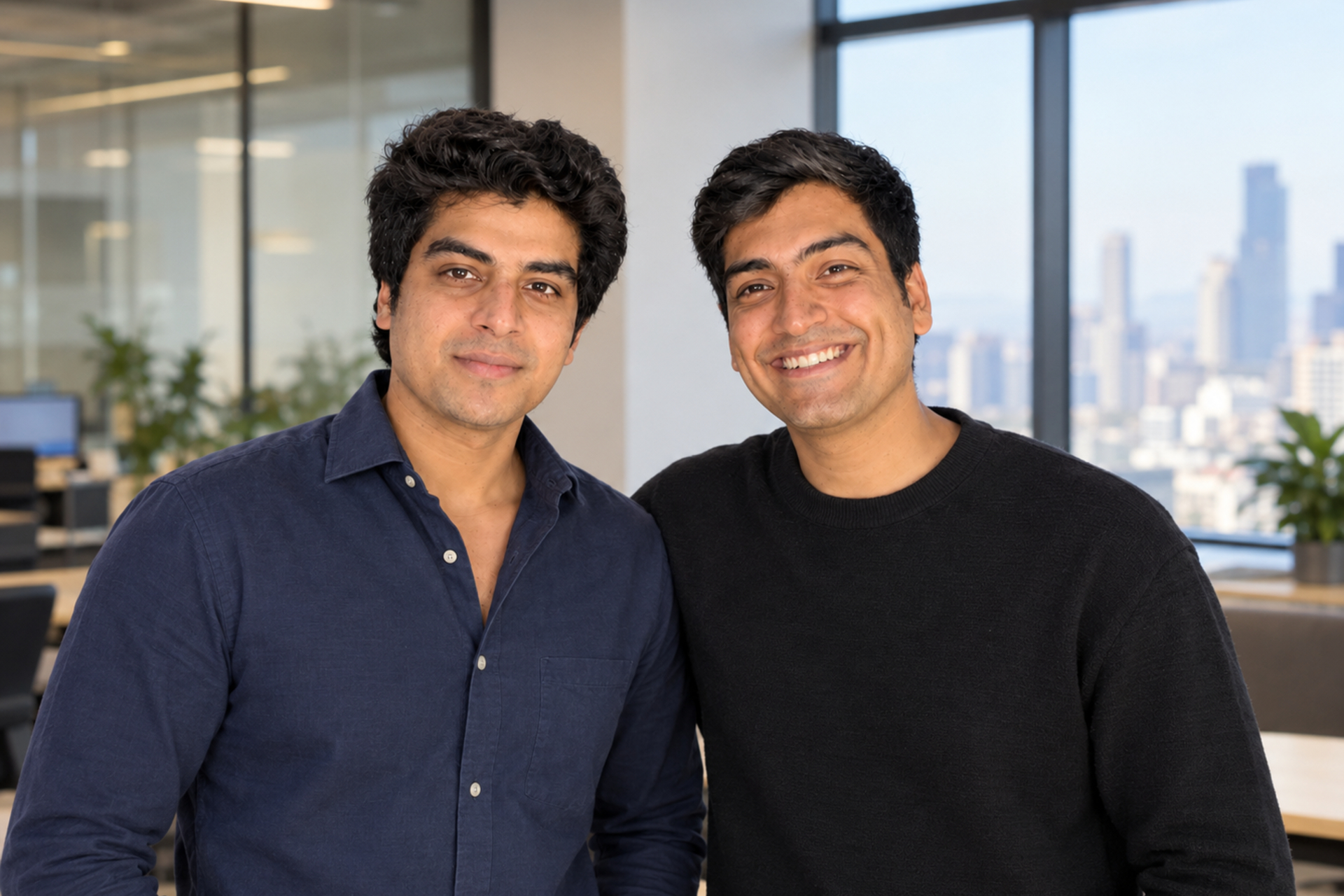
Founded in 2022 by former Oracle software engineer Jain and former Google engineer Devansh Ghatak, Simplismart grew directly out of the co-founders’ firsthand professional experiences building and deploying complex machine-learning systems at scale. The two entrepreneurs originally met while studying at BITS Pilani, and the startup now maintains a dedicated team of 58 employees, according to Jain.
Simplismart plans to allocate its newly acquired capital toward expanding its operational presence in the United States, growing its engineering and go-to-market teams, and investing further in research and development for its core inference software. Jain emphasized that the United States remains a vitally important strategic market for the startup as it looks to build aggressively upon its existing U.S. customer base.
The funding announcement follows a recent report by Indian financial daily The Economic Times stating that Simplismart was previously in preliminary talks to raise between $40 million and $50 million at a vastly higher valuation ranging from $300 million to $400 million. When asked about the accuracy of the report, Jain declined to comment on the speculation, maintaining that the startup was not actively engaged in fundraising at that scale and clarifying that the current Series B round is formally closed and will not be extended.