The digital marketing landscape is undergoing a rapid evolution, driven by advanced artificial intelligence integrations across major social platforms, emerging video-retention strategies, and sophisticated trust-building frameworks. Industry practitioners are facing a shifting ecosystem where automated workflows, agentic AI features, and direct-checkout capabilities are reshaping how brands connect with audiences, generate leads, and measure campaign performance.
Build a LinkedIn Trust Loop Using Your Recommendations URL
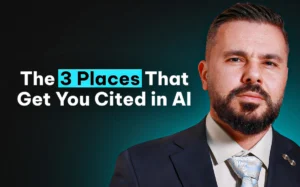
In professional networking and client acquisition, establishing immediate credibility remains a formidable challenge for marketers who scatter their verifiable achievements across disparate platforms. During recent industry discussions, marketing strategist Judi Fox highlighted a strategic framework known as the trust loop, designed to guide potential clients seamlessly from discovery to consultation. By leveraging a centralized LinkedIn recommendations URL, professionals can direct prospects to a verified ecosystem where endorsements are intrinsically tied to real individuals, authentic job titles, and established professional reputations.
Industry experts emphasize that LinkedIn recommendations carry significantly more weight than anonymous website testimonials. Because artificial intelligence cannot easily fabricate the complex chain of verification inherent in a professional network profile, prospective clients naturally treat these recommendations with a higher degree of trust. This approach minimizes friction in the vetting process, giving decision-makers the confidence required to book a call or engage professional services.
Make AI Your Career Advantage
As artificial intelligence adoption matures across the corporate sector, knowing a handful of basic prompts no longer provides a competitive edge for marketing professionals. Many practitioners find themselves cycling through an endless array of software tools, hoping to stumble upon a solution that sticks. However, industry leaders note that those who truly stand out are the ones who understand precisely which tool fits a specific task, allowing them to construct efficient workflows that save hours of manual labor each week.

This operational shift highlights the growing demand for hands-on technical literacy. Marketers are moving past experimental prompting and focusing on systemic integration, turning repetitive administrative duties into automated proficiencies that free up creative and strategic bandwidth.
How to Keep YouTube Viewers Watching and Turn Them Into Customers
Content creators who invest heavily in short-form video formats often find that their material vanishes from algorithmic feeds and consumer memory within days. Addressing this challenge, YouTube strategist and revenue lab founder Adam Ivy advocates for a strategic pivot toward long-form YouTube content built specifically around audience retention. According to Ivy, properly structured long-form videos can earn deep trust, attract consistent views, and drive customer acquisition for years, continuing to generate business value long after the initial upload date.
A central component of this strategy involves prioritizing focused attention over passive, distracted scrolling. The viewers who invest time in a comprehensive video are substantially more qualified as potential prospects than casual scrollers who only consume fleeting clips. Capturing this focused attention requires a deliberate opening sequence—utilizing an emotional hook that builds intrigue without giving away the ultimate payoff, paired with a narrative structure that signals a deep understanding of the viewer’s immediate pain points.
Transition techniques also play a crucial role in maintaining viewer momentum. Strategists caution against rigid structural habits, such as explicitly numbering every step in a presentation, which can inadvertently prompt viewers to click away. Instead, smooth narrative transitions keep audiences engaged longer than anticipated. Furthermore, balancing active engagement through comments, casually introducing lead magnets without disrupting the user experience, and leveraging organic retargeting through thank-you pages allow creators to convert viewership into tangible business outcomes without relying on overly aggressive sales tactics. Ending videos with forward momentum rather than protracted goodbyes ensures viewers transition naturally into subsequent content on the channel.
Recent Platform Updates and Feature Rollouts
The major social networks have rolled out a comprehensive suite of updates affecting advertising, content creation, and platform navigation.
Instagram has expanded its Edits application beyond video-centric creation by introducing a new carousel workflow. This feature allows creators to combine photos and videos, experiment with diverse layouts, apply native fonts and text styles, and generate reusable cutout stickers. The update is rolling out initially on iOS, with Android support anticipated shortly.
At the same time, Instagram leadership addressed ongoing adjustments to the platform’s native interface. While Apple’s native tab bar now supports images—resolving a prior limitation that forced Instagram to build a custom interface—technical hurdles persist regarding video-related color effects on iOS 26 and unintended tab switching during gesture scrolling. Platform representatives noted that subsequent operating system iterations appear to resolve these color rendering complications.
Meta has announced a sweeping expansion of its artificial intelligence advertising tools, stretching from initial creative development and campaign management to in-conversation checkout. The Ads Creative Studio is expanding its reach to a broader audience of advertisers, while the Meta AI business assistant is evolving into a more agentic tool capable of conversational campaign optimization and task automation. Meta is also scaling natural-language audience discovery, expanding generative video capabilities, and testing direct checkout options within its conversational interfaces to shorten the journey from product discovery to final purchase. In addition, Instagram has introduced a new feature enabling users to embed previously liked or saved Threads posts directly into their Instagram Stories using a dedicated sticker format.

Reddit is bolstering its advertising capabilities with a strong emphasis on lead generation. The platform has introduced automated Max campaigns, intent-based audience targeting, expanded measurement partnerships, and deeper customer relationship management integrations. These enhancements enable advertisers to capture prospects through custom landing pages and forms, optimize toward specific lead submissions, and route data directly into existing business workflows, helping brands move from simple lead collection toward qualified demand generation.
TikTok is similarly advancing its ecosystem with a broad deployment of agentic AI features spanning commerce, lead generation, and advertising. New offerings include Buy Direct and Shopping Assistant features for commerce transactions, Agentic Leads for qualifying prospective clients, and the TikTok Ad Network for expanding campaigns beyond the native application. By enhancing its Gross Merchandise Value Max optimization tools to account for a more comprehensive view of seller operational costs, TikTok continues to deeply embed automation into campaign execution and performance measurement.