As the work week draws to a close, marketers and small business owners are navigating a rapidly shifting landscape of artificial intelligence capabilities, workflow automations, and data privacy controls. Recent updates from tech giants Google and OpenAI, alongside strategic insights from industry practitioners, highlight how automation and AI planning are transforming daily operations for modern businesses.
Understanding Triggers and Actions in AI Automation
For many professionals, repetitive administrative tasks consume hours of valuable time each week. Whether it involves copying form responses into a spreadsheet, saving incoming email attachments, or updating calendar reminders, these routine processes represent precisely the kind of work that modern automation tools are designed to eliminate.
Platforms such as Make, n8n, and Google Workspace Studio feature distinct interfaces and deployment options, yet they fundamentally operate on a singular logical premise: when a specific event occurs, a designated action should follow. Every automation workflow comprises an initial trigger followed by one or more subsequent actions.
Choosing the appropriate tool often depends on a user’s existing technical ecosystem and infrastructure preferences. Professionals heavily embedded in the Google ecosystem frequently begin with Google Workspace Studio, which is often readily available within their existing accounts. Meanwhile, Make provides a visual, drag-and-drop builder capable of connecting thousands of disparate software applications, and n8n appeals to users seeking deeper control, including the flexibility to self-host their automation infrastructure.
Once a foundational workflow is established, advanced users often incorporate intelligent language models to analyze incoming data and dynamically determine subsequent actions. These capabilities are increasingly becoming central topics of discussion within professional communities such as the AI Business Society, where practitioners share implementation strategies and session replays.
Collaborative Insights and Industry Events
While digital tutorials and independent software testing provide a solid foundation for individual learning, many professionals find that breakthrough ideas often emerge from peer-to-peer discussions. Hearing firsthand accounts of how fellow marketers solve complex operational challenges offers practical perspectives that cannot always be captured through standard documentation.

Industry gatherings, including events like AI Business World, serve as venues for these practitioner-led conversations, where speakers focus on sharing real-world operational strategies implemented within their own enterprises.
Building Landing Pages With AI: From Strategy to Publishing
A common hurdle for businesses leveraging AI productivity tools is translating operational efficiency into measurable commercial growth. Frequently, the primary bottleneck involves the speed at which a new offer can be brought to market, a process that typically relies on the deployment of an effective landing page.
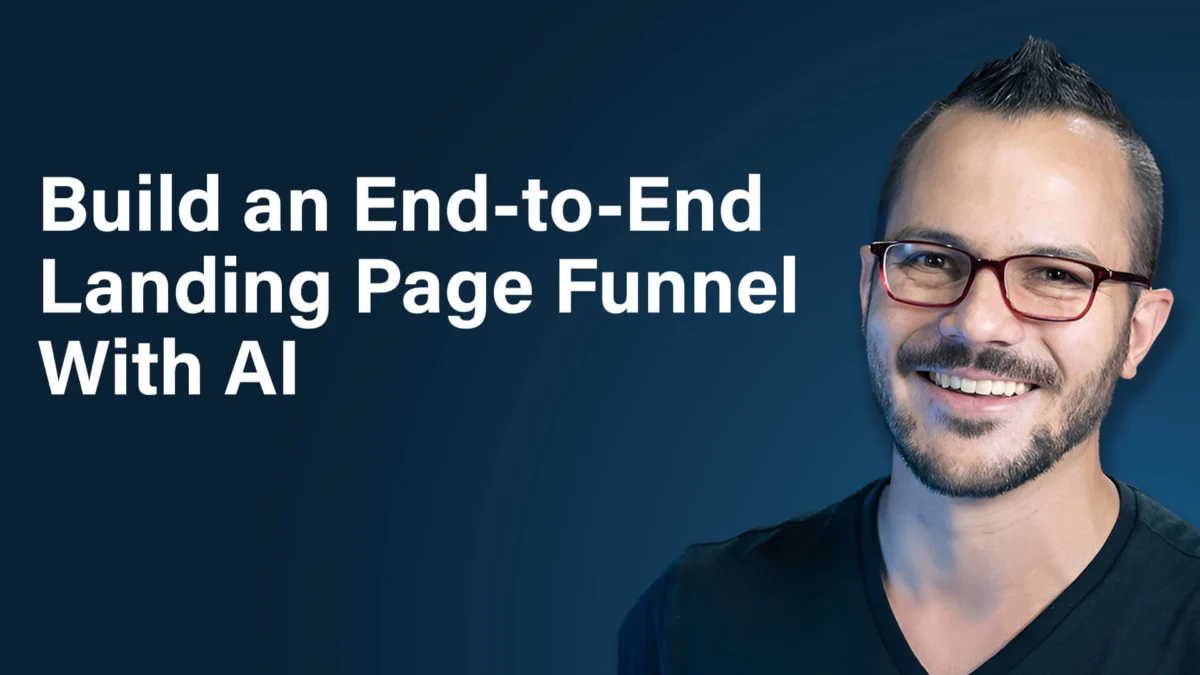
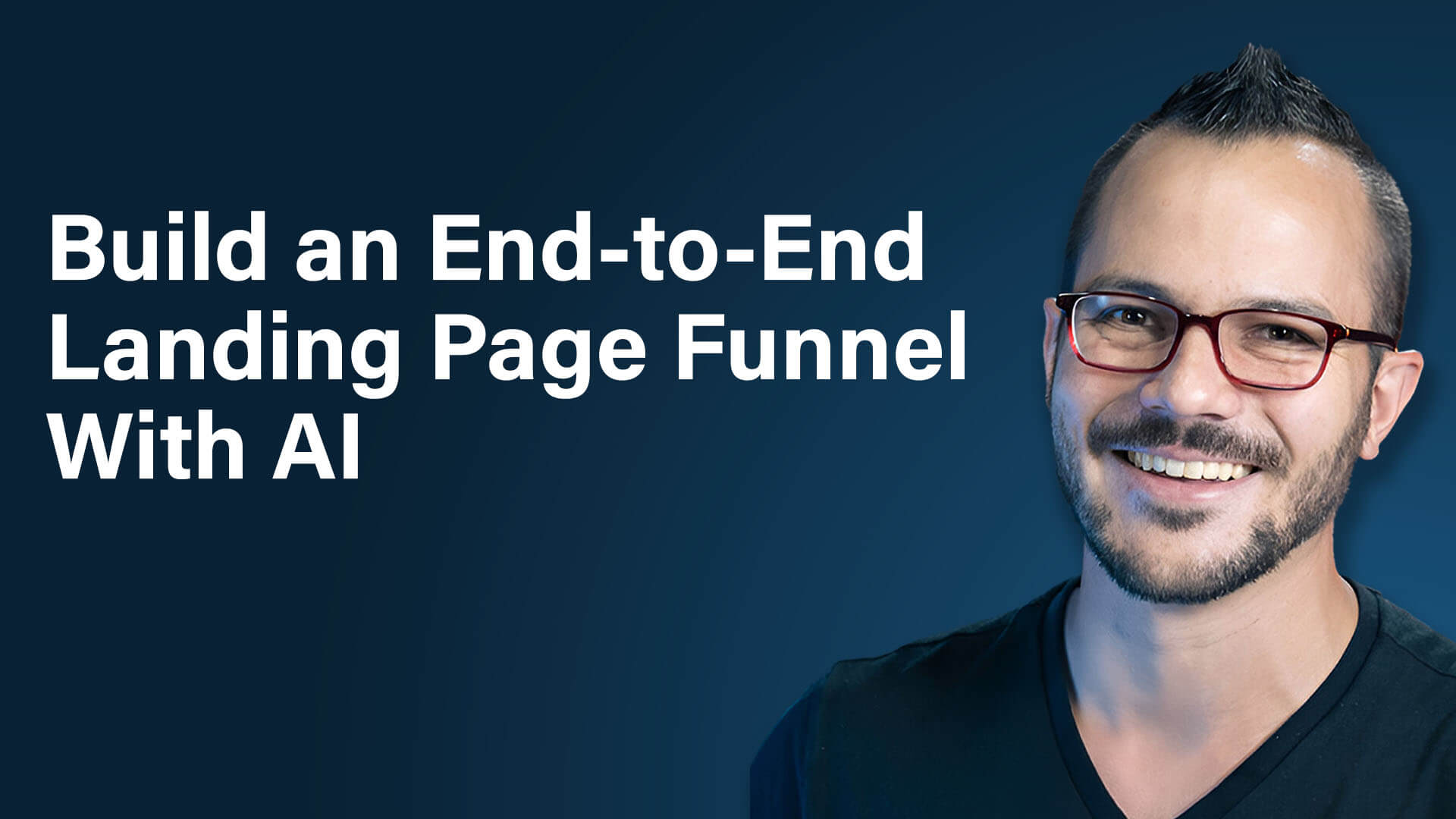
Dan Sanchez, an AI strategist and host of the AI Driven Marketer podcast, has shared comprehensive approaches to utilizing artificial intelligence for planning, designing, copywriting, and launching complete landing page campaigns independently.

According to Sanchez, effective deployment begins with comprehensive strategic planning within a standard chat interface before utilizing any dedicated coding or building tools. This initial scoping phase encompasses elements that extend far beyond the visual page layout, addressing critical components of the conversion funnel where organizations often miss potential revenue opportunities.
Rather than separating text generation from layout creation, advanced practitioners often task AI systems with handling copy and visual structure concurrently, utilizing established copywriting frameworks while applying structured art direction even in the absence of a formal design background. To optimize operational efficiency and resource allocation, advanced setups frequently employ custom delegation skills, allowing premium AI models to route routine subtasks to more cost-effective language models.
When selecting hosting environments for newly generated pages, strategies vary between budget-friendly deployment options and more flexible infrastructures equipped with version control. Industry best practices consistently emphasize the importance of rigorous pre-launch reviews, ensuring that human oversight validates the complete user experience from initial interaction to final conversion.
Google Expands Gemini Capabilities for Small Businesses
In broader industry developments, Google has announced a comprehensive rollout of new Gemini capabilities tailored specifically to assist small business owners in streamlining operational workflows, managing marketing efforts, and making data-driven decisions.
The update introduces a dedicated business hub designed to centralize branding tools, financial analytics, and seamless integrations across both native Google services and third-party enterprise platforms. Among the notable additions are enhanced image generation features intended to help businesses establish reusable visual identities and maintain asset consistency across marketing campaigns. Additionally, updated financial analysis tools are designed to translate standard business records into interactive, actionable insights.
Google has indicated that these new features will begin rolling out globally in the coming days, expanding the accessibility of AI-powered business assistance for entrepreneurs and small-scale operations.
OpenAI Introduces Locked Chats for Enhanced ChatGPT Privacy
Parallel to enterprise software expansions, OpenAI has implemented new privacy controls within its conversational platform by introducing a feature known as Locked Chats.
The update enables users to secure individual ChatGPT conversations utilizing a PIN or supported biometric authentication methods, such as fingerprint or facial recognition. Protected discussions are isolated within a designated section featuring a separate memory space, allowing users to revisit sensitive conversations without integrating that specific context into their broader, general chat history.
While this feature provides an additional layer of security against unauthorized access by other individuals sharing the same physical device, OpenAI clarified that it does not alter the underlying data encryption standards, retention periods, or data-use policies governing the platform. The rollout of Locked Chats began across the majority of ChatGPT subscription tiers, with broader availability expanding progressively to all users.