
The digital commerce landscape continues to evolve at a rapid pace, with the latest wave of product releases, platform updates, and technological advancements focusing heavily on artificial intelligence, workflow automation, and cross-border capabilities. In this week’s comprehensive rundown of new services designed for merchants, platforms are rolling out sophisticated AI agents, streamlined business-to-business payment solutions, live commerce integrations, programmatic advertising tools, and advanced product discovery engines.
As merchants prepare for upcoming shopping seasons and navigate an increasingly complex omnichannel environment, tech providers are striving to bridge the gaps between customer engagement, backend operations, and data analytics. From enterprise-grade marketing automation to specialized wholesale marketplaces and real-time ROI tracking, the latest industry developments reflect a concerted push toward greater efficiency, smarter automation, and deeper cross-channel synergy.
New Tools for Merchants
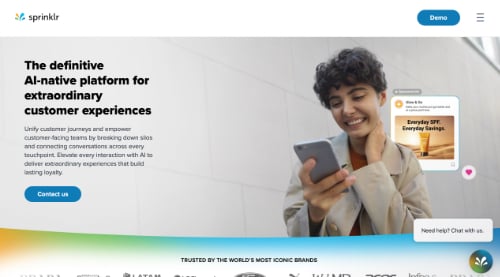
The integration of artificial intelligence into daily operational workflows remains a dominant theme across the industry, with platforms introducing specialized tools to help businesses scale their efforts. Sprinklr has stepped into this arena with the launch of the beta version for its Marketing AI Agents. Designed specifically for enterprise marketers, the new suite includes specialized agents focused on ideation, creative production, campaign execution, compliance, community management, and budget optimization. According to Sprinklr, these advanced capabilities are intended to help marketing teams identify relevant cultural or market moments much sooner, scale and localize content efficiently, reduce the burden of repetitive campaign-building tasks, strengthen brand governance, and make more informed budget decisions across multiple channels simultaneously.

Financial operations and B2B transactions are also seeing notable technological upgrades. Stripe has introduced a new plugin called Stripe Pay, which is designed to facilitate instant business-to-business transfers. This service allows eligible companies operating in the United States and the United Kingdom to utilize their existing Stripe profiles to send money completely free of charge. To utilize the service, senders are required to have a funded Stripe Treasury financial account, while recipients can receive funds either through their own Treasury financial account or via a payout-enabled bank account linked directly to their Stripe profile. The functionality is easily accessible through the standard Stripe dashboard and command-line interface, streamlining cash flow management for growing enterprises.
Procurement operations are receiving similar attention through Amazon Business, which has launched a new analytical tool known as Value Intelligence. This system is designed to quantify cost savings, operational efficiency, and purchase compliance within a single, comprehensive view. Every metric generated by the tool stems directly from an organization’s proprietary Amazon Business data, while remaining securely grounded in independent third-party benchmarks that feature transparent, user-adjustable inputs. Amazon states that this solution aims to provide procurement leaders with a robust method to measure and prove the full, strategic value of their buying strategies far beyond simple upfront cost reductions.
Measurement and attribution continue to challenge digital marketers, prompting Adobe to debut a new application called Marketing Campaign Analytics. This newly launched tool unifies measurement and strategic planning to help marketing professionals understand true incremental impact, dynamically adapt budgets as performance metrics and market conditions shift, and continuously maximize their overall return on investment. Adobe notes that the application is capable of isolating the specific incremental impact of marketing activities from external factors such as seasonal shifts, promotional periods, and broader market conditions. Furthermore, it captures the intricate ways marketing channels lift one another, allowing teams to clearly evaluate the individual contributions of each channel as well as the performance of the combined media mix.
Platform ecosystems are likewise expanding their feature sets to accommodate emerging shopping trends. Shopify has released its Fall Edition, titled Exponential, which introduces a vast array of new tools geared toward agentic commerce, localized payments, and streamlined merchant operations. Among the updates is an expansion of Shopify Payments, which now incorporates seven new local payment methods, including widely used options such as Alipay and WeChat Pay. Additionally, the platform has introduced Shopify Protect, a comprehensive suite of risk management and dispute resolution tools built directly into the admin interface. These tools are designed to stop fraudulent transactions at checkout and automatically manage the chargeback dispute process. To support the shift toward autonomous operations, Shopify Connectors allow merchants to seamlessly link their stores to the AI agents they already utilize for managing products, inventory, orders, and overall performance.
Further advancing the capabilities of AI-driven store management, Virid has launched the marketAgility Model Context Protocol connector for ecommerce retailers. As a unified commerce provider, Virid’s new tool works alongside any leading AI platform that supports custom Model Context Protocol connectors, including systems like Claude and ChatGPT. Through natural language requests, clients can search through products, orders, and customer data, as well as actively manage catalogs, inventory, and promotional campaigns. This allows retail teams to work comfortably within whichever AI environment they prefer, eliminating the need to build and maintain custom integrations.
Social discovery and live shopping are converging through a strategic partnership between the AnyMind Group and Meta. By connecting social discovery and audience engagement directly with live commerce, the collaboration enables businesses to leverage Facebook and Instagram video ads to draw audiences straight into their live shopping streams. The initiative offers flexible checkout options, allowing consumers to complete purchases through a brand’s independent website or app, a marketplace store, or directly via business messaging. According to the companies, these integration updates are rolling out for Facebook Live video ads, with Instagram support slated to follow.

In the advertising space, Pinterest has introduced Programmatic Deals in select global markets. This new feature enables advertisers to purchase selected Pinterest display and video inventory alongside the remainder of their broader marketing campaigns through established supply-side and demand-side platform partners. These partners include Amazon Ads DVA+, Google Display & Video 360, Yahoo DSP, and DeepIntent, with the core technical infrastructure provided by sell-side technology provider Magnite.
Product discovery is also undergoing a technological transformation. Fast Simon has unveiled a new commerce-native AI model aimed at optimizing product discovery and driving revenue growth. By combining shopper intent, merchant objectives, and real-time commerce conditions, the model utilizes catalog intelligence and live behavioral data to dynamically adapt product rankings and recommendations as shoppers browse and interact with a site. The system blends merchandising, personalization, and optimization while ensuring merchants retain full control over their core brand and business strategies.
Wholesale distribution is expanding as well, with TopDawg launching a direct integration with Faire, the prominent B2B wholesale marketplace that connects independent brands with retail buyers. This integration significantly broadens distribution opportunities for U.S. manufacturers, wholesalers, and brands seeking independent retail channels. It forms a key component of TopDawg’s broader multichannel distribution hub, which allows suppliers to efficiently manage product catalogs, inventory levels, and supported distribution workflows through a single centralized portal.

To assist merchants in capturing and retaining consumer attention ahead of busy shopping periods, Omnisend has introduced a series of new email and SMS marketing features. These include Social Capture, which helps brands convert Instagram engagement directly into email subscribers, and Forms+, which incorporates gamified popups designed to engage first-time visitors. Additionally, the platform has rolled out Send Time Optimization, a feature that analyzes the past behavior of individual contacts to deliver marketing communications precisely when recipients are most likely to open, click, or make a purchase.
Fulfillment policies are also seeing adjustments internationally, as Amazon expands its Returnless Resolutions feature for European sellers utilizing Fulfillment by Amazon. Available across marketplaces in Germany, Italy, France, Spain, and the United Kingdom, the program enables customers who request a refund to receive their money back without the logistical requirement of returning the physical item. Participating merchants retain full control, setting their own maximum item price thresholds ranging from one to seventy-five euros, and they can choose to apply the policy across their entire catalog or restrict it to specific products.
Trust and transparency remain critical for online consumers, prompting Denmark-based The Trust Search to launch a new platform dedicated to verified reviews and business ratings. The platform connects consumers with top-rated businesses by prioritizing authentic feedback, utilizing an analytical system that cross-references customer information, evaluates multiple data points, and applies strict consistency checks to guarantee review authenticity.

To help brands adapt to the changing search landscape, NielsenIQ has expanded its Shopper Experience Platform with optimization capabilities supported by its ContentOne Framework. This tool evaluates whether product content is adequately structured to support discovery, comparison, and recommendations across emerging AI-powered shopping experiences. The new features enable brands to assess their product content and imagery against specific retailer requirements and category expectations, identify content gaps, and prioritize improvements that enhance overall product visibility in AI discovery engines.
Messaging automation continues to see strong adoption, with Shopify releasing an update that enables merchants to automatically engage customers using timed WhatsApp messages via the Shopify Messaging app. Merchants can construct automated marketing workflows triggered by specific customer actions, such as abandoning a cart, abandoning a browse session, or signing up for a newsletter. Pre-built templates are available to simplify setup, or merchants can integrate WhatsApp messaging directly into their custom automation sequences.
Similarly, Invoca has announced the launch of Messaging Agents for Google Ads. Designed to answer questions, qualify leads, and book appointments for consumers who initiate messages with brands directly from Google Ads, the tool provides marketers with clear visibility into which advertisements successfully drive conversations and sales. By tying together clicks within Google, conversations handled by Invoca, and revenue recorded in internal systems of record, the platform feeds outcome data back into Google Ads to optimize campaigns specifically for high-value sales.

Physical retail analytics are also bridging the digital divide through a partnership between DNA Payments and Zeal. This collaboration introduces a specialized loyalty and real-time customer insights service for merchants in the United Kingdom. Physical retailers can now combine point-of-sale transaction data from DNA Payments with Zeal’s customer-level loyalty and reporting suite, overcoming the traditional analytics gap associated with in-person card payments. With every card tap, the system identifies the customer, awards loyalty points, and provides merchants with detailed behavioral patterns to encourage repeat visits.
Rounding out the recent wave of developments, marketing and customer experience platform Omnichat has successfully secured $10 million in a Series A funding round led by Openspace Capital. The company plans to use the capital to scale its agentic AI platform, accelerate international expansion efforts, and deepen ongoing research and development for its suite of AI agents—which cover marketing, sales, and customer service—as well as its specialized AI business analyst tool, OmniClaw.