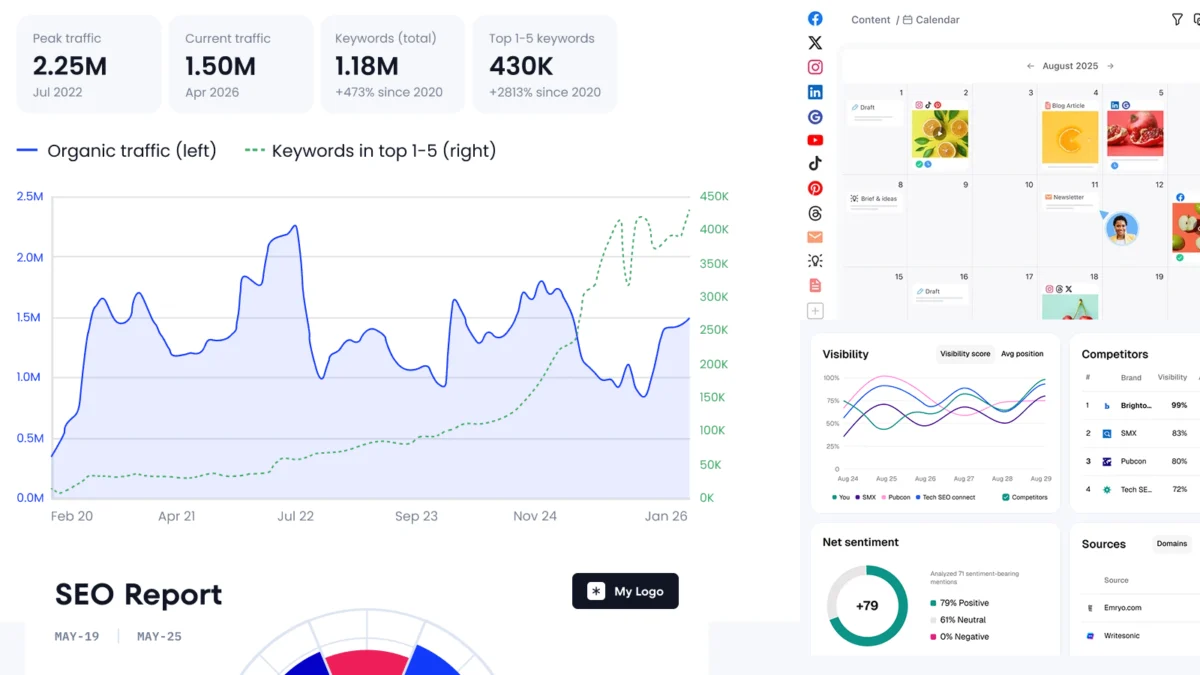
When managing an enterprise website boasting 400,000 SKUs, selecting an SEO analysis tool is not a matter of admiring what the software can find. Instead, procurement decisions rely on a fundamental mathematical constraint: sizing the platform before signing a contract. For many teams operating with limited engineering resources—such as six staff members and two engineering sprints per quarter, with organic search driving a third of total revenue—a crawler that surfaces 60,000 technical issues without matching engineering capacity is practically useless. If a team cannot ship fixes against the data, the tool ultimately returns zero value.
Scale fundamentally changes the core question of technical SEO. According to Google’s official documentation, a site with 1,000,000 pages qualifies as a large property, while 10,000 pages is considered medium or larger. This means crawl allocation must be treated as a strict operational budget. An analysis of major head terms related to SEO analysis tools, enterprise SEO platforms, and ecommerce SEO solutions reveals a glaring transparency gap: not a single landing page publishes a clear page ceiling, monthly crawl allowance, export row cap, or API rate limit. Instead, the top search results are dominated by free one-URL scanners and surface-level feature comparisons that ignore the realities of large-scale architecture.
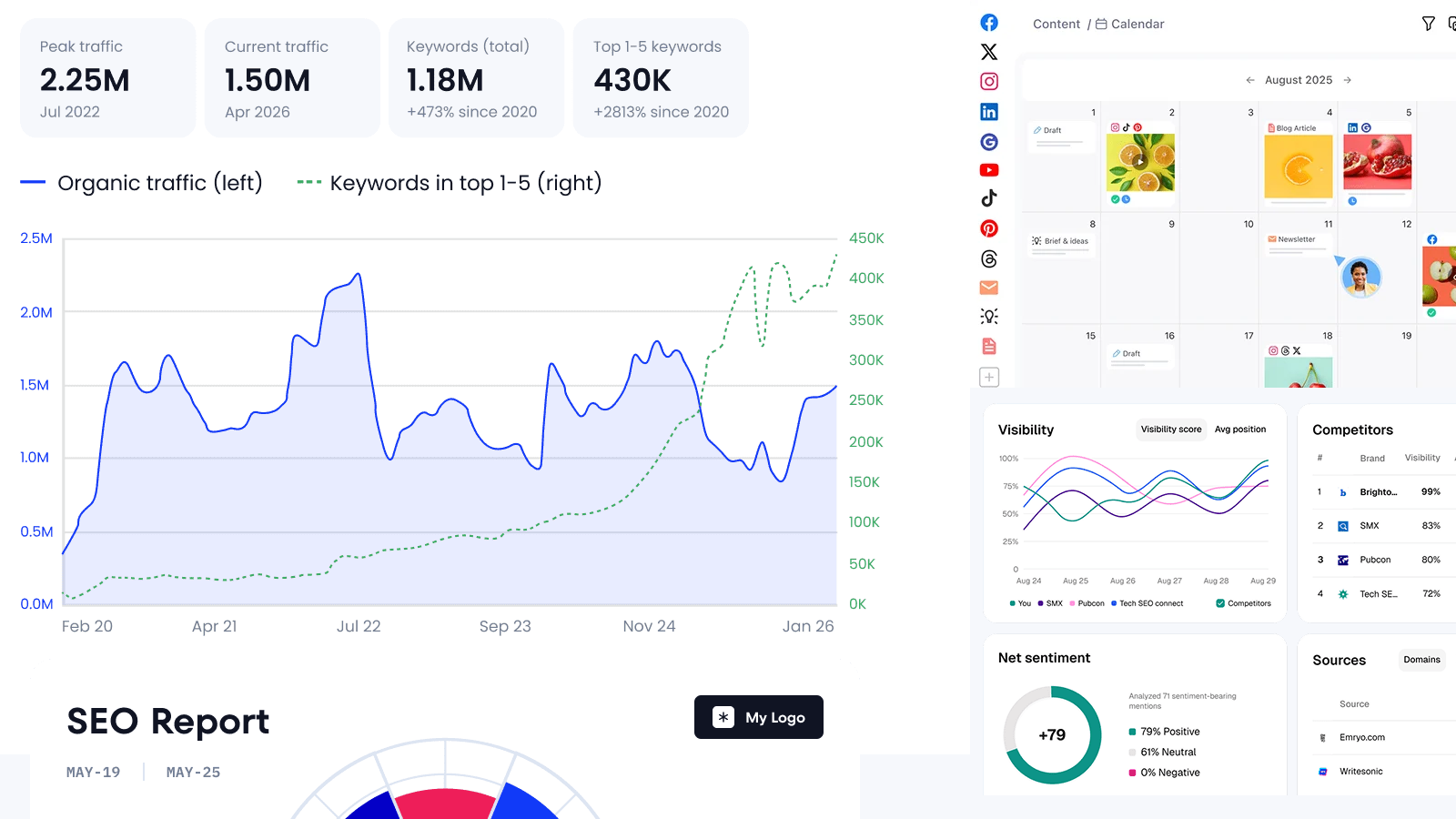
This lack of published parameters creates severe procurement hurdles for buyers managing hundreds of thousands of pages. According to ecommerce UX research from the Baymard Institute, which has reviewed more than 170 sites and 21,000 parameters, 58% of desktop and 78% of mobile ecommerce product lists rate as poor to mediocre, while 51% fail to provide all five essential filter types. Because catalog defects are inherently template defects copied across countless listing URLs that a casual crawl may never reach, establishing hard ceilings before procurement is non-negotiable.
Reading the Data Before Procurement
Every figure evaluated by enterprise buyers must be read directly from vendor pricing pages or technical documentation rather than estimations. Tools that fail to publish transparent pricing or caps complicate the evaluation process. When assessing enterprise platforms, technical leads typically run through a series of strict procurement tests to ensure the software matches their engineering pipelines.

Industry experts emphasize the dangers of opaque software metrics. Gary Illyes, an analyst on the Google Search Relations team, has repeatedly pointed to faceted navigation as by the far the most common source of overcrawl issues for large websites. Because Google’s rendering service caches resources for up to 30 days regardless of individual caching directives, JavaScript rendering capacity functions as a critical sizing column. One complete crawl pass must fit comfortably within a platform’s monthly allowance.
Platform Evaluations and Market Options
Several prominent tools approach these scaling challenges in distinct ways, offering varying degrees of transparency and resource limits.
SE Ranking stands out as an enterprise option that publishes the specific ceilings required to size a 400,000-page catalog. Its Growth tier enables crawls of up to a million pages in a single project and provides 2,000,000 Website Audit pages a month. Based on standard catalog arithmetic, this allows for five complete passes of a 400,000-page catalog, though it leaves little room for frequent re-crawls or competitor audits since monthly allowances reset without rolling over. Core plans start at $129 a month, while Growth runs $279 monthly, making it a viable candidate for teams that need to verify capacity before signing.
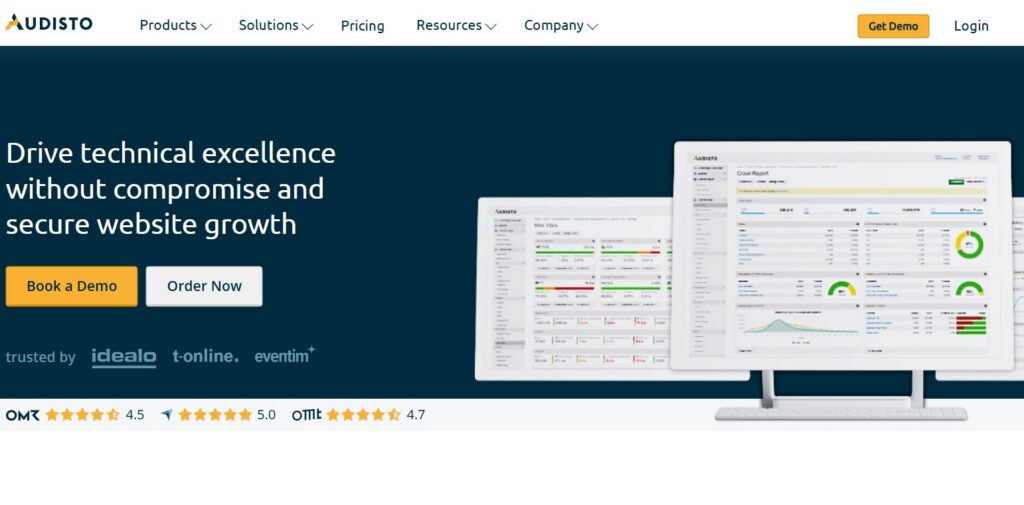
Audisto takes a different approach by separating its pricing and metering across two distinct metrics: crawled HTML pages and total URLs. At the 500,000-HTML-page tier, a single crawl covers 500,000 HTML pages alongside 15,000,000 total URLs. For ecommerce platforms where faceted URLs vastly outnumber actual products, this dual-metric approach addresses the core constraint directly on a public pricing page.

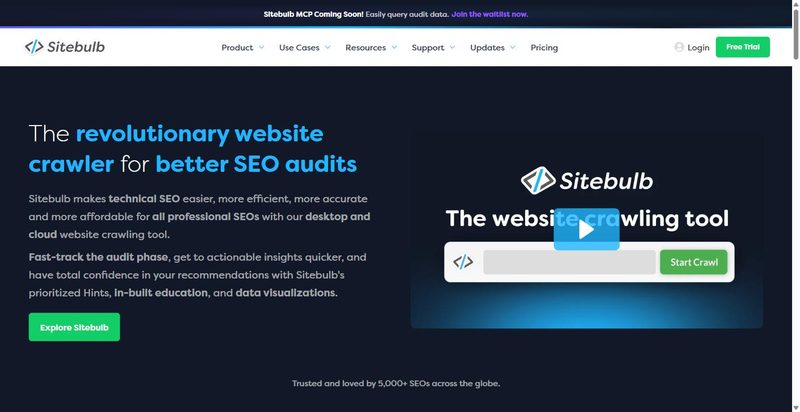
Sitebulb provides desktop and cloud auditing tools with clearly stated limits for every cloud tier. The platform outlines total monthly URLs alongside maximum URLs per audit, allowing teams to measure a 400,000-page pass against defined boundaries before committing engineering hours. Cloud tiers start at $125 a month, scaling to $495 for Medium packages.
JetOctopus offers a cloud crawler and log analyzer metered by a monthly URL pool. Its In-House Pro tier provides 1,000,000 crawled URLs a month and 5,000,000 log lines, featuring unlimited projects and simultaneous crawls with no per-domain fees priced at $549 a month billed annually. However, because certain rate limits and per-crawl ceilings remain unpublished, buyers must rely on discovery calls to complete their technical assessments.
Screaming Frog SEO Spider utilizes a memory-bound desktop model with no built-in page meter. The operational ceiling is determined by local hardware: 2GB of allocated RAM typically handles between 100,000 and 1,000,000 URLs, while 4GB generally reaches 2,000,000 URLs with database storage writing to disk by default. Priced at approximately 199 British pounds per user annually, it serves teams with provisioned local hardware well, provided they account for the manual effort required to export and score data without native API automation.
Semrush publishes per-audit ceilings per tier, though its standard Site Audit caps out at 100,000 pages on its Advanced plan against a monthly budget of 1,000,000 pages. Because a 400,000-page catalog exceeds these standard single-audit limits, larger properties typically require custom enterprise sales conversations rather than standard self-serve signups.

Netpeak Spider offers technical throughput with severity-sorted issues and an unmetered Pro tier supporting up to 200 threads for $20 a month. While it excels at raw processing speed on controlled hardware, the absence of a vendor API means crawl deltas must be manually exported into tracking sheets.
Google Search Console provides an invaluable baseline by tracking actual search engine behavior rather than executing active site crawls. However, because it is constrained to 2,000 URL inspections a day, attempting a single pass over 400,000 URLs would take roughly 200 days. Consequently, it functions best as a verification layer alongside paid crawling software rather than a primary technical audit tool.

Navigating Opaque Vendor Practices
A significant portion of enterprise SEO software—including major names like Lumar, Botify, Oncrawl, Conductor Website Monitoring, and Ryte—frequently obscures pricing or relies on complex token systems. For instance, Oncrawl meters usage via tokens, charging one token per standard URL and three tokens for JavaScript rendering. For a 400,000-page JavaScript pass, this translates to 1,200,000 tokens on unpriced tiers. Highlighting this friction, Maria Georgieva, who heads SEO at Payhawk, noted in recent industry commentary that she always begins her tool evaluations directly on the pricing page.
Procurement specialists emphasize that enterprise software lacking published ceilings and transparent pricing should generally be skipped. Sourcing SEO analysis tools blindly introduces severe financial and operational risks. As Bill Hunt, President of Bisan Digital, has noted regarding technical backlogs, accumulating unaddressed issues without implementation capacity simply represents unimplemented intent rather than genuine progress. When writing engineering tickets based on audit data, teams are advised to frame findings in units product managers can readily rank, such as projected revenue impact per template per quarter.