Ever wondered if tapping away at a keyboard can truly pay the bills? The digital landscape is currently caught in a swirl of conflicting narratives. On one side, the public is frequently bombarded with online marketing spin claiming that individuals can amass fortunes overnight simply by setting up a blog. These hyperbolic claims are almost always packaged alongside commercial products or services designed to sell the secret to instant wealth. Conversely, skeptics frequently argue that it is entirely impossible to generate a meaningful income from blogging, dismissing anyone claiming a full-time living as either a marketer, a scammer, or someone peddling digital snake oil.
Industry veterans note that the actual reality exists somewhere between these two extremes. Experienced publishers confirm that making money from blogging is entirely possible, yet it is far from an exclusive club reserved only for internet marketing gurus. From personal lifestyle hobbies to lucrative commercial operations, content creators across diverse sectors—including fashion, food, travel, and niche hobbies—are actively monetizing their platforms. However, seasoned bloggers emphasize that building a sustainable revenue stream is rarely an overnight success story. Transforming a digital diary into a viable enterprise demands creative grit, audience trust, and a strategic understanding of the publishing business.
1. It is Possible to Earn a Living
For those who have spent nearly a decade in the publishing industry, the trajectory of monetization is a gradual evolution rather than an immediate windfall. Many established creators report starting out earning mere pennies a day, only to watch those modest figures grow over several years into the financial equivalent of a part-time job, eventually scaling into a full-time career capable of supporting a growing enterprise and employing additional staff.
While some early pioneers entered the digital space during its formative years and benefited from fortuitous timing, contemporary publishers continue to build sustainable, independent incomes from scratch. For some individuals, a blog functions merely as a supplementary hobby that covers daily expenses; for others, it provides a flexible income stream that complements traditional employment or helps support a household while balancing family commitments. Others still operate entirely as full-time digital entrepreneurs.
2. There is No Single Way to Monetize a Blog
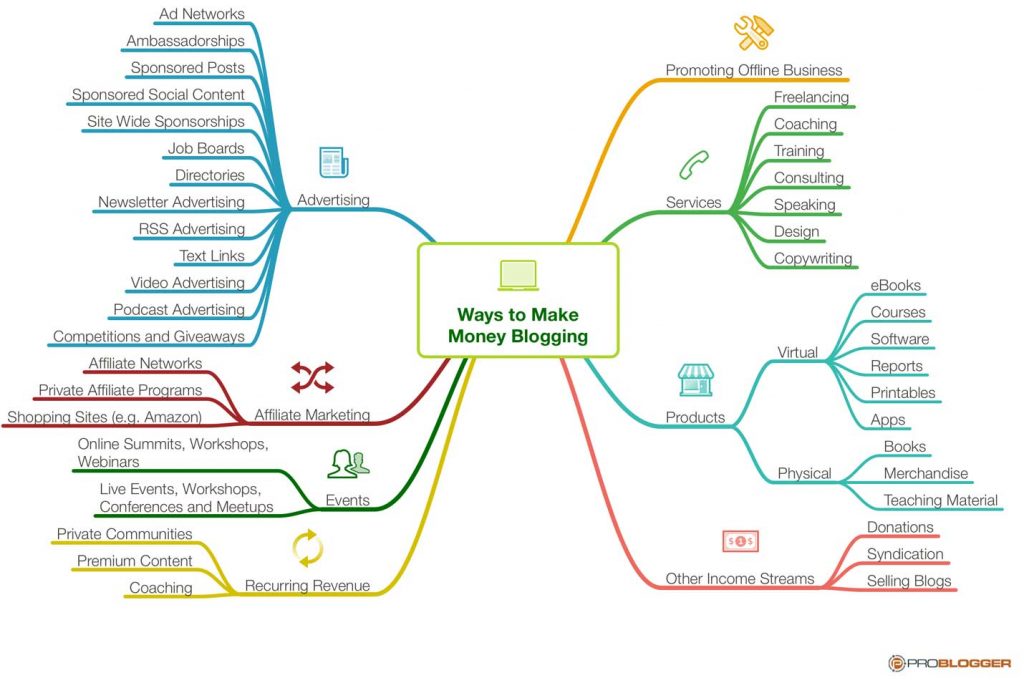
A close examination of successful digital publishers reveals that there is no singular blueprint for monetization. Content creators across various regions and industries generate revenue through a remarkably diverse array of channels. Some rely heavily on traditional digital advertising placements, while others establish exclusive membership communities, sell proprietary digital books, run targeted affiliate marketing promotions, or leverage their online presence to drive traffic to offline businesses and professional speaking engagements.
Many successful operations utilize a combination of multiple income streams simultaneously. These monetization strategies span across a vast spectrum of creative industries, proving that digital publishing can adapt to nearly any subject matter when paired with an engaged and targeted readership.

3. There Are No Guaranteed Formulas for Success
Despite the numerous commercial products released over the years promising guaranteed formulas for online wealth, industry veterans maintain that a universal roadmap simply does not exist. Every full-time publisher typically forges a unique path, often relying on calculated risks, creative intuition, and surprising discoveries made along the journey.
While common operational patterns emerge among successful sites, each creator brings a distinct personality, style, and voice to their audience. Furthermore, different niches naturally lend themselves to entirely different monetization mechanics. The overarching lesson for aspiring publishers is to observe industry peers and learn foundational principles, while remaining willing to innovate and chart an independent course.
4. Normal Niches Can Be Profitable
A persistent critique within the digital economy suggests that the only profitable blogs are those dedicated to teaching others how to make money online. However, empirical evidence from industry conferences and publisher networks demonstrates that this assumption is false.
Many of the most profitable digital publications focus entirely on everyday, mainstream topics. Highly successful publishers frequently report that their niche lifestyle, health, wellbeing, simple living, or specialized hobby blogs generate significantly higher revenues than sites dedicated to business instruction. None of these successful mainstream operators rely on selling "make-money-online" courses; instead, they thrive by providing genuine value within traditional consumer markets.
5. Most Bloggers Do Not Make a Full-Time Living
Despite inspiring success stories, industry data consistently shows that creators generating a full-time income remain in the minority. Reader surveys conducted across prominent publishing networks illustrate a wide distribution of earnings among individuals actively attempting to monetize their platforms.
Statistical analyses of publishing cohorts typically reveal that a notable percentage of aspiring bloggers generate little to no revenue during their initial phases, with the majority earning modest amounts that fall well below the threshold of a living wage. New creators frequently encounter a steep learning curve, as a significant portion of participants are relatively new to the medium.
Nevertheless, within these same surveys, a distinct tier of publishers achieves substantial financial success, generating thousands of dollars per month. While the upper echelon proves that high earnings are achievable, the broad statistical reality indicates that most active bloggers do not make a primary living solely from their sites.
6. Building a Profitable Blog Takes Time
An analysis of top-earning publishers consistently highlights the critical role of longevity. The vast majority of creators operating in the highest income brackets have maintained their digital platforms for multiple years before reaching financial stability.
Industry veterans note that transitioning from zero earnings to a gradual increase, and eventually toward a full-time income level, typically requires years of consistent effort. Monetizing digital content is fundamentally distinct from get-rich-quick schemes; it requires a sustained commitment to building an engaged audience, establishing a recognizable brand, and earning the trust and reputation necessary for commercial viability. Even with years of dedicated operation, financial success is never formally guaranteed.
7. Operational Success Demands Hard Work
Longevity alone does not dictate profitability. The other defining characteristic shared by successful full-time publishers is a relentless commitment to proactive execution. The popular misconception of blogging as a purely passive income stream rarely aligns with the lived experiences of working digital entrepreneurs.
Building a sustainable publishing business requires continuous effort across multiple operational fronts, including daily content creation, community engagement, business management, product development, and audience expansion. The core foundation of any profitable blog relies on publishing original, interesting, and genuinely helpful material that matters to readers. Achieving this standard requires deliberate action, beginning with the foundational step of launching a platform and committing to the long-term process of digital publishing.