When an entrepreneur exits a company for nearly $2 billion, the subsequent chapters of their professional lives are often spent on quiet retirement, passive investing, or serving on high-profile corporate boards. For Allison and Stephen Ellsworth, however, the massive payday that came with selling their prebiotic soda brand Poppi to PepsiCo for $1.95 billion served a different purpose: it provided the financial freedom and the creative itch to do it all over again.
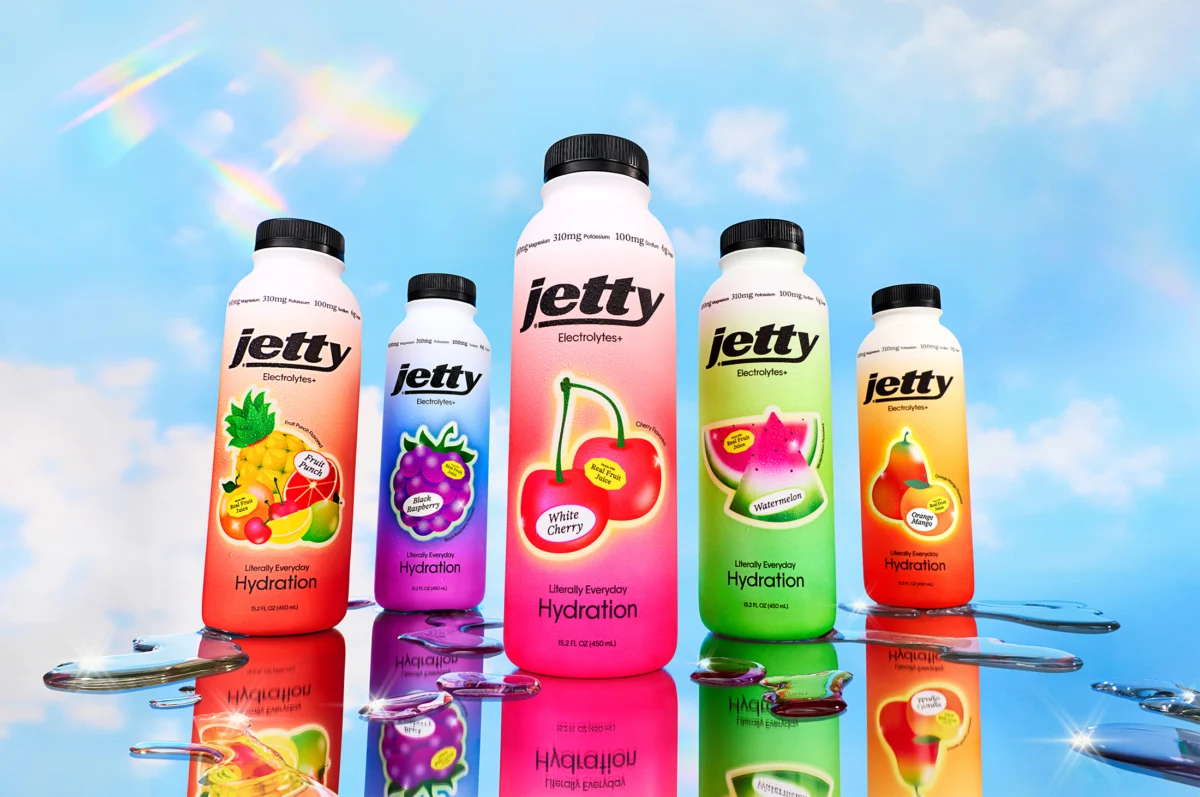
Just one year after finalizing the blockbuster acquisition, Allison Ellsworth is stepping back into the beverage arena with a brand-new venture called Jetty. Billed as a "literally everyday hydration" brand, the startup offers a lineup of hydration powders and liquid beverages. To get the enterprise off the ground, the couple is entirely self-funding the launch with a $2.5 million investment, retaining complete ownership and control over their new creation.
The decision to dive back into the grueling world of consumer packaged goods has naturally raised eyebrows among friends, peers, and even their own children. "My kids asked me, ‘Mom, why are you doing this again?’" Ellsworth recalls. Her response was simple yet resolute: "Because I want to. I’m really excited to build again. And I also think there’s something really important about showing my kids the work ethic of it all. We don’t want them to grow up and think, ‘Oh, we don’t have to work hard.’"
Yet, the road ahead is far from easy. The Ellsworths are entering a market category that is not only crowded, but showing signs of decline. In their new quest, they will be going head-to-head with established juggernauts like Liquid I.V. and Gatorade, brands with massive marketing budgets and deep-rooted consumer loyalty.
To give Jetty a fighting chance, the founders are looking backward to draw crucial lessons from the rise of Poppi. According to Ellsworth, five core strategic insights learned during their time building the prebiotic soda empire will guide their journey forward.
Opportunities hide in crowded categories
Conventional business wisdom often advises entrepreneurs to seek out blue ocean markets—uncontested spaces where competition is minimal or nonexistent. But Ellsworth’s experience suggests the exact opposite: if you want to find a massive business opportunity, you should look directly where the market is most crowded.
This counterintuitive approach is precisely how Poppi came to dominate supermarket shelves. The brand originally began its life under the moniker Mother, with the Ellsworths pitching it primarily as a health tonic centered around apple cider vinegar. That early positioning trapped them in a narrow corner, chasing a niche demographic within a remarkably small market.
Everything shifted when they secured a major investment on Shark Tank, rebranded the formula as Poppi, and boldly decided to compete inside the much larger, noisier, and heavily saturated soda category. The timing was fortuitous, arriving just as sales of traditional, mainstream sodas began to experience a steady decline.
The play worked because Poppi targeted an underserved consumer segment with a superior, better-for-you alternative. The product managed to be just different enough to carve out a unique space, yet familiar enough for conventional soda lovers to embrace it without hesitation.
This journey taught Ellsworth a vital lesson: when a product category appears to be struggling, it does not necessarily indicate a permanent drop in overall consumer demand. Instead, it frequently signals that existing products have simply stopped evolving to meet the changing needs of the public.
She sees an identical dynamic playing out today within the modern hydration space. In her view, the dominant legacy players are overly fixated on marketing to male athletes, positioning their products strictly as functional solutions for heavy physical exertion. That narrow focus leaves behind a massive, untapped demographic of everyday consumers—particularly women—who simply want to stay hydrated throughout the day while enjoying something flavorful.
The market data appears to back up her thesis. According to industry insights, when average consumers reach for hydration beverages such as Gatorade, BodyArmor, or Vitaminwater, they are typically consuming them during the morning, lunch, or afternoon hours. Over seventy percent of consumers are drinking these products outside of active workout sessions.
To capitalize on this reality, Jetty is purposely positioning itself around the daily ritual of "everyday hydration"—a beverage that people can reach for in the exact same way they would grab a cup of coffee or a Diet Coke, entirely unconcerned with whether they have recently broken a sweat.
Lead with personality, not just benefits
When most early-stage consumer brands arrive on the market, their packaging acts as a literal billboard for clinical data and functional benefits. Brands routinely crowd their labels with bold callouts detailing unique ingredients, specialized health claims, and every conceivable reason why the product should be considered superior.
With Jetty, Ellsworth deliberately chose to take a different path. While the product does offer clear functional benefits, she believes that leaning too heavily on clinical selling points can create a sterile relationship with the consumer.
"People get really caught up on benefit, benefit, benefit," Ellsworth notes, "but they wouldn’t think to make the largest callout just fun."
Jetty’s packaging does include informative benefit statements, but they are intentionally rendered smaller and kept strictly secondary. The primary visual language of the brand focuses heavily on vibe, color, flavor-forward aesthetics, and quirky, memorable messaging. One prominent phrase stamped on the packaging reads: "Hydrating just became your new personality."
The overarching goal is to make Jetty feel like a distinct lifestyle identity rather than a dry list of reasons to consume electrolytes. This strategy is firmly rooted in consumer psychology. While data points and health claims may serve to inform an initial purchase, lasting, generational brands are ultimately forged through deep emotional resonance.
Building a long-term, sustainable brand that cultivates a loyal community requires finding authentic ways to connect with consumers on a human level, according to the co-founder.
Companies are built on org charts
During the early days of building their original brand, Mother, the Ellsworths poured the vast majority of their energy into perfecting the product itself. As the enterprise rapidly expanded, they found themselves scrambling to construct a corporate organization to support the sudden growth, relying on reactive problem-solving to keep up with momentum.
For Jetty, the couple has completely inverted their operational playbook.
"When we decided to do this, our first exercise was to sit down and make an org chart," Ellsworth explains. From that initial organizational blueprint, they meticulously modeled out operational costs, funding requirements, and staffing projections years into the future—long before the physical product ever existed.
Most entrepreneurs tend to build businesses reactively, scaling through trial and error rather than establishing a deliberate architectural plan from day one. By mapping out the corporate structure early, the founders hope to bypass the chaotic initial phase where founders are forced to wear every hat and navigate administration independently.
Surrounding themselves with top-tier talent from the very beginning allows them to scale effectively without losing momentum.
Think of Amazon as a trust signal
For nascent consumer brands, Amazon often presents a difficult dilemma. While it serves as an undeniably powerful tool for national reach, the platform comes with high operational costs and competitive hurdles that can strain early-stage margins.
Despite these challenges, Ellsworth emphasizes that Amazon offers a distinct strategic advantage that brands cannot afford to ignore. With Amazon Prime embedded in the vast majority of American households, the platform functions far beyond a simple transactional storefront.
For Jetty, Amazon is viewed primarily as a top-tier marketing channel for consumer trial over the first two to three years of operations. When a shopper encounters the brand on a physical retail shelf—such as at Whole Foods—they frequently pull out their smartphone to check digital ratings and reviews. That immediate social validation, reflected in high star ratings and detailed customer comments, often serves as the final push toward a purchase decision, regardless of whether the actual transaction ultimately occurs online or in-store.
This digital-first strategy also dictates physical packaging choices. While Jetty’s hydration powders are sold in rigid boxes when displayed on traditional retail shelves to maximize visibility, the Amazon iterations will be packaged in flexible bags. The reasoning is entirely pragmatic: shipping a paperboard box through standard postal networks frequently results in crushed packaging and negative customer reviews. In the modern direct-to-consumer ecosystem, maintaining pristine product presentation to protect review integrity is paramount.
Always make it personal
The journey of scaling Poppi was intensely stressful, driven by the immense stakes that accompany high-growth startups. For Ellsworth, the experience felt as though her entire life was hanging in the balance, weighed down by the pressures of building generational wealth and a lasting legacy.
Now, with the pressure of financial survival removed, the stakes have shifted. The Ellsworths do not need to build Jetty out of pure financial necessity, which allows them to rediscover the pure enjoyment of company-building.
Even so, Ellsworth stresses the importance of maintaining an internal drive and avoiding complacency. Entrepreneurs must always retain a deep personal motivation that extends well beyond simply launching a successful product.
For Jetty, that personal stake centers around pride, creative autonomy, and self-reliance. When building their previous companies, the Ellsworths famously secured a $400,000 investment on Shark Tank from veteran beverage investor Rohan Oza, whose deep industry expertise helped guide their early expansion.
With Jetty, however, the couple is entirely self-funding and relying strictly on their own accumulated know-how. The lack of outside institutional guidance introduces a unique form of pressure, but it is one the founders embrace willingly. By tackling the challenge completely on their own terms, they aim to prove their capability to succeed independently once again.