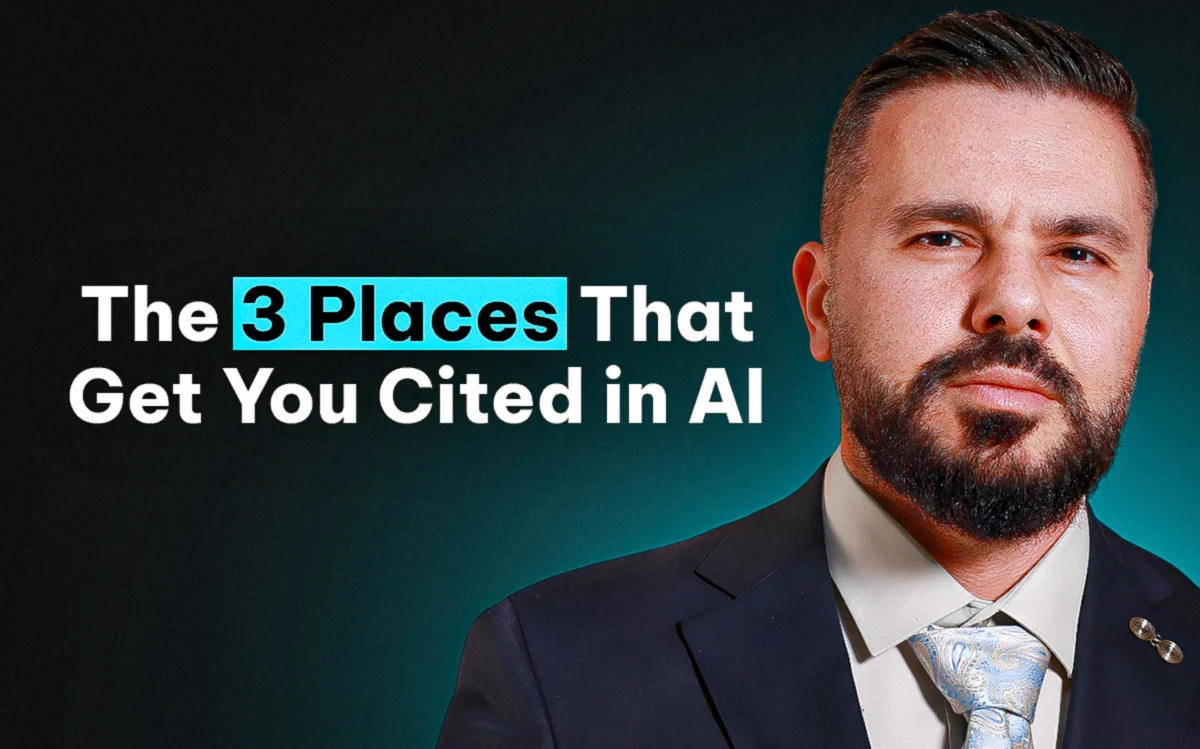
The landscape of digital discovery is undergoing a profound structural evolution, shifting away from traditional search engine optimization and toward answer engine optimization. In a recent episode, digital marketing veteran Besmir Bregasi sat down to discuss the underlying mechanisms influencing whether brands successfully secure citations within ChatGPT, Google AI Overviews, and other large language model-driven search experiences in 2026. As the founder of ZeroRank, Bregasi has unique access to expansive visibility datasets spanning multiple brands, geographic locations, specific prompts, and competing platforms, granting him distinct insight into where modern enterprises must focus their marketing resources.
The conversation explores why third-party discussion platforms, niche sites, editorial mentions, and real-time community engagement often carry significantly more weight than many traditional site owners anticipate. It also examines the foundational on-site technical factors that still retain utility, alongside the complex methodological approaches required to measure algorithmic results that frequently vary from user to user. Furthermore, the discussion charts Bregasi’s entrepreneurial trajectory, detailing how he scaled ZeroRank from an initial concept into a mid-six-figure annual recurring revenue business within months, leveraging platforms like AppSumo as a primary customer acquisition lever.
The Strategic Shift From SEO to AEO
Bregasi’s professional background spans nearly two decades in search engine optimization, followed by roughly 15 years heavily concentrated in paid advertising and affiliate marketing. His return to organic visibility via answer engine optimization mirrors earlier historical phases in digital marketing when nascent channels presented massive opportunities accompanied by relatively low initial competition. Having previously gathered extensive experience scaling online communities and marketing events, Bregasi recognized that the rapid expansion of LLM traffic represented a generational shift substantial enough to justify an all-in entrepreneurial commitment, ultimately culminating in the creation of ZeroRank.
This historical perspective informs his view of modern search behavior. While conventional search engines relied heavily on keyword matching and backlink profiles to rank static web pages, LLM-driven discovery environments synthesize information from a vast, decentralized web of human discourse. Consequently, the signals that trigger an AI model to cite a specific brand have expanded far beyond the traditional confines of a company’s corporate website.
The Dominance of Off-Site Signals in LLM Visibility
The most prominent theme emerging from ZeroRank’s proprietary data is the heavy emphasis that modern language models place on off-site activity. Bregasi notes that AI visibility is overwhelmingly influenced by digital ecosystems where consumers actively discuss, cite, review, or react to a brand in organic settings. This dynamic introduces a distinct strategic challenge for businesses, as companies exercise near-total editorial control over the content published on their own domains, whereas third-party discussions generate unmanaged, external trust signals.
Among the critical off-site vectors tracked by ZeroRank are authentic customer reviews, independent product comparisons, social media dialogues, and community-driven forums. For webmasters and digital marketers who traditionally channel the vast majority of their energy into on-page optimization, this data suggests a strategic rebalancing. While technical on-page optimization remains a mandatory baseline requirement, the larger growth opportunity increasingly involves generating sufficient external attention so that AI systems repeatedly encounter the brand across trusted, independent sources.
The Freshness Advantage Across AI Search Algorithms
Among all the algorithmic variables analyzed in ZeroRank’s data, Bregasi places the highest premium on content freshness. According to his observations, recently published, highly valuable content frequently carries significantly more influence within LLM citations than a massive, legacy archive of older, static brand mentions.
Brands boasting extensive online histories often struggle to gain traction if their digital footprint consists primarily of dated or low-quality material. Conversely, fresh content that commands immediate, organic interaction sends a powerful signal to underlying language models. Illustrating this phenomenon, Bregasi referenced an experimental campaign run on social platform X, where a piece of fresh material gained initial exposure, rapidly attracted user engagement, and subsequently unlocked compounding organic reach across the platform. The broader implication is clear: modern algorithms prioritize dynamic, actively discussed topics over stagnant repositories of information.
The Three Platforms Carrying the Greatest Citation Weight
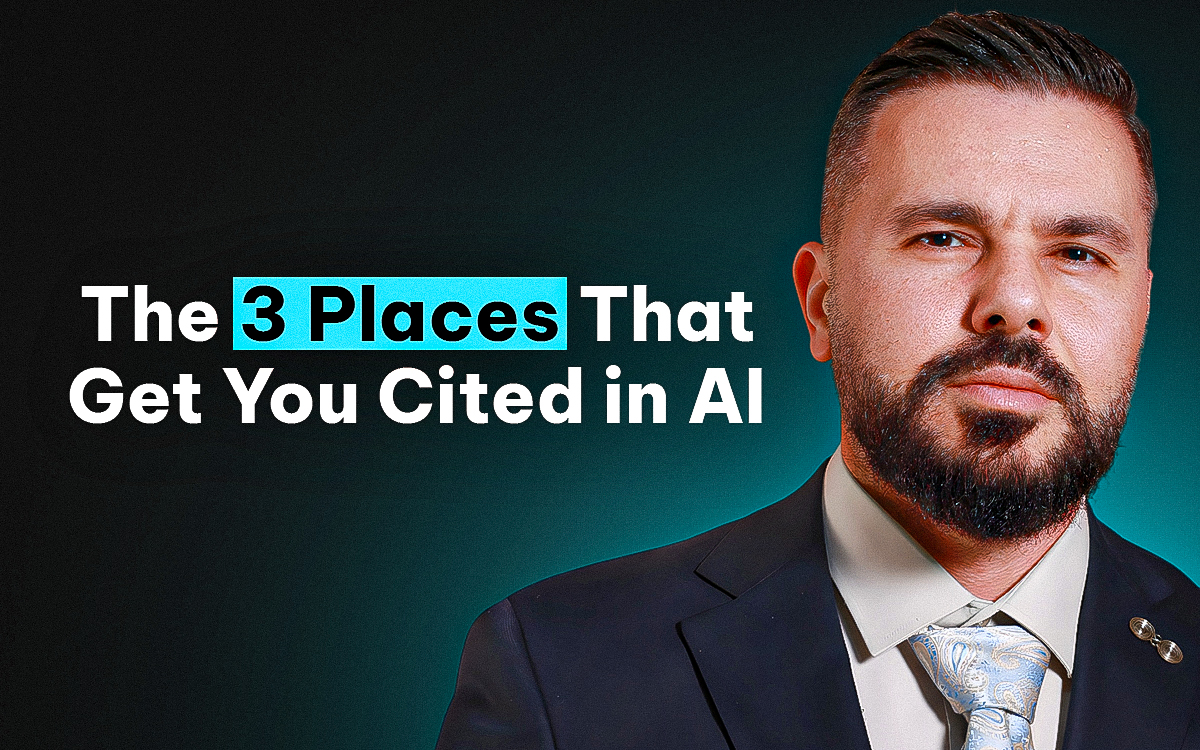
When evaluating which external platforms exert the most profound influence on AI citations, ZeroRank’s client data consistently points toward three primary channels: Reddit, X, and YouTube. Each platform operates under distinct mechanical and algorithmic rules, meaning that superficial brand presence across all three yields negligible results compared to earning deep, meaningful exposure within active communities.
Reddit remains a foundational citation source for major LLMs, even amid shifting platform dynamics. Metrics relating to discussion thread quality, historical context, and community validation heavily dictate whether a specific Reddit conversation ultimately influences AI-generated summaries. For commercial brands, this requires active, credible participation in relevant niche conversations rather than deploying aggressive, overt promotional tactics.
Meanwhile, X enables brands to introduce fresh information and generate rapid, real-time engagement. Paid promotional strategies can successfully jump-start an account’s visibility, particularly when starting without an established organic audience. However, paid exposure alone is insufficient; the underlying content must generate genuine interest to sustain natural user interaction.
YouTube represents another major citation reservoir, with Bregasi noting its disproportionate influence on Google AI Overviews. Fresh video content that successfully accumulates comments, likes, and watch-time engagement shortly after publication is heavily indexed and referenced by LLMs. This grants video dual utility, serving simultaneously as a direct consumer media channel and an influential third-party source linking a brand to specific topical queries.
The Value of Niche Editorial Mentions and Cross-Channel Dynamics
While user-generated content commands significant algorithmic attention, LLMs continue to draw heavily from established editorial websites, independent blogs, industry-specific news outlets, and specialized niche domains. A citation originating from a highly relevant, authoritative industry publication inherently carries more weight with an AI model than a randomized mention on an unrelated, generalized domain.
Interestingly, ZeroRank’s client data reveals notable disparities across social networks. When analyzing the primary referral and citation sources for corporate clients, professional networks like LinkedIn do not appear near the top of the hierarchy, trailing significantly behind Reddit, X, YouTube, and specialized editorial sites. This distinction does not render professional platforms irrelevant for traditional B2B marketing, but it underscores that their current citation weight within LLM training data and real-time retrieval systems differs markedly from consumer-focused discussion hubs.
Furthermore, traditional search engine optimization retains a vital supporting role within this ecosystem. Bregasi characterizes the broader information retrieval layer as a hybrid model where conventional search engines and static websites still supply foundational data inputs that LLMs draw upon when formulating comprehensive responses. Rather than abandoning traditional SEO in a rush to capture AI citations, digital strategists must recognize the profound overlap between conventional search visibility and off-site answer engine optimization.
Local Search Opportunities and Market Dynamics
One of the most compelling case studies highlighted in the data involves a vacation rental enterprise targeting a specific geographic market against entrenched competitors. Struggling to break through via conventional local search rankings, the company pivoted its strategy toward localized community conversations, actively participating in regional Reddit threads and localized X discussions conducted in the native language.
By embedding the brand authentically within localized digital communities, the business successfully influenced how geographically specific queries were synthesized and answered by AI models. This scenario demonstrates that local business marketing in an AI-driven era requires an expanded approach that accounts for language, precise geographic parameters, platform selection, and topical relevance. In less heavily contested local markets, targeted, fresh community engagement can produce disproportionate visibility gains compared to traditional local map pack optimization.
Establishing the On-Site Foundation for AI Visibility
Addressing the architectural adjustments required on corporate domains, Bregasi emphasizes that on-site work functions primarily as a baseline technical requirement rather than an aggressive growth lever. Ensuring a website is technically sound, clean, and easily crawlable allows LLM systems to accurately access, parse, and interpret brand information. However, performing endless structural tweaks on a website yields diminishing returns compared to building external brand authority.
Core technical fundamentals, such as clear semantic markup, logical site architecture, and accessible data structures, minimize friction for automated web scrapers. Once these foundational elements are secured, investing excessive resources into on-page micro-optimizations is often far less effective than earning authoritative third-party references across trusted external networks, which provide the independent quality signals algorithms require.
Methodological Approaches to Tracking LLM Visibility
A central operational challenge within answer engine optimization stems from the inherent personalization of modern AI search platforms. Individual users entering identical prompts frequently receive varying responses shaped by geographic location, historical browsing behavior, device specifications, and account profiles.
To overcome this measurement hurdle, ZeroRank bypasses single-query tracking in favor of large-scale sampling. The platform executes automated queries across expansive combinations of variables and accounts, systematically analyzing the output for recurring patterns. By tracking aggregate visibility baselines rather than volatile, isolated rankings, businesses can reliably measure the directional impact of their marketing experiments over time, confirming whether strategic off-site adjustments successfully elevate their brand presence within AI responses.
Accelerating Growth Through Strategic Customer Acquisition
The rapid development of ZeroRank itself followed an aggressive timeline, with Bregasi and his co-founder constructing the initial version of the software within a strict three-month window. Following the platform’s initial rollout, the team utilized AppSumo as a primary customer acquisition channel to rapidly onboard a large cohort of users and stress-test the product infrastructure.
This acquisition strategy quickly propelled ZeroRank past the milestone of 1,000 active customers, securing top-selling status during its launch month. Rather than treating the campaign as an immediate profit center, Bregasi approached the initiative as a strategic marketing investment designed to generate invaluable product feedback, market awareness, and referral loops that would fuel long-term recurring revenue.
As ZeroRank progressed past its first year of operation, reaching mid-six figures in annual recurring revenue, the company expanded its operational team and diversified its customer acquisition channels. Future growth phases incorporate traditional search engine optimization, targeted paid media, podcast sponsorships, editorial outreach, comprehensive case studies, and structured affiliate marketing networks. By incentivizing existing users with free AI credits for successful referrals, the company continues to foster organic advocacy.
Ultimately, the data shared by Besmir Bregasi underscores that achieving visibility within modern AI search environments requires a holistic marketing strategy that extends far beyond traditional on-page optimization. While maintaining a technically sound website remains essential, the decisive trust signals that compel large language models to cite a brand are increasingly generated through real-time community discussions, fresh content deployment, active social engagement, and authoritative third-party editorial mentions across the digital landscape.