In an era where consumer attention is overwhelmingly captured by mobile applications, small businesses often find themselves facing a formidable digital barrier. While major corporations effortlessly leverage dedicated apps to drive push notifications, manage direct orders, and cultivate loyalty programs without paying steep commissions to third-party delivery platforms or ad networks, local enterprises have historically been left behind. For a neighborhood restaurant, a community church, a boutique fitness studio, or an independent retailer, launching a custom mobile application traditionally meant hiring an expensive development agency, enduring months of waiting, and footing another bill every time a minor update was required.
Consequently, most small teams find themselves trapped between two undesirable choices. They can rent space on crowded digital marketplaces—thereby sacrificing valuable customer relationships and profit margins—or they can settle for a standard mobile website that lacks the capacity to dispatch push notifications or secure visibility in official app store searches. Neither alternative fosters the direct, repeatable connection that keeps modern consumers returning.
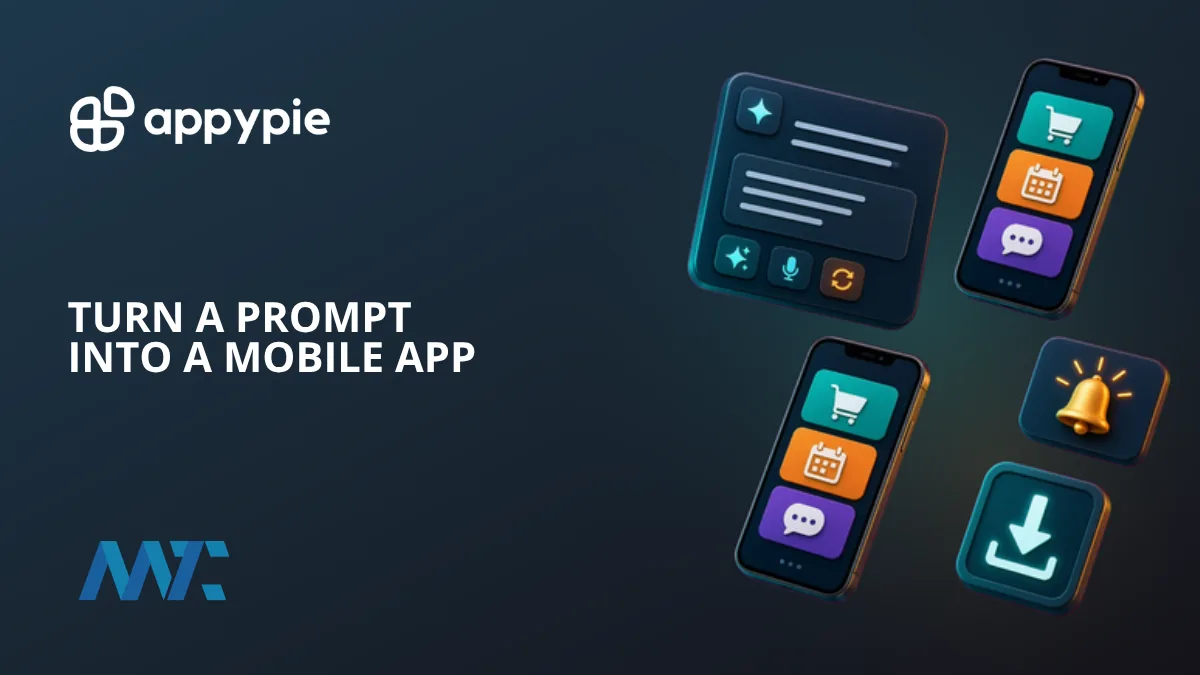
Seeking to dismantle these traditional barriers to entry, the no-code platform Appy Pie has introduced an artificial intelligence-driven app builder designed to transform plain-English prompts into fully functional Android and iOS applications. The system allows business owners to publish directly to Google Play and the Apple App Store under their own developer accounts, offering a streamlined pathway for marketers, founders, and small enterprise operators who require legitimate store-ready applications featuring user accounts, integrated payments, and push notifications, but lack the technical resources or dedicated engineering teams typically required to build and host them.
Why Businesses Turn to AI App Builders
The primary driver behind the adoption of such technology is the drastic reduction in time-to-market. Business owners can simply describe their desired application—such as a localized restaurant ordering interface complete with loyalty stamp rewards—and the platform automatically generates the underlying screens, navigation architecture, and database logic in roughly a minute. From that initial foundation, creators can refine the layout within a visual editor or continue issuing conversational commands to the artificial intelligence, which updates the existing project rather than forcing creators to start from scratch. This capability allows a business to transition from a conceptual idea to a submitted application within days rather than months.
Furthermore, the operational backend is pre-configured out of the box. Essential components such as user authentication, content management systems, payment gateways, push notification dispatchers, analytics dashboards, and administrative panels are already interconnected, eliminating the need for businesses to independently source separate hosting services, databases, and security protocols. Financial transactions are seamlessly handled through established processors including Stripe, PayPal, Apple Pay, Google Pay, alongside more than seventeen regional payment gateways.
This technical integration effectively converts a standard mobile application into a powerful, owned marketing channel. Direct push notifications empower businesses to reach their customer base instantly with targeted promotional offers, timely reminders, and special event updates. Integrated loyalty mechanisms incentivize repeat visits, while in-app ordering structures successfully shift revenue streams away from intermediary marketplaces that typically extract a significant percentage fee from every individual transaction. Early adopters have reported swift progress; for instance, Maria G., the owner of Memorial Tacos, noted that after prompting the system for a restaurant ordering tool with integrated loyalty stamps, she had a functioning application running on TestFlight by the very same evening.

Features and Platform Capabilities
The ecosystem provided by Appy Pie encompasses the entire lifecycle from initial concept to a polished product that consumers can install, utilize, and transact through securely. The journey begins with the initial natural language prompt and the administrative dashboard, which together provide an immediate preview of how well the generated application aligns with operational requirements. Once deployed, businesses can layer on targeted push notification campaigns and robust payment processing as user adoption scales.
The platform’s architectural framework is structured to support varied organizational needs across different operational tiers. Administrative controls allow non-technical operators to manage daily content updates, analyze user engagement metrics, and oversee customer accounts without requiring specialized coding knowledge. Meanwhile, the underlying infrastructure manages the complexities of cross-platform deployment, ensuring that applications meet the stringent technical guidelines enforced by major app store distributors.
Plans and Pricing Structure
Appy Pie operates on a subscription-based pricing model, billing clients either monthly or annually, with yearly commitments offering reduced overall costs. Users are permitted to build, preview, and iteratively refine their applications free of charge, while every paid tier initiates with a seven-day free trial. Pricing scales upward depending on the degree of platform support, monthly push notification allowances, and maximum monthly download limits, with provisions for overage fees should an enterprise exceed its designated usage thresholds.
The service maintains a policy of zero setup fees, and businesses seeking advanced customization can opt for a separate add-on package designed to remove Appy Pie branding entirely while supplying a dedicated account manager. To support community-centric and public service initiatives, specialized discounts are made available for educational institutions, registered nonprofits, government agencies, and military organizations.
Basic subscription tiers accommodate single-platform deployments on Android with fundamental email support and lower monthly limits for notifications and downloads. Mid-tier Gold plans expand communication channels to include live chat assistance alongside slightly higher usage caps. Platinum tiers unlock dual-platform publishing for both Android and iOS environments, introducing comprehensive telephone support alongside increased capacity limits. Enterprise agreements provide unrestricted push notification allowances, custom download thresholds, and continuous twenty-four-hour support with tailored response-time guarantees.
Getting Started
To initiate the development process, users navigate to the platform and input a concise description of their desired application, specifying the target audience and essential functional requirements. The resulting preview can then be fine-tuned using the integrated visual editor before selecting a subscription tier that aligns with the intended publishing platforms. Prior to final submission to public marketplaces, administrators must configure their own independent developer accounts with Google Play and Apple to ensure the application officially launches under their proprietary brand identity.