
Building a seven-figure enterprise online rarely happens by accident, and for many successful digital entrepreneurs, the foundation rests entirely on the power of persuasive writing. Having founded and subsequently sold a digital marketing agency before becoming a partner in the prominent education platform Copyblogger, industry practitioners know that effective communication is the ultimate engine for customer acquisition.
Across nearly all digital business models, the overwhelming majority of revenue originates from written marketing channels—ranging from long-form blog posts and social media outreach to targeted email newsletters. While the digital landscape is flooded with varying tips, tactics, and growth hacks, veteran marketers often look back on a core set of fundamental principles that fundamentally reshape their career trajectories.

What Makes a Great Copywriter?
A common misconception among aspiring writers is that becoming a better copywriter equates to mastering eloquent prose. In professional marketing practice, the exact opposite is frequently true. The most effective copywriters are those who maintain absolute clarity, practice strict conciseness, and ultimately convert casual readers into paying customers.
Instead of obsessing over the artistic craft of writing more gracefully, professionals are urged to concentrate on generating measurable revenue from their words. Proving that written copy can consistently yield a higher return on investment than the market average is the single most reliable path to a lucrative and sustainable career in the field.

To bridge the gap between creative expression and commercial success, industry veterans distill their core methodology into ten foundational pillars that govern modern digital copywriting.
Talk to Customers
The primary objective of any copywriter is to capture a prospective buyer’s attention, establish immediate trust, introduce a viable solution, dismantle lingering objections, and guide the user toward a final transaction. Achieving this requires a profound, granular understanding of the customer’s actual mindset and daily reality.

Master copywriters excel by observing the exact situations prospects face and reflecting that reality back to them. When an audience reads copy that mirrors their precise frustrations—whether it is the fatigue of a rigid nine-to-five routine, the monotony of evening television viewing, or weekend errands—they instantly recognize that the product or service has been meticulously engineered for their unique circumstances.
From a tactical standpoint, writers pressed for tight deadlines may not always have direct access to customer focus groups. In such scenarios, professionals frequently consult sales representatives to identify prevailing pain points and common objections. Alternatively, analyzing transcripts from recorded sales calls through artificial intelligence tools can quickly surface recurring customer friction points. When primary data is completely absent, public forums and niche community boards offer invaluable insight into the authentic language, tone, and emotional triggers used by consumers navigating specific problems.

Learn From Your Competitors
Industry leaders who dominate a given market have almost certainly invested substantial time and capital into rigorous copywriting experiments. Rather than starting from scratch, modern marketers utilize competitor campaigns as a baseline to evaluate what messages resonate and which approaches fall flat.
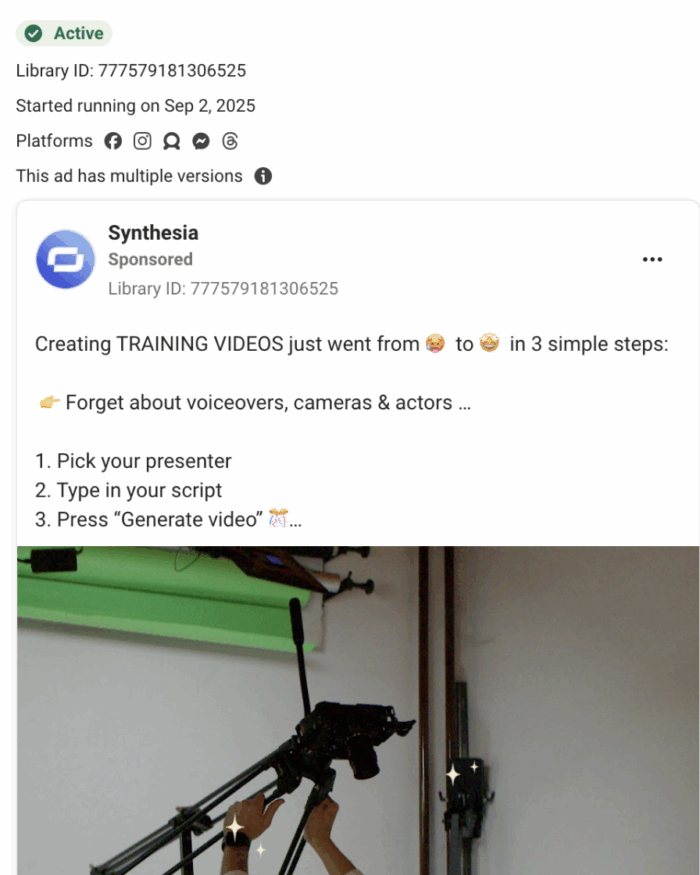
Ad libraries hosted by major social platforms serve as particularly effective research hubs, allowing analysts to identify which promotional materials have maintained active status over extended periods. Because advertisements that run for weeks or months generally indicate a profitable return, they highlight the specific pain points and messaging angles that successfully drive user engagement. Reviewing these active campaigns across diverse sectors frequently uncovers subtle operational insights—such as the financial fallout of disorganized customer relationship data—that can be seamlessly integrated into broader content strategies.

Create a Swipe File
Complementing competitor research involves maintaining a dedicated archive of high-performing copy. Collecting compelling headlines, persuasive sales pages, and high-impact advertisements provides an ongoing reservoir of inspiration for future campaigns.
Beyond building personal repositories, professionals often reference curated industry databases maintained by veteran copywriters. Studying examples validated by seasoned practitioners helps cultivate a refined eye for effective messaging, particularly when writing outside of one’s personal consumer habits.

Establish a Writing Process
As writers mature in their craft, they realize that successful copywriting is essentially the deliberate arrangement of targeted pain points, structural objections, and clear calls to action. Implementing a repeatable writing process guarantees that no critical phase of campaign construction is inadvertently omitted.
While specific workflows naturally adapt depending on the medium—whether producing an educational blog post, a promotional email, or a comprehensive sales page—maintaining a structured approach eliminates the friction of staring at a blank screen and banishes writer’s block entirely.

Practice Writing
While regular practice remains non-negotiable for professional growth, productivity experts emphasize the importance of writing with intentional direction. Rather than producing endless text without purpose, writers are encouraged to develop copy for their own entrepreneurial projects.
Whether an individual aims to become a social media ghostwriter, an search engine optimization specialist, or a software content creator, building personal digital assets offers a dual advantage. Publishing one’s own material not only sharpens professional execution but also provides verifiable case studies and revenue metrics that validate higher pricing models when pitching prospective clients. Furthermore, ventures launched as side projects occasionally generate commercial returns that eclipse client-based service work entirely.
Embrace AI for the Right Use Cases
While artificial intelligence tools were once viewed with skepticism by traditional writers, many digital marketers now utilize modern language models as collaborative partners to streamline their workflow. While human creators retain full ownership of conceptual ideas and creative direction, technology can significantly accelerate specific research and refinement tasks.
Writers frequently deploy artificial intelligence to rapidly map out audience pain points, explore alternative sentence phrasing for enhanced clarity, and discover expert quotations or real-world examples from industry leaders. Rather than allowing algorithms to generate entire campaigns autonomously, skilled practitioners use these platforms as cognitive catalysts to jog memory and uncover overlooked insights.

Master One Platform
Different digital channels demand distinct structural frameworks, hook strategies, and content depths. While thought-leadership narratives thrive within professional networking environments, highly actionable, instructional formats tend to dominate search engine results pages.
Developing a deep comprehension of a specific platform’s underlying distribution algorithms allows a writer to maximize audience reach and commercial impact. By consistently delivering superior results on a chosen medium, practitioners can justifiably command higher rates for their professional services.

Measure the ROI of Your Work
Subjective opinions regarding the quality of written copy vary wildly among stakeholders. To cut through personal biases, professionals rely on hard analytics to determine which content successfully drives revenue and isolate the variables responsible for that success.
Tracking return on investment varies significantly across channels. In professional networking ghostwriting, engagement metrics can be misleading if they fail to attract the intended buyer persona; consequently, analysts monitor the professional titles of active commenters and utilize conversion forms to trace leads directly back to specific social posts. For search-driven content, prioritizing conversion tracking over raw visitor volume ensures that traffic translates into meaningful business outcomes rather than casual readership.
Join a Community and Ask For Feedback
Navigating the digital marketing landscape independently can prove challenging and isolating. Engaging within established professional communities accelerates growth by allowing practitioners to learn from the shared experiences and mistakes of their peers.
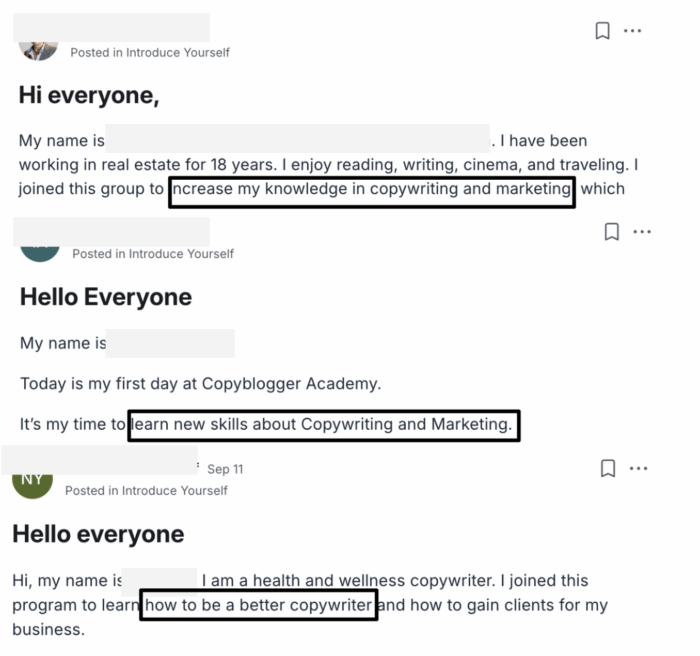
Active participation involves presenting draft material for peer critique, though writers must carefully weigh feedback based on the expertise of the respondent. To address the scarcity of high-level guidance for emerging entrepreneurs, platforms such as Copyblogger Academy have been established to provide structured educational courses alongside direct mentorship from seasoned multi-figure marketers, fostering an environment where members can exchange opportunities and refine their commercial execution.

Be Impatient With Action and Patient With Results
Adopting the philosophy popularized by prominent technology investors, successful copywriters maintain an aggressive posture toward daily execution while exercising long-term patience regarding commercial outcomes. Mastery over consistency remains one of the most demanding hurdles in the digital economy, but professionals who commit to continuous writing, testing, and refinement over extended periods ultimately secure sustainable success.