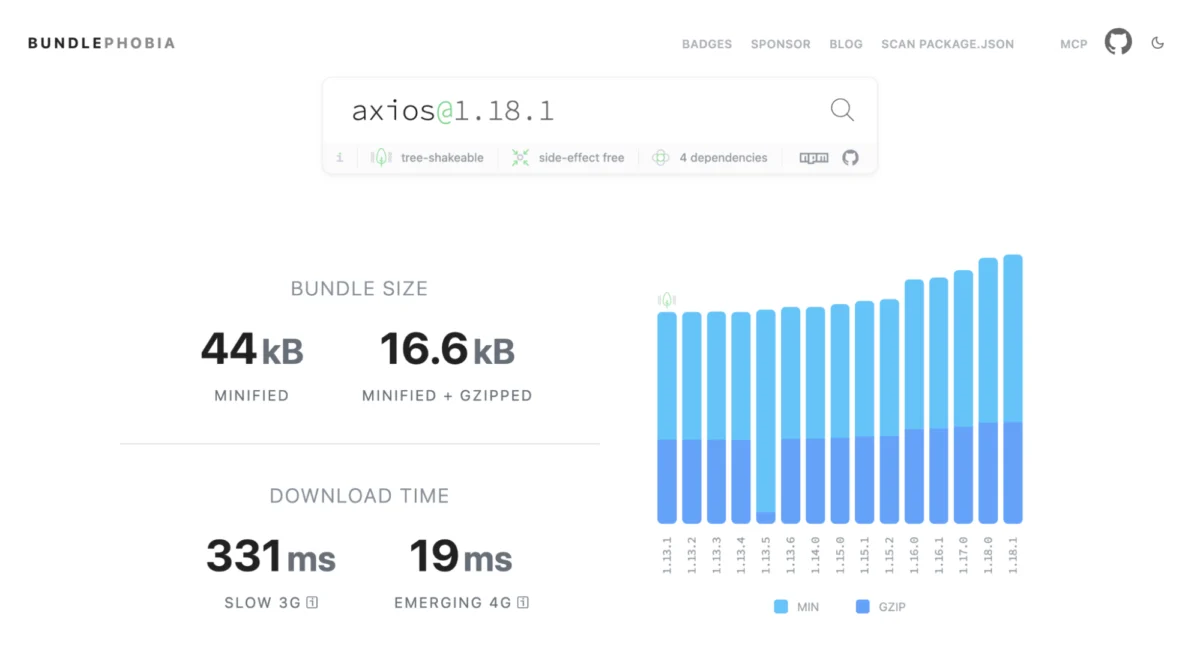
The traditional software development mantra that every common feature requires an external library is steadily losing ground as modern web browsers absorb functionalities previously handled by third-party packages. Recent insights from web platform analysts highlight a growing convergence between what developers rely on external packages for and what native browser engines can achieve out of the box. For a typical mid-sized JavaScript application, developers often find between 60KB and 90KB of minified and gzipped dependencies that the modern web platform can now manage natively.
Features such as advanced date and number formatting, network requests, modals, popovers, deep object cloning, and array grouping were all significant gaps in native browser capabilities just a few years ago. Today, a substantial portion of those gaps have been permanently filled. Despite these advancements, external libraries tend to remain embedded in project repositories for years. This persistence is rarely due to oversight or negligence; rather, engineering teams frequently fail to re-audit their dependencies against modern interoperability metrics or remain unaware of the rapid pace at which modern browsers are shipping platform updates.
Security audits via package managers check for known vulnerabilities, but the fundamental question of whether an installed library is still doing something the browser cannot handle is rarely asked during routine maintenance cycles. To address this oversight, industry standards initiatives are providing clearer metrics for feature availability across major browser engines, enabling engineering teams to safely reduce their reliance on redundant external codebases.
Understanding the mechanics of native availability relies heavily on the concept of Baseline, a collaborative initiative from the WebDX Community Group. Baseline establishes clear guidelines on the safety and cross-browser compatibility of web platform features across Chrome, Edge, Firefox, and Safari. A feature transitions from being newly introduced to widely available over a structured timeframe, typically spanning thirty months. This maturation period is critical for engineering teams evaluating whether to drop a dependency. Features that have achieved widespread availability can generally replace external libraries immediately, whereas newly available features require a closer examination of user demographics or a strategic feature check to ensure seamless user experiences.
Before embarking on dependency removal, web architecture experts recommend a robust decision framework to prevent unintended regressions. Replacing a library is not always a friction-free process; native features might occasionally require polyfills that could inadvertently increase bundle sizes if not managed correctly. Furthermore, native APIs often provide standardized primitives rather than comprehensive frameworks, meaning a direct swap might require writing small utility helpers to match the exact functionality of a feature-rich library.
Evaluating internationalization libraries reveals some of the most substantial bundle size reductions available today. The browser ecosystem now includes a robust family of formatting tools under the native internationalization namespace, rendering many popular third-party packages unnecessary. For instance, relative time formatting packages designed to convert raw timestamps into localized phrasing like "three hours ago" can be directly replaced by native relative time formatters that are widely available across all major browser engines. Developers utilizing native formatting can easily configure numerical output preferences to handle localized phrasing natively, requiring only minor arithmetic helpers to determine the largest applicable time unit.

Similarly, native number formatting tools cover the vast majority of use cases previously managed by dedicated formatting libraries, including thousands separators, currency styling, percentages, and compact notations. Complex tasks such as formatting lists of items with proper conjunctions and punctuation can also be handled natively, eliminating the need for fiddly custom helper functions. While certain advanced internationalization features like duration formatting are still progressing through their availability cycles, foundational text and number operations offer immediate opportunities for bundle reduction.
The landscape of network requests presents a more nuanced picture, requiring careful evaluation before making architectural changes. While lightweight HTTP clients and fetch wrappers remain popular for their convenient defaults, the native fetch API combined with standard controllers covers the core requirements for most web applications. Standard request timeouts, which previously required specialized library configurations, are now natively supported through modern signal abort methods. However, differences remain in how libraries handle advanced features like automatic interceptors, global request caching, or automated retries. Developers reviewing their network layer must weigh whether they actively utilize these advanced patterns before replacing their existing HTTP tooling with native primitives.
User interface primitives represent another area where modern web platform additions offer compelling advantages, frequently exceeding the accessibility defaults of hand-rolled solutions. Modal dialogs, popovers, and floating tooltips that traditionally required dedicated dependency clusters can now be implemented using native dialog elements, popover interfaces, and modern CSS anchor positioning. The native dialog element manages critical accessibility requirements out of the box, including focus trapping, keyboard navigation, and background inertness, rendering separate focus-trap packages obsolete.

By leveraging native platform features alongside modern layout styling, developers can eliminate multiple UI-related dependencies while simultaneously improving the accessibility and performance of their applications. While some of the newest positioning features are still gaining stable traction across all browser engines, the core primitives provide a solid foundation for modern interface design without the overhead of heavy third-party widget libraries.
Utility libraries, particularly those derived from utility frameworks like Lodash, also show significant overlap with native JavaScript capabilities. Functions designed to group collections of data into categorized objects or maps now have direct platform equivalents. Similarly, deep object cloning operations that historically required specialized utility functions can now be executed natively through structured clone methods, which correctly handle complex data types and circular references while outperforming legacy JSON serialization workarounds. Modern set operations further expand the native capabilities of JavaScript collections, allowing developers to perform unions, intersections, and differences without external assistance.
Not all third-party utilities have native equivalents, and certain specialized functions remain valuable dependencies for modern applications. The overarching objective of a platform audit is not the complete elimination of utility packages, but rather the removal of redundant code that duplicates native browser functionality. By systematically auditing production dependencies against current web standards, engineering teams can continuously reclaim valuable bundle space, reduce maintenance overhead, and deliver faster, more efficient web experiences to users worldwide.