The latest weekly roundup of commerce service releases highlights a fast-evolving digital retail landscape defined by agentic checkouts, advanced artificial intelligence-powered marketing tools, localized same-day logistics, sophisticated brand intelligence, cross-border infrastructure, and deep cross-channel personalization. These rollouts reflect how technology providers are rapidly adapting to changing consumer expectations and the rise of automated, AI-driven shopping environments.
New Tools for Merchants
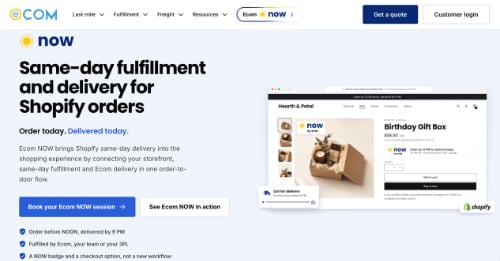
The shift toward hyper-efficient logistics reached Canadian Shopify merchants this week with the launch of Ecom Now by Ecom Logistics. Designed to bridge the gap between storefront discovery and rapid physical fulfillment, Ecom Now connects a merchant’s Shopify storefront directly to Ecom’s integrated order-to-door network across Canada. By uniting fulfillment and last-mile delivery into a single cohesive experience, the service allows customers ordering eligible products before noon to receive their packages by 9:00 p.m. the same day. Currently, the service is operational for eligible deliveries across major Canadian urban centers, including Toronto, Montreal, Vancouver, and Calgary.
In the realm of digital advertising and social commerce, Meta has introduced a comprehensive suite of commercial artificial intelligence capabilities. Centered around an upgraded Meta AI business assistant, the update incorporates creative insights directly from Ads Creative Studio alongside enhanced long-term memory functions for business accounts. Furthermore, Meta has expanded its generative AI video tools within Ads Creative Studio and Advantage+, giving advertisers the ability to seamlessly transform static product images into dynamic video assets. To streamline the consumer journey further, users can now complete purchases natively without ever leaving their chat conversations. Additionally, Meta is rolling out AI-enabled audience discovery to its Detailed Targeting capabilities, helping brands identify and connect with high-intent shoppers more efficiently.

Embedded financial solutions are also expanding geographically. Commerce, the parent company of BigCommerce, has announced the rollout of BigCommerce Payments by PayPal across the United Kingdom. While the payment solution is co-branded and deeply embedded within the BigCommerce ecosystem, merchants maintain their direct financial relationship with PayPal. The system unifies credit and debit cards, traditional PayPal accounts, Apple Pay, Google Pay, and other leading digital wallets into a single, native checkout experience designed to reduce cart abandonment and simplify transaction management.
Shopify is similarly tackling cart abandonment and checkout friction through its consumer-facing app, Shop. The platform can now verify shoppers actively browsing a participating store prior to the final purchase decision. For recognized Shop users, the checkout interface loads significantly faster, browsing carts synchronize automatically across multiple devices, and sign-in is expedited via a one-tap process. Furthermore, the "Buy with Shop Pay" button is pre-filled to ensure a seamless transaction flow. Because browsing activity syncs directly to the shopper’s Shop account, the application can intelligently resurface previously viewed items and abandoned carts.
To help businesses capture and convert traffic more effectively, Typeform has launched AI Landing Pages. As an AI-native platform traditionally known for interactive conversational forms, Typeform’s new builder allows companies to generate branded, publish-ready landing pages through a simple interactive conversation with Typeform AI. Users can effortlessly refine page layouts, incorporate native forms and payment collection tools, and track performance metrics from a centralized platform. Merchants can either integrate pre-existing forms or instruct the platform’s AI to build custom forms tailored precisely to the conversion goals of the page.
Advertising ecosystems are also seeing tighter integration of first-party data. Google Ads has introduced commerce audience sharing for retail media networks. This capability permits retailers and marketplaces to share valuable first-party audience segments directly with brands and sellers running eligible retail media campaigns. By linking a Google Ads account with the relevant Google Merchant Center and data-sharing accounts, retail partners can securely share audience segments, provided both the commerce partner and the advertiser meet Google’s strict eligibility criteria. These shared audiences are strictly restricted to commerce media network campaigns.
The infrastructure supporting autonomous shopping agents continues to mature as well. Crossmint, a specialized payment infrastructure platform, has unveiled its Agent Commerce Toolkit. This developer-focused tool enables AI agents to pay with any standard payment card and complete secure online purchases across any web store through a single integration. Handling the entire purchase flow from card tokenization to final checkout, the toolkit is currently live and available on a self-serve basis, allowing developers to implement the capability using a single prompt alongside an open-source reference app.
Fulfillment and shipping infrastructure are likewise adapting to automated storefronts. Zenkraft, a Salesforce-native shipping platform connecting merchants to global carrier networks, has launched Shipping for Agentic Commerce. Built specifically for Salesforce B2C Commerce’s Storefront Next, the app is available via the Commerce App Registry. It provides merchants with a turnkey solution to incorporate estimated delivery dates, branded tracking portals, and robust return capabilities directly into their storefronts without requiring complex custom coding or engineering resources.

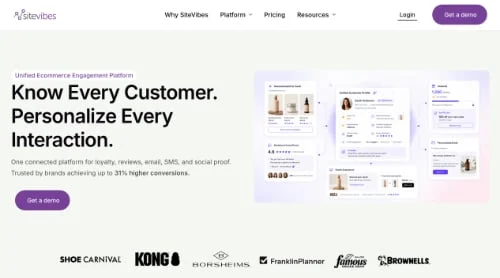
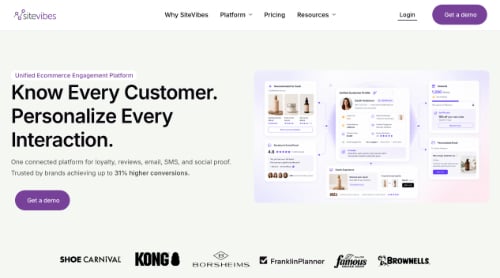
In the sphere of data management and customer retention, Listrak has expanded its integration with the retention platform SiteVibes. This enhancement allows marketers to pull real-time SiteVibes events and consumer data—including loyalty program insights, review activities, and granular customer behaviors—directly into the Listrak ecosystem. By utilizing webhooks to pass data between the platforms in real-time, merchants maintain a unified customer view, allowing them to trigger automated, personalized messages across channels like email and SMS the moment a loyalty or behavioral event occurs.
Managing B2B operational data is also becoming more streamlined. SyncSpider, a workflow automation and business integration provider, has introduced B2Bware, a dedicated B2B portal designed to replace cumbersome spreadsheets, manual emails, and disconnected order-management processes. By integrating seamlessly with enterprise systems such as Odoo, Shopware, and Shopify, B2Bware offers businesses a unified environment to manage complex product catalogs, customer databases, order documentation, pricing structures, and real-time inventory levels.
To help merchants navigate the emerging wave of automated retail, Shopware has released the Agentic Commerce Maturity Index. This self-assessment tool is designed to help businesses evaluate their current AI readiness and understand their standing within the global agentic commerce marketplace. Comprising 24 targeted questions and taking roughly 25 minutes to complete, the assessment evaluates four core pillars: discovery, transactions, fulfillment, and operations. Upon completion, merchants receive an immediate maturity score, comparative benchmarks against other participants, and actionable recommendations for their strategic roadmap.
Brand intelligence and measurement capabilities are also seeing significant upgrades. Kantar has launched Kantar Experience Impact, powered by the Qualtrics experience management platform. The solution combines both customer and non-customer perspectives to illustrate how real-world experiences shape brand perceptions across the broader market. By synthesizing voice-of-customer feedback alongside operational and brand performance data, businesses gain a clearer picture of market dynamics. The product was developed in close partnership with Qualtrics and is available directly through the Qualtrics platform and marketplace.
On the attribution front, Sellforte has introduced the Incremental Pixel for daily ecommerce attribution. This advanced measurement capability merges customer journey data with causal evidence derived from incrementality experiments and marketing mix modeling. By calibrating attribution data across multiple advertising platforms, the tool isolates which campaigns drive genuinely incremental sales. This gives ecommerce and retail marketers a reliable measurement framework for optimizing daily paid media campaigns and making informed strategic investment decisions.
Product discovery and checkout experiences are further converging through platforms like Constructor, which has launched Agentic Checkout, powered by Stripe. This solution allows shoppers—both human users and AI agents—to transition smoothly from product discovery to final purchase within a single conversational AI interface. Shoppers can discover products, ask detailed questions, receive personalized recommendations, refine their preferences, and securely complete transactions using the Link by Stripe digital wallet or alternative payment methods without ever abandoning the agent experience.

Similarly, DaVinci Commerce has expanded its Agentic Commerce Experience Platform with advanced architecture and Product Context Memory technology. Designed to help brands compete effectively in AI-driven environments, the platform unifies three core capabilities: the Agentic Discoverability Engine, Brand Agent, and Agentic BrandStore. The Product Context Memory technology maintains a dynamic repository of contextual knowledge for every stock-keeping unit, linking authoritative product specifications with relevant benefits, consumer needs, use cases, occasions, preferences, and supporting evidence.
Global logistics and financial networks are also forging strategic alliances to support smaller enterprises. FedEx Dataworks, the insights and intelligence subsidiary of FedEx Corp., has partnered with Stripe to reduce friction in global commerce for small- and medium-sized businesses. The collaboration combines the expansive global physical network of FedEx with Stripe’s robust financial infrastructure, aiming to broaden access to business financing. Additionally, FedEx will adopt Stripe as an optional payment processor, adding more than 50 distinct payment methods to its checkout operations.
Finally, in the Asian market, financial solutions and payment services provider Razorpay has partnered with OpenAI to expand ChatGPT Ads in India. Collaborating through Razorpay Engage, its dedicated marketing platform, Razorpay will help India-based brands prepare product catalogs, launch targeted advertising campaigns, and measure advertising performance effectively on ChatGPT Ads.