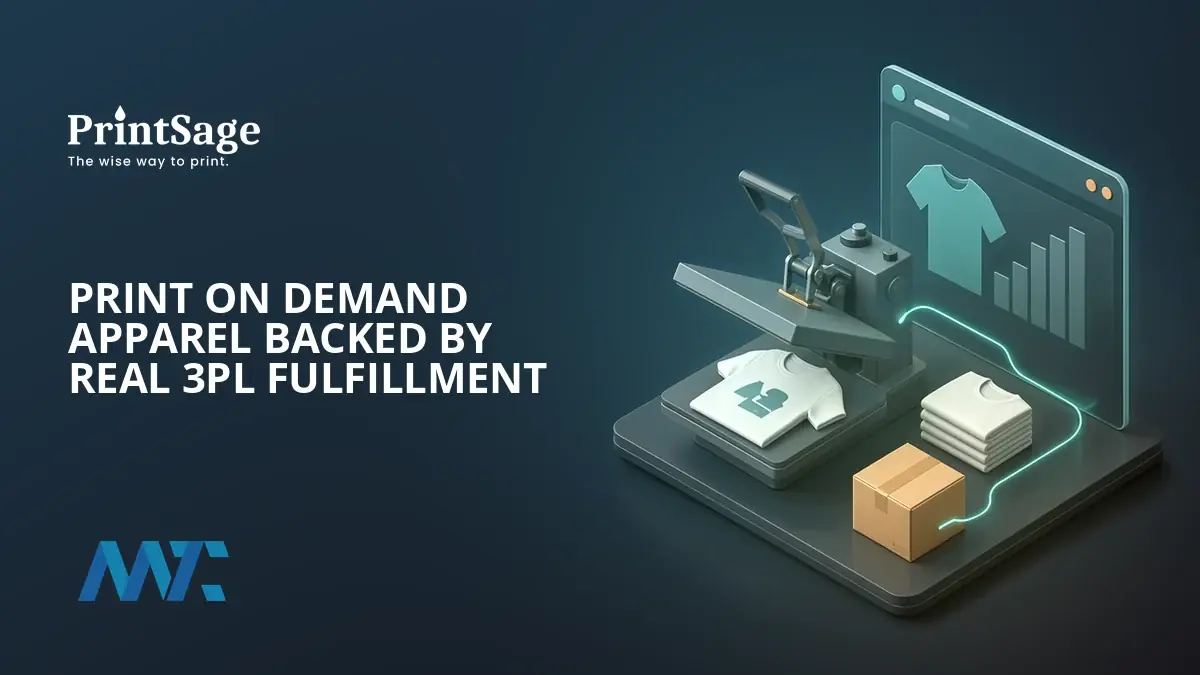
The landscape of custom merchandise and e-commerce logistics is experiencing a significant shift with the introduction of PrintSage, a newly launched print-on-demand platform developed by third-party logistics (3PL) fulfillment company ShipSage. Designed to bridge the historical gap between creative product design and complex physical inventory management, PrintSage offers a streamlined solution for creators, online brands, and independent merchants looking to sell custom apparel without the traditional financial burdens and logistical headaches.
For years, breaking into the custom merchandise market has presented e-commerce entrepreneurs with a frustrating dilemma. On one hand, purchasing blank inventory upfront ties up valuable working capital in sizes and colorways that run a high risk of remaining unsold. Attempting to handle fulfillment independently transforms a retail side venture into an exhausting, labor-intensive second job. Conversely, while standard print-on-demand services traditionally eliminate the inventory problem entirely, they frequently hand off production to sprawling, unpredictable networks of third-party printers. This detachment often leads to inconsistent product quality, unpredictable production timelines, and unreliable tracking for end consumers.
PrintSage aims to solve these persistent industry hurdles by shifting the entire operation directly into an established 3PL infrastructure. In the print-on-demand model, a product such as a t-shirt or sweatshirt is printed strictly after a customer completes a purchase, meaning sellers carry zero inventory and pay only the production cost per individual order. What sets PrintSage apart is that printing, packing, and shipping take place entirely in-house rather than being outsourced to an external printer network. Operating directly on the same order management system and warehouse management system that power ShipSage’s broader fulfillment network, the platform integrates production, inventory tracking, picking, packing, and shipping into a single unified dashboard without relying on complex middleware or disconnected third-party software extensions.
The platform has been built to cater to two distinct audiences within the modern e-commerce ecosystem. For sellers—ranging from Shopify merchants and independent creators to marketplace operators and established brands—PrintSage provides the infrastructure needed to build a cohesive product line while capturing the revenue margin between the retail price and the baseline production cost. Simultaneously, everyday shoppers looking for a personalized touch can use the PrintSage storefront to design a single custom piece, which is then printed and delivered directly to their doorstep.
Why Sellers Choose PrintSage
The core differentiator for the platform lies in the execution of its supply chain. By keeping printing and fulfillment within a genuine 3PL operation rather than relying on decentralized printer networks, sellers gain a remarkable degree of consistency and visibility at every stage of the transaction lifecycle. Traditional print-on-demand arrangements often suffer from opaque production timelines and variable print quality because orders are bounced between independent print shops depending on regional capacity. PrintSage centralizes these operations, ensuring that the physical handling of the merchandise aligns directly with professional logistics standards.

How PrintSage Works
Integrating the service into an existing retail operation is designed to be frictionless. Connecting a Shopify storefront, for example, takes only a matter of minutes. Once a merchant authorizes the application, custom products can go live immediately upon publishing, completely bypassing any separate manual approval processes or lengthy waiting periods.
Orders flow seamlessly from the sales channel into the centralized dashboard. Once a customer completes a purchase on a connected marketplace or web store, the order triggers an automated sequence. Products are printed, packed, and shipped directly from domestic U.S. fulfillment centers. Once the items leave the warehouse, tracking information is automatically synchronized back to the seller’s original storefront, keeping customers fully informed without requiring manual administrative oversight.
PrintSage Features and Catalog Quality
To ensure professional presentation and durability, the PrintSage catalog features blank apparel sourced from industry-standard manufacturers including BELLA+CANVAS, Gildan, Tultex, and Hanes. Additionally, the platform features its own proprietary BasePrint line of standard t-shirts and cropped tees, providing merchants with reliable, cost-effective options for their apparel lines.
Beyond basic apparel production, the platform supports advanced branding capabilities. Sellers are able to incorporate custom packing slips, branded shipping boxes, and targeted marketing inserts into their shipments. This allows businesses to maintain a strictly white-label customer experience, ensuring that every package arrives under the merchant’s own brand identity rather than a third-party logistics provider.
PrintSage Pricing Model

The platform operates on an accessible financial model designed to minimize initial barriers to entry. PrintSage is free to install and free to connect to supported e-commerce infrastructure, requiring no monthly subscription fees, no initial setup costs, and no minimum order quantities. Merchants pay only the baseline product cost for each individual item when an order is successfully fulfilled. Sellers retain the entirety of the profit margin generated between that base cost and their chosen retail price. Every item listed within the catalog clearly displays its base cost upfront, enabling merchants to calculate and review their exact margins per variant prior to publishing products to their stores.
The platform’s versatility is reflected across its various deployment options. Shopify merchants can utilize the dedicated app to publish items directly to their storefronts. Meanwhile, sellers operating across major marketplaces such as Amazon, TikTok Shop, Etsy, Walmart, Temu, and Shein, alongside more than 100 other sales channels, can route all incoming orders through a single centralized dashboard. For individual consumers, the standalone PrintSage storefront allows shoppers to design and order single custom items without maintaining a commercial store.
Getting Started and Operational Logistics
Merchants looking to adopt the platform typically begin by creating an account, connecting their primary sales channels, and publishing a curated selection of designs onto popular apparel blanks. Industry best practices recommended by early adopters include ordering physical product samples to personally verify print quality and capture professional product photography for online listings. Once initial inventory visuals are established and orders begin processing, sellers can gradually introduce branded packaging elements to strengthen their brand presence.
With nationwide fulfillment capabilities anchored by six strategic U.S. fulfillment centers, orders are generally produced within two business days and delivered to customers across the country in approximately two days. Whether scaling an existing retail brand or launching a new merchandise line as a content creator, PrintSage provides a unified infrastructure designed to handle the complexities of apparel production and logistics under one roof.