For as long as modern bookkeeping has existed, monthly and weekly reconciliations have formed the bedrock of the profession. Matching bank statements, verifying receipts, and clearing out routine transaction lines are tasks that every financial professional knows intimately. Yet, repeating the exact same manual steps week after week consumes valuable hours—time that could otherwise be dedicated to high-level financial analysis, strategic planning, and the kind of advisory work that truly benefits from a seasoned professional’s expertise.
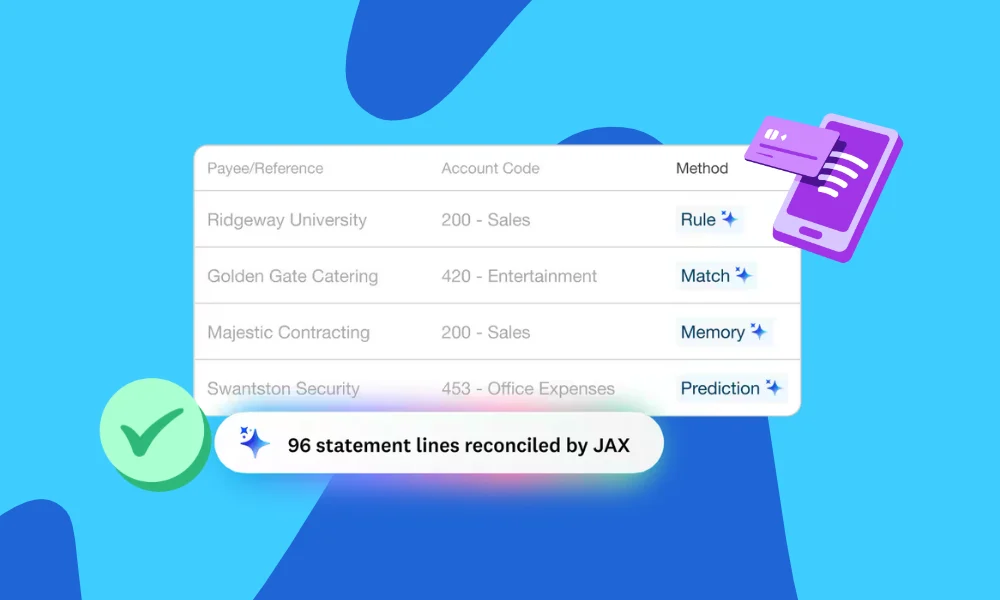
Recognizing this persistent operational bottleneck, financial technology platforms have increasingly turned their focus toward intelligent automation. Xero’s Auto Bank Reconciliation tool was specifically engineered to alleviate this burden by automatically handling routine bank transactions whenever the system’s confidence score is sufficiently high. Crucially, the platform was designed to maintain total visibility, keeping every automated reconciliation open for human review and oversight. But for the professionals who use these systems day in and day out, the most compelling part of the technological shift is not merely the automation itself. Instead, the real story lies in what practices are actually doing with the reclaimed hours.
To understand how modern firms are adapting, it helps to look at the experiences of industry leaders who have integrated the feature into their daily operations. Katie Williams, founder of The Vault Bookkeeping in Australia’s Hunter Valley, and Martine Hoosen, a thirty-year industry veteran and former Non-Executive Director of the Institute of Certified Bookkeepers who now runs The Bookkeepers Academy, are both members of the Xero Partner Advisory Council (XPAC). Having tested and implemented the tool within their own practices, they have emerged as vocal advocates for smarter workflow automation, offering a firsthand look at how artificial intelligence and machine learning are reshaping the day-to-day reality of bookkeeping.
Like many experienced practitioners, Williams initially approached the arrival of automated bank reconciliation with a mixture of professional caution and personal apprehension. She admits that she was both skeptical and nervous about what the shift might mean for the industry at large. The primary concern among many financial professionals when new automation tools emerge is always the same: where does this position the role of the traditional bookkeeper? However, running a modern practice means constantly searching for operational efficiencies that create breathing room for more lucrative and impactful advisory services.
For Hoosen, who has spent three decades navigating every major technological transition in the financial services sector—from the introduction of the Goods and Services Tax all the way through to the widespread adoption of cloud accounting and automated bank feeds—Auto Bank Reconciliation was simply the next logical evolution in the profession. True to form, she wasted no time evaluating its potential. As soon as the feature became available, she immediately deployed it within her own business files to test its accuracy and determine how it could be scaled across her entire client base. Her focus was entirely practical: how could this technology create additional value for clients, drive internal efficiency, build firm capacity, and ultimately generate new revenue and profitability?
First Pass by Auto Bank Reconciliation, Final Say by Your Team
Neither Williams nor Hoosen treats automated bank reconciliation as a simple "set-and-forget" switch that can be activated across an entire portfolio without oversight. Instead, both describe the onboarding process as remarkably similar to hiring a new human team member. It begins with cautious supervision, close monitoring, and a gradual expansion of responsibilities as trust and confidence in the workflow grow organically over time.
Williams’s foundational advice for any practice starting out with the tool is to take a methodical approach, beginning with smaller and less complex client files. She recommends turning the feature on for secondary accounts first—such as dedicated savings accounts or GST holding accounts—allowing the team to get fully accustomed to how the background data feeds behave before ever applying the automation to a primary everyday operating account.
In her own practice, Williams initially restricted the rollout to the firm’s smallest monthly and quarterly clients, deliberately avoiding businesses that relied on complex third-party invoicing integrations during the initial trial phase. During the first week, her team diligently checked the data feeds on a daily basis, correcting any miscoded entries immediately. As the system adapted and the underlying files stabilized, they eased their review schedule back to a fortnightly cadence, and eventually to standard monthly reviews.
Hoosen encountered her own initial hurdles during implementation, noting a specific allocation challenge with a client whose supplier payments were processed as multi-pays through internet banking. Initially, the automated tool struggled to split those multi-line payments correctly. However, by consistently reviewing and manually correcting the allocation lines, Hoosen watched the system’s performance improve week over week. Because the underlying machine learning algorithms analyze not just payee names, but also transaction amounts and reference numbers, consistent human corrections allowed the system to adapt rapidly. Within a couple of weeks of steady, diligent oversight, the tool was sorting those complex multi-pays correctly every single time.
Despite the high accuracy rates achieved by automated tools, both bookkeepers continue to rely on manually established bank rules for transactions where absolute certainty is non-negotiable. This includes predictable financial commitments such as structured loan repayments and recurring software subscriptions with known, fixed GST treatments, leaving the tool’s predictive capabilities to handle lower-risk, repetitive transactions.
The Numbers, When You Actually Look
When asked about the tangible outcomes delivered by Auto Bank Reconciliation, both professionals point directly to hours saved and subsequently reinvested into high-value client advisory work. For Hoosen, the initial investment of time required to train the system has paid off handsomely. Looking at performance metrics across a recent thirty-day window, she estimates that an impressive 97 percent of all incoming statement lines are now automatically reconciled without requiring manual intervention.
For Williams, the most dramatic operational shift manifested across her firm as a whole, rather than being isolated to a single client account. Her practice measured an average productivity gain of approximately six hours per employee, with the efficiency gains concentrated heavily in the exact accounts that historically demanded the most tedious manual attention: routine daily transfers and merchant facility platforms like Stripe and PayPal that now quietly reconcile in the background.
Reflecting on the financial impact, Williams noted that their monthly and quarterly client packages previously represented their lowest return on investment. Because the vast majority of billable hours were consumed by manual data coding and chasing missing details, client touchpoints were minimal and profit margins were thin. With the introduction of Auto Bank Reconciliation, that entire segment of the business has experienced a complete turnaround, evolving into one of the firm’s most lucrative and reliable revenue streams.
A Gentle Nudge Toward Value
The collective experience of these practitioners points toward a broader, highly valuable lesson for the wider accounting and bookkeeping profession: the hours saved through intelligent automation present a golden opportunity to re-evaluate how bookkeeping services are priced in the modern market.
Hoosen has spent years encouraging her peers to move away from outdated pricing models, a perspective she recently detailed in Xero’s Modern Practice Playbook report. In her view, Auto Bank Reconciliation has only reinforced the urgency of that message. Bookkeepers should never price their services purely on the basis of how many minutes or hours a specific task takes to execute. Instead, pricing models should always be anchored around outcomes and strategic value. If a firm is processing transactions more quickly and reconciling accounts faster due to advanced technology and specialized professional skill, it does not mean they should charge less for the identical value being delivered to the client.
Williams shares this philosophy, viewing it as an essential mindset shift that her own internal team had to work through. Artificial intelligence and automation are simply tools designed to assist professionals in executing their core responsibilities. The true value that a modern bookkeeper brings to the table is not measured by the sheer volume of individual transactions processed manually. Rather, it is found in professional knowledge, expert oversight, and the forward-looking financial advice that becomes possible precisely because professionals are reviewing accounts on a regular, uninterrupted basis.
Both leaders emphasize that this evolution does not need to happen overnight or across an entire practice at once. For professionals who have spent decades charging strictly by the hour or by the transaction volume, transitioning to value-based pricing can feel like a daunting leap. Their collective advice is to approach pricing strategy the exact same way they approached the automation software itself: start small, build internal confidence with a select group of clients, and let the undeniable results speak for themselves.
Where the Time Actually Goes
For Hoosen, the fundamental transformation enabled by automation is ultimately about professional identity. These emerging tools allow practitioners to shed the outdated stereotype of the transaction-based data entry clerk and step fully into the role of a trusted strategic advisor. By delivering timely insights and helping business owners interpret their financials, bookkeepers are actively empowering their clients to make smarter, more informed operational decisions.
For Williams, who also lends her expertise to the Australian Taxation Office’s BAS Agent Advisory board, the shift represents an opportunity to bridge a communication gap she has long observed in client relationships. Because professional bookkeepers are inside a company’s accounts on a regular basis, they are inevitably the first to spot emerging financial trends, operational roadblocks, or compliance considerations. Proactively closing that advisory gap ensures that clients receive timely guidance before minor issues escalate into costly problems.
For any financial professionals who may have experimented with automated bank reconciliation in its earliest stages and remained unconvinced, or for those who have yet to integrate the technology into their workflows, Hoosen and Williams offer a reassuring reminder: the pace and method of experimentation remain entirely within the practitioner’s control. Practice leaders interested in exploring implementation strategies can connect with their account managers or engage with ongoing professional education resources, such as specialized industry webinars, to learn how to successfully deploy automated reconciliation across their practices.