It is a typical Wednesday afternoon, and the life of a sales leader is defined by a relentless pace. Between preparing for a Quarterly Business Review (QBR), addressing urgent customer escalations, interviewing potential new hires, and managing a barrage of incoming Slack messages, the strategic focus required for long-term planning often falls by the wayside. For many, Monday’s forecast call already feels like a distant memory, even though the data underpinning that forecast is constantly in flux.
In the modern enterprise, the primary challenge is not a lack of data; it is the inability to process that data fast enough to remain agile. Business users often suffer from the "unknown unknowns"—they do not know what they should be looking for until a problem has already manifested. By the time a user realizes they need to open a specific dashboard or ask a targeted question, the window for effective intervention has often closed.
Tableau Next is setting out to change this paradigm with the introduction of Proactive Intelligence. By shifting analytics from a destination that users must visit into an always-on, intelligent agent that surfaces critical insights precisely when and where they are needed, Tableau is fundamentally transforming how organizations interact with their business data.
The Shift to Proactive Intelligence
Proactive Intelligence works by monitoring business data in the background, continuously evaluating trends, risks, and anomalies. Instead of relying on manual report generation or static dashboard refreshing, Tableau Agent acts as a silent observer that identifies potential pitfalls before they become full-blown crises.
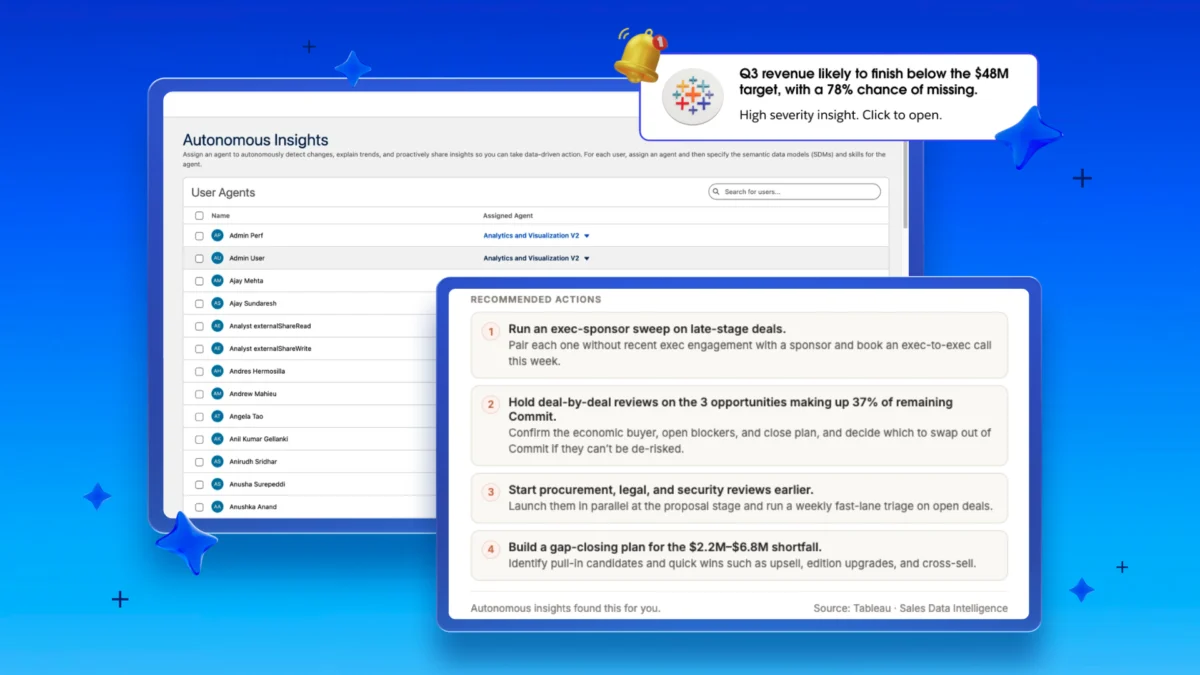
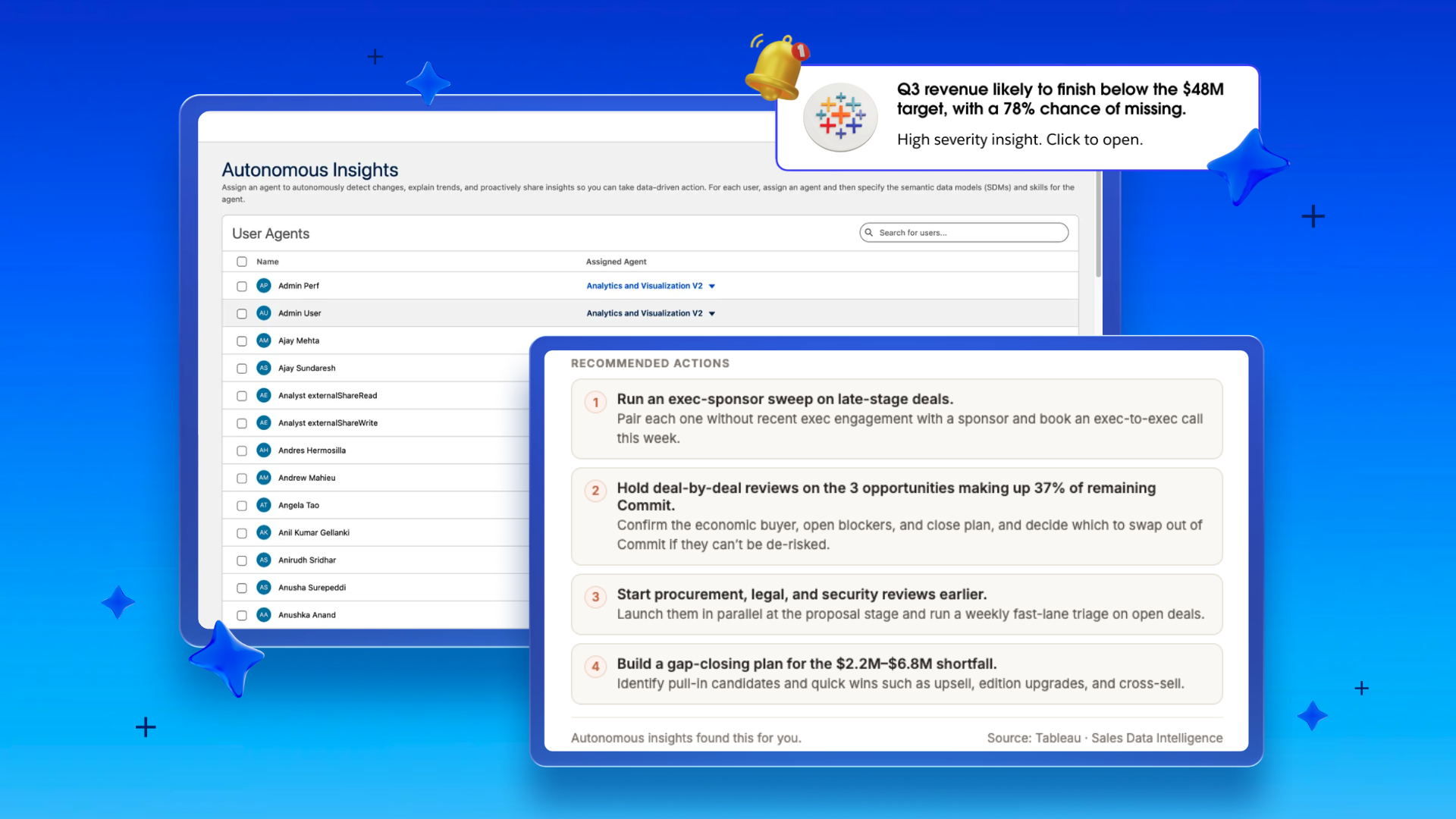
Consider the hypothetical, yet common, scenario of a sales leader missing their Q3 targets. In the traditional workflow, this realization might only occur during a late-stage review. With Tableau Agent, the system can proactively push a notification stating that revenue is likely to fall short of a $48 million target, identifying a 78% probability of a miss due to three specific deal pushes. More importantly, the agent suggests a concrete path to remediation—such as adding an executive sponsor to an opportunity with a key account like Northstar Bank. This is not just data delivery; it is actionable, context-aware guidance provided before the leader even knew to look for the problem.
This intelligence is delivered directly into the flow of work, whether that is via Slack, Salesforce, or any other platform compatible with the Model Context Protocol (MCP). By anchoring these insights in a governed semantic model, Tableau ensures that the metrics remain consistent with the business’s verified definitions, preventing the confusion that often arises from disparate "best guess" calculations.
A Unified Ecosystem of Insights
The architecture of Tableau Next is built on three pillars that function in concert: intelligence briefs, data alerts, and autonomous insights. Intelligence briefs provide the foundational context for daily routines, while data alerts act as tripwires for critical metrics that cannot afford to slip. Autonomous insights, meanwhile, serve as the system’s proactive layer, revealing surprises and trends that a human user might never have thought to query.
Because these capabilities are powered by Tableau Next MCP tools, the entire experience remains unified. Whether a user is interacting with an insight in Slack, Salesforce, or a third-party AI client, the follow-up threads and data definitions remain synchronized. This consistency is vital for organizations that rely on a single version of the truth to drive decision-making.
Administrative Foundation and Deployment
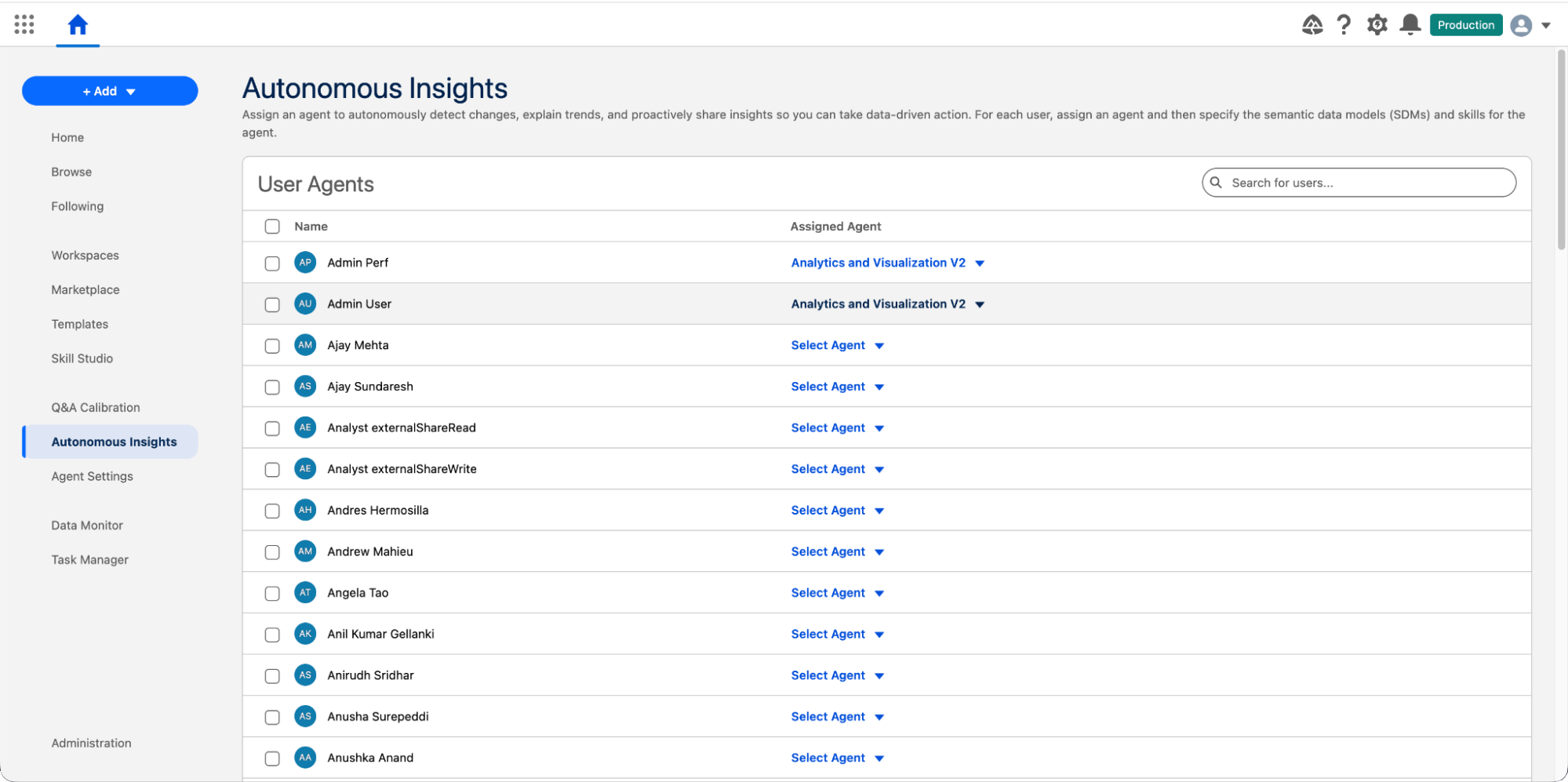
For administrators, the implementation of Proactive Intelligence is designed to be streamlined, focusing on the connection between the Tableau Next environment and existing collaboration tools like Slack. The initial setup requires connecting the Tableau Next instance to Slack and enabling the Tableau Next MCP server. This server is the engine that allows the Slackbot to not only retrieve data but also to manage alerts and answer complex follow-up questions using the organization’s verified semantic models.
This flexibility extends beyond the Salesforce ecosystem. Because the system leverages the Model Context Protocol, any MCP-compatible AI client—such as Claude or ChatGPT—can connect to the same server. This ensures that users receive the same trusted answers and consistent data definitions regardless of the interface they choose to use.
Guiding the Agent with Business Context
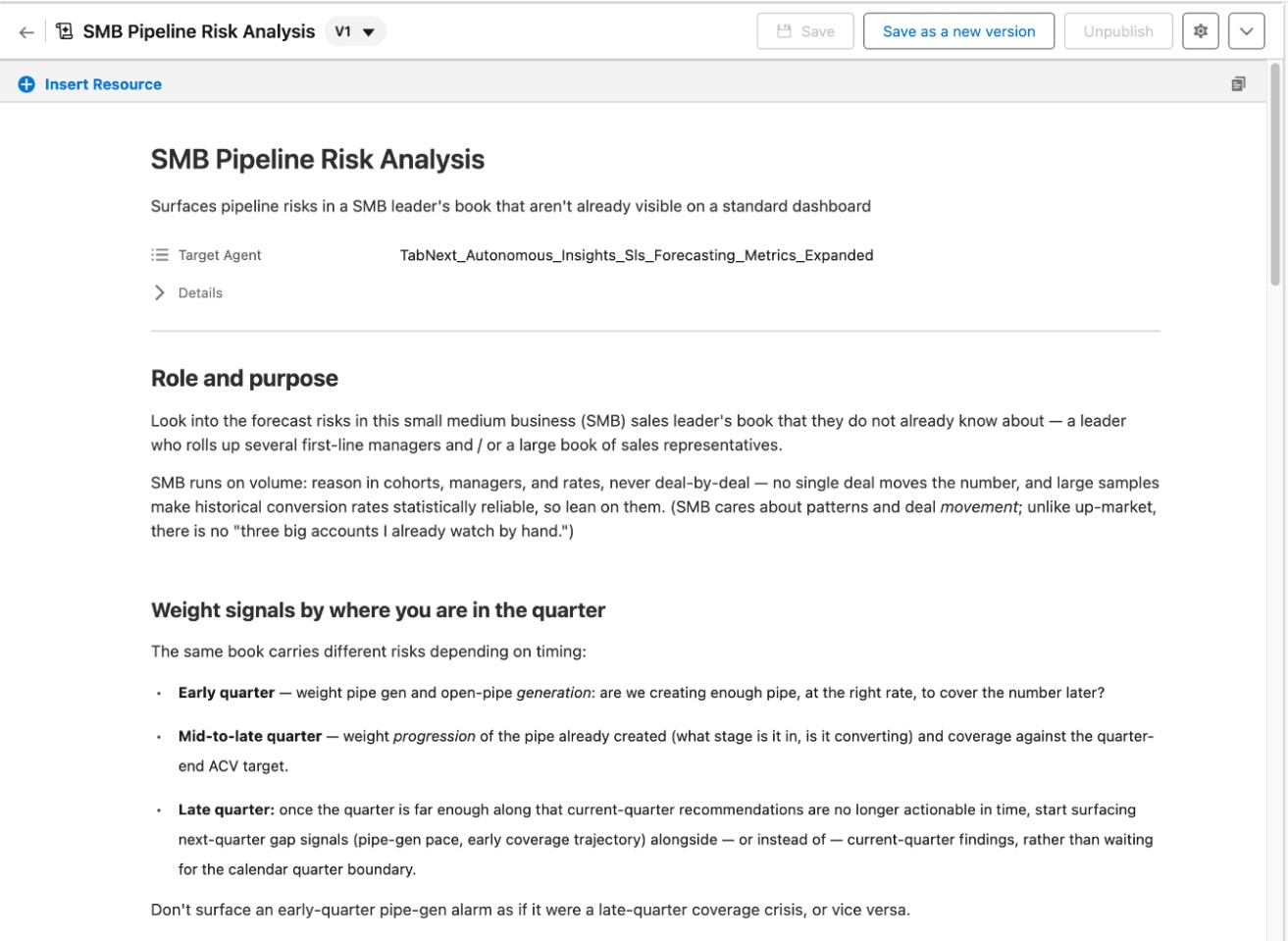
One of the most significant shifts in the Tableau Next framework is the move from executing fixed, static skills to providing an agent with nuanced business context. Administrators can use Agentforce Studio to create "skills" that guide the Tableau Agent’s reasoning. These skills act as guardrails, helping the agent understand what a sales leader cares about and what constitutes a significant deviation from the norm.
Importantly, these skills are not rigid scripts. The agent retains the ability to reason through the data, prioritizing what is urgent and important based on the context provided. By enabling "Autonomous Insights" and mapping the agent to specific semantic models, organizations can ensure that the AI is exploring relevant data while remaining bounded by the company’s internal logic.
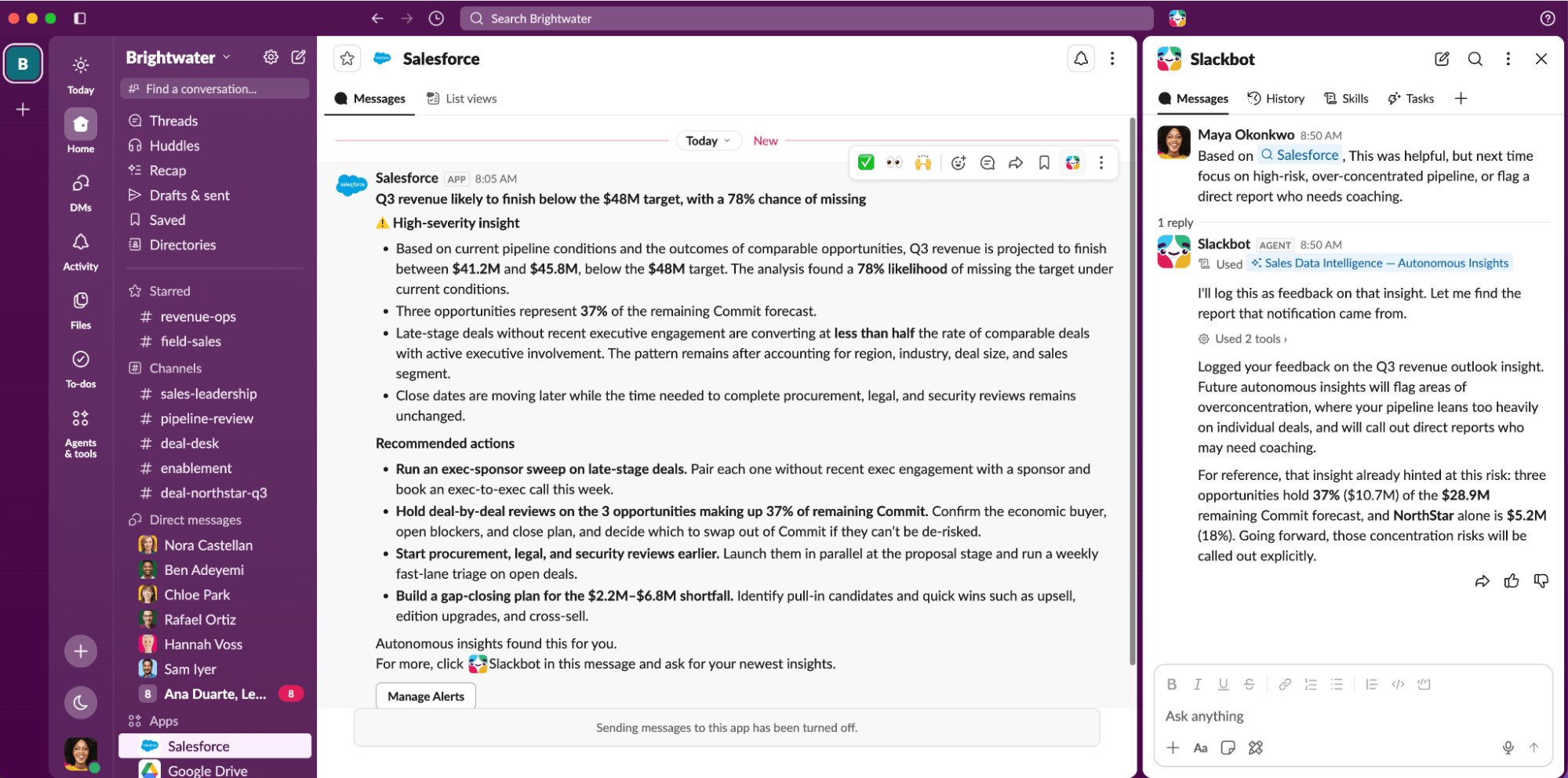
Once the agent is assigned to specific users, it begins its work, delivering insights ranked by their level of urgency. Over time, the system becomes more personalized. As users interact with the insights—offering feedback such as "more like this" or indicating that certain data points are not relevant—the agent learns and refines its output, becoming an increasingly precise tool for the individual user.
Dynamic Alerting and Real-Time Responsiveness
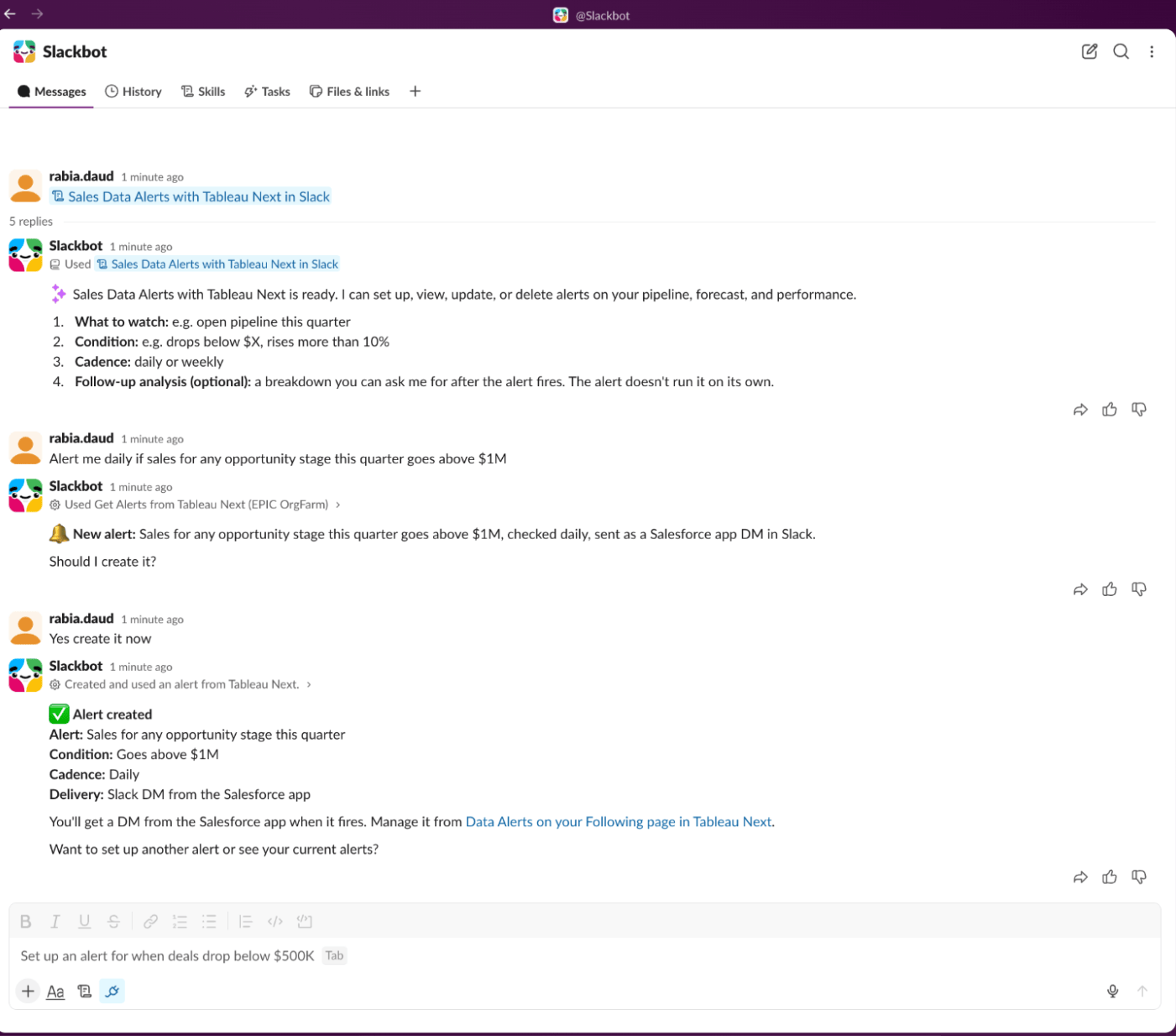
While autonomous insights are designed to find risks the user might miss, data alerts serve as a fast, direct way to stay informed about known critical metrics. By using natural language, users can ask the Slackbot to create an alert for specific conditions. For example, a user might request to be notified if a specific opportunity value drops below a certain threshold or if a pipeline growth metric deviates from a target.
These alerts remain dormant until the defined condition is met. When an alert fires, it does not just present a number; it provides context regarding the factors contributing to that change. Users can reply directly in the thread to ask follow-up questions, turning an alert into a collaborative conversation. This capability allows for immediate management of alerts—if a threshold needs to be adjusted or an alert stopped entirely, the user can simply tell the Slackbot, and the system updates accordingly.
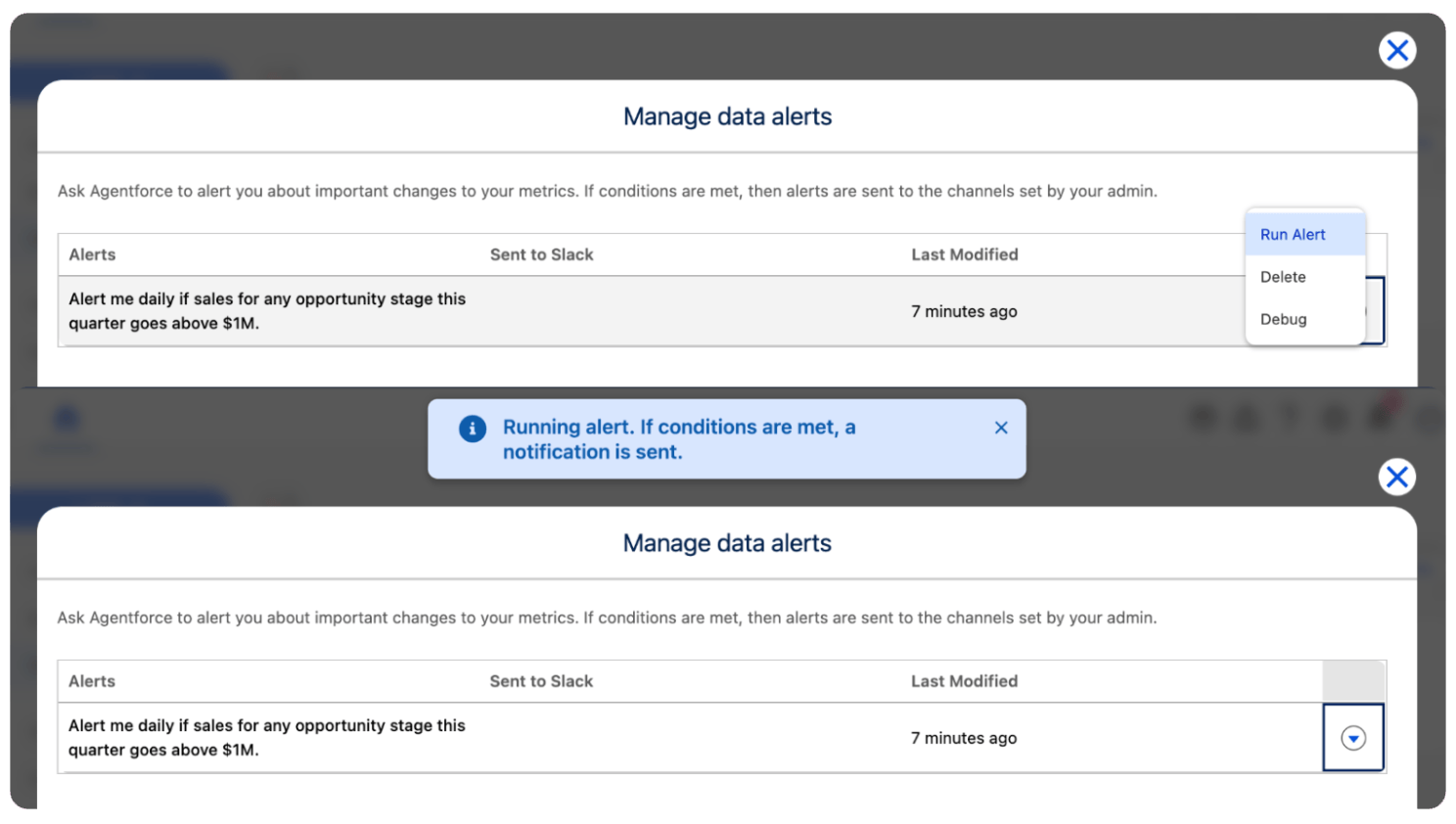
For those tracking metrics already established within the Tableau Next environment, built-in alert types offer an even simpler path. By navigating to a metric and selecting "Manage Alerts," users can configure notifications to arrive via email or through the notification bell within the platform.
A Scalable Approach to AI Adoption
The transition to a proactive, AI-driven analytics culture does not require an immediate, full-scale overhaul of existing systems. Tableau emphasizes a modular approach, suggesting that organizations start with small, focused implementations to demonstrate value before layering on additional capabilities. By beginning with a single team or a specific set of metrics, leaders can validate the efficacy of the agent’s insights and build trust within the organization.
As organizations continue to integrate these tools, the goal remains the same: to move from a reactive state of "what happened" to a proactive state of "what should we do next." By bridging the gap between raw data and actionable intelligence, Tableau Next is attempting to alleviate the cognitive load on business leaders, allowing them to focus on high-level strategy rather than the constant, manual pursuit of information.
Ultimately, the power of Proactive Intelligence lies in its ability to be always present, ensuring that even in the middle of a chaotic Wednesday, the most important business insights are not missed, but are instead brought directly to the forefront of the conversation.