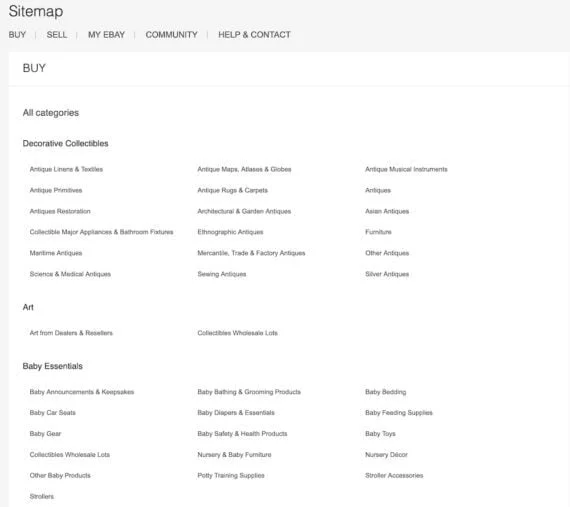
From the very earliest days of the commercial internet, developers have looked for ways to help visitors and search engines navigate complex digital environments. Long before sophisticated algorithms dominated search, website creators included summaries of links pointing to a site’s key sections, such as core categories, company background pages, policies, and procedural documents. These navigational summaries frequently appeared tucked away in website footers or housed on standalone pages. Developers commonly referred to these tools simply as "sitemaps."
As the web evolved and search engines grew exponentially more complex, the landscape of digital discoverability shifted dramatically. In 2005, Google introduced a modernized version of the sitemap based on Extensible Markup Language, commonly known as XML. This text-based format, originally developed in the 1990s for structured data storage, provided a standardized way for site owners to submit a comprehensive list of their URLs directly to search engines through tools that eventually evolved into Google Search Console. The primary aim was clear and enduring: to help search engines thoroughly crawl and index every valuable page across an entire website without missing deeply buried content.
Over time, digital marketers and technical optimizers began distinguishing between these two approaches by referring to them as "HTML sitemaps" and "XML sitemaps." Even today, many ecommerce site owners frequently confuse the two distinct formats, despite both remaining uniquely helpful for modern search engine optimization strategies. Understanding how each format functions, where their capabilities differ, and how they complement one another is essential for maintaining strong organic search visibility, particularly for large, fast-changing online retail operations.
The Core Differences in Discoverability and Access
The primary distinction between XML and HTML sitemaps lies in how they serve search engine bots versus human visitors, and how search engines access the data contained within them.
XML sitemaps are fundamentally built to assist with discoverability. Search engine bots can parse an XML sitemap to find web pages quickly and directly without needing to organically land on the host website first. However, whether those search-engine bots ultimately choose to access, crawl, and index the newly discovered pages depends entirely on a variety of broader ranking and technical signals. These factors include a site’s available crawl budget, overall domain authority, content relevance, depth and originality of the material, internal linking structures, and external backlinks pointing to the domain, among other algorithmic considerations.
Conversely, HTML sitemaps provide no such backdoor entrance to a website. Traditional web crawlers must first land on the actual website to access an HTML sitemap, likely navigating to it via standard internal links placed prominently in a footer or main navigation menu.
Within the search engine optimization community, opinions have historically varied regarding the true impact of HTML sitemaps. However, experienced technical practitioners note that HTML sitemaps heavily support the indexing process by revealing clear internal pathways to every important page on a domain. When placed strategically in a website footer, HTML sitemaps effectively distribute internal link equity directly to the listed pages. Furthermore, they can help minimize the accumulation of URLs trapped in Google Search Console’s "Crawled, currently not indexed" status by establishing a reliable, visible link structure.
The Value of Deploying Both Formats
Both HTML and XML sitemaps work in tandem to help search engines discover, crawl, and index a higher volume of pages, which is especially critical for larger websites with thousands of product and category variations.

Despite their utility, neither format serves as a replacement for a sound website architecture that naturally prioritizes important pages through a logical hierarchy. Only a fast, well-structured, and intelligently interlinked website can guarantee solid, long-term organic search visibility. Technical SEO specialists occasionally advise implementing temporary HTML sitemaps during major website redesigns or platform migrations while the site awaits its final permanent internal linking structure. Even in those scenarios, however, an HTML sitemap is never meant to act as a permanent substitute for a clean site architecture.
The discussion around the practical utility of HTML sitemaps recently gained fresh perspective during an episode of Google’s "Search off the Record" podcast. John Mueller, a long-time search advocate at Google who has historically expressed skepticism regarding the necessity of HTML sitemaps, acknowledged their potential value during the broadcast. Mueller noted that HTML sitemaps "would help crawling because from this place we can find all the links."
Construction and Practical Application
The underlying construction and maintenance requirements of the two sitemap types differ significantly to match their respective audiences and functions.
XML sitemaps are dynamic files that are continually updated in the background with newly published pages, fresh product listings, and routine site updates, encompassing every single URL that an owner wants search engines to index. HTML sitemaps, by contrast, are usually static or semi-static pages designed to highlight the most important sections of a website for both humans and search crawlers.
During the same podcast episode, Mueller addressed these structural differences specifically in the context of retail websites, explaining that merchants should approach the two formats differently. If an operator runs an extensive ecommerce site, Mueller pointed out that they would not typically list every single individual product within an HTML sitemap file. Instead, the HTML sitemap should feature core categories and subcategories so that human visitors and bots can navigate to the correct section before drilling down into individual product pages.
For most modern businesses, XML sitemaps are built directly into the content management system or specialized ecommerce platform, allowing them to update automatically as inventory changes. Site owners can easily check the documentation of their respective CMS or platform to locate their XML sitemap URLs, which should then be submitted directly to tools like Google Search Console and Bing Webmaster Tools. Technical professionals also routinely utilize specialized web crawlers, such as Screaming Frog, to evaluate XML sitemaps for common technical glitches, including broken links and accidentally noindexed URLs.
HTML sitemaps are constructed differently, focusing heavily on human usability while simultaneously guiding crawlers to high-priority landing pages. Developers build these pages according to the specific page priorities defined by the site owner. A prominent example of this practice can be seen on platforms like eBay, which maintains a comprehensive HTML sitemap linking directly to its primary retail categories and subcategories. The intended audience for these pages consists primarily of human users searching for specific departments, help center resources, and community discussion boards, though search engine crawlers reap structural navigation benefits as a byproduct of their existence.