Imagine arriving at your long-awaited vacation destination, walking down to the baggage claim area, and watching the carousel slowly grind to a halt while realizing your suitcase never made it onto the plane. Losing your wardrobe, favorite shoes, and essential toiletries is frustrating enough to put a damper on the start of any holiday, but the situation escalates dramatically if that missing suitcase also contains your blood pressure medication, insulin, or other critical daily prescriptions.
For millions of individuals, particularly retirees and older adults managing chronic health conditions, traveling with prescription medications requires far more forethought than simply tossing a pill organizer into the corner of a suitcase. In recent times, travel and health authorities have placed renewed emphasis on a common oversight that can turn an otherwise relaxing getaway into an expensive and stressful medical emergency. Issues ranging from lost or delayed airline luggage and extreme temperature fluctuations to strict international drug laws and airport security protocols mean that modern travelers are increasingly rethinking how and where they pack their vital medicine.
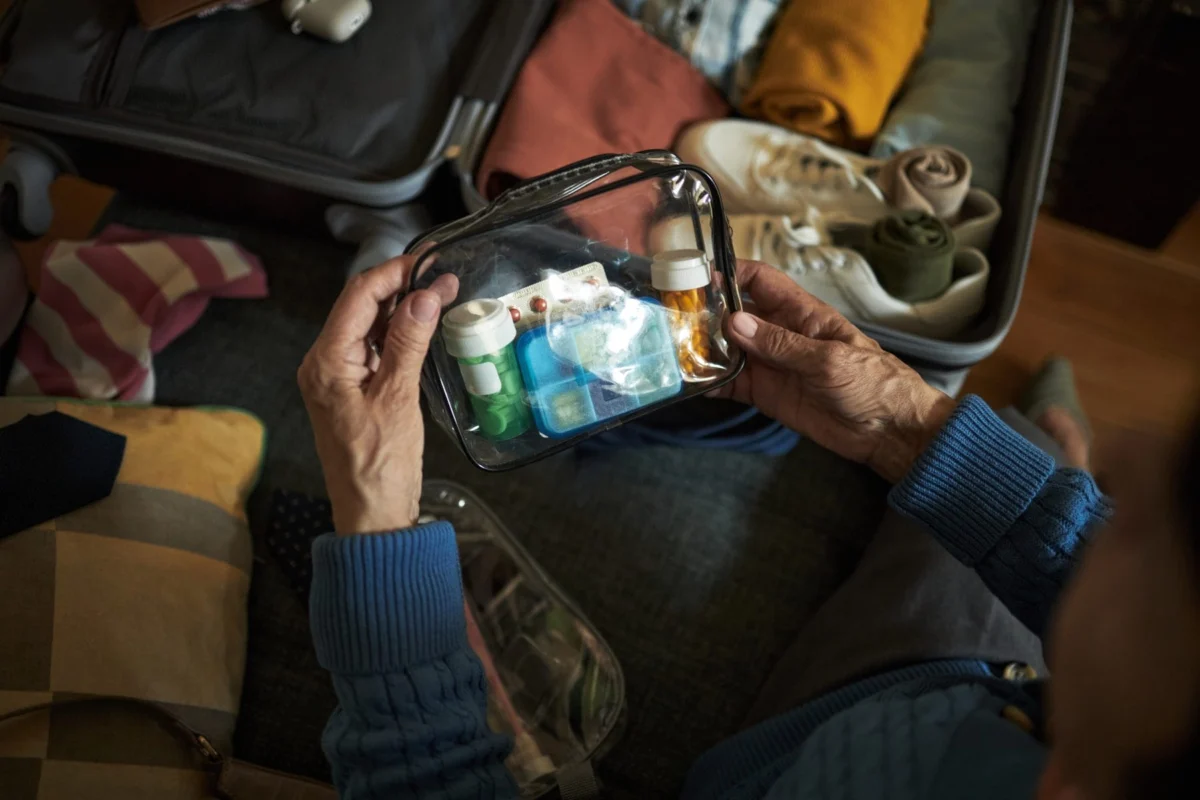
Health agencies and aviation experts now strongly advise travelers to keep their essential medications in their carry-on luggage rather than checking them into the cargo hold. This strategic shift is designed to protect passengers against unpredictable baggage delays, lost transit connections, and other logistical complications that are entirely outside of their control.
Checked Luggage Can Leave You Without Essential Medication
One of the most persistent and hazardous mistakes people make when preparing for a trip is packing their entire supply of prescription medication inside their checked suitcase. Airlines occasionally misplace luggage, and even a relatively short delay can spiral into a serious health crisis when an individual depends on maintenance medications that must be taken at strict, specific intervals. Organizations like the Transportation Security Administration strongly recommend keeping all necessary medications in a carry-on bag so they remain readily accessible whenever a dose is due.
Consider the precarious situation of a traveler managing a serious heart condition who arrives at an international destination only to discover that their checked baggage will not arrive until the following afternoon or evening. Replacing that critical prescription in an unfamiliar foreign country is rarely straightforward. It often involves navigating a foreign healthcare system, finding an available physician, locating an appropriate pharmacy, and paying unexpected out-of-pocket medical expenses that can quickly exhaust a travel budget.
Extreme Temperatures Can Affect Certain Medications
Another frequently overlooked hazard involves the environmental temperatures that medications are inevitably exposed to during the travel process. Extreme heat or freezing conditions can significantly reduce the biochemical effectiveness of many pharmaceutical products, making proper storage an essential component of trip preparation. Certain vital prescriptions, including various insulin products, biological treatments, and injectable medications, have exceptionally strict temperature parameters that patients must maintain.
Leaving medication inside a vehicle parked under a blazing sun, exposing a bag to direct tropical sunlight, or storing drugs in an uninsulated luggage compartment can compromise the integrity of the treatment depending on the specific drug and the duration of the exposure. Before departing on any journey, health professionals advise consulting a pharmacist regarding the manufacturer’s precise storage guidelines to determine whether a specialized, temperature-controlled travel case is required to keep the medicine safe.
Your Daily Pill Organizer May Not Be the Best Travel Container
Many individuals, particularly older adults, routinely rely on weekly plastic pill organizers to keep track of complex medication regimens involving multiple prescriptions. However, the realities of modern travel, particularly international journeys, introduce entirely new considerations. The Centers for Disease Control and Prevention advises travelers to keep their medications in their original, pharmacy-labeled containers whenever they are traveling across international borders.
These official prescription labels assist customs officials, border security agents, and international healthcare professionals in quickly identifying the exact medication, correct dosage, prescribing healthcare provider, and intended patient. Although domestic airport security screening guidelines do not generally mandate that pills remain in their original packaging, various state regulations and strict foreign laws may impose entirely different standards. Carrying clearly labeled containers alongside copies of the original prescriptions can prevent misunderstandings if officials choose to inspect what is being transported.
Some Prescription Drugs Are Restricted in Other Countries
A medication that is completely legal and routinely prescribed within the United States may be heavily restricted, controlled, or entirely prohibited at a traveler’s intended international destination. The U.S. Department of State advises all international travelers to verify local prescription medication regulations directly with the foreign embassies of any countries they plan to visit or even transit through during their journey. Certain classes of medications frequently prescribed for chronic pain, anxiety, attention deficit disorders, and sleep disturbances are often subjected to much stricter legal controls abroad.
Depending on the specific destination and the chemical composition of the drug, travelers may be required to secure additional medical documentation, obtain advance government authorization, or arrange for alternative treatment protocols before setting off. Checking these complex regulatory requirements well in advance of booking travel can prevent the heartbreak of confiscated prescriptions, sudden travel disruptions, and potentially severe legal consequences in foreign jurisdictions.

Airport Security Rules Are More Flexible Than Many Travelers Realize
A primary reason many well-meaning passengers still place vital medications inside their checked luggage is the assumption that liquid prescription products are barred by standard airport security restrictions. However, aviation security protocols permit medically necessary liquids, gels, and aerosols in reasonable quantities that exceed the standard 3.4-ounce limit imposed on ordinary toiletries.
Passengers carrying these items are simply required to notify security personnel about the medical necessity of the liquids and present them for a separate screening inspection when requested. Furthermore, medically necessary cooling accessories, such as ice packs or freezer packs used to preserve sensitive biological treatments, are also generally permitted to pass through security checkpoints, though they remain subject to standard inspection procedures.
A Gate-Checked Carry-On Creates Another Potential Problem
Even travelers who meticulously pack their medications inside their carry-on bags can occasionally encounter an unexpected hurdle right at the boarding gate. When flights are exceptionally full and overhead storage bins run out of space, airlines may require passengers to check their larger carry-on rolling bags down into the cargo hold just before boarding the aircraft. If critical prescriptions are buried deep inside one of those large suitcases, the passenger could lose access to their medication for the duration of the flight.
A practical solution to this common dilemma is keeping essential, time-sensitive medications tucked inside a smaller personal item, such as a handbag or a small backpack, that is guaranteed to fit beneath the seat directly in front of the passenger, provided it complies with the airline’s published baggage dimensions. This approach also ensures that travelers can easily retrieve a dose during a lengthy flight without needing to disrupt other passengers or search through an overhead compartment.
Running Out of Medication Abroad Can Become Expensive
Unexpected travel delays, missed flight connections, and impromptu itinerary extensions can quickly deplete a carefully measured pharmaceutical supply. Bringing enough medication to cover the entire duration of the planned trip, alongside a generous buffer of additional doses in the event that travel plans are disrupted, is an essential safety measure.
For retirees and seniors, the financial implications of running out of medication far from home can be substantial. Original Medicare does not typically cover routine medical care or prescription drugs obtained outside the United States, though there are very limited exceptions. While certain Medicare Advantage plans, Medigap policies, or standalone travel insurance products may offer limited international health benefits, coverage levels vary widely between providers.
Prior to departure, travelers are encouraged to consult their regular pharmacist regarding vacation overrides and early refills, review the fine print of their health insurance policies, and ensure that any extra medication they plan to carry complies fully with international import limitations.
What to Do If Your Medication Is Lost or Stolen
If prescriptions are unexpectedly lost, damaged, or stolen while traveling, contacting the primary healthcare provider and the insurance company should be among the immediate priorities. A regular physician may be able to transmit prescription documentation or coordinate directly with a licensed medical professional located near the traveler’s current destination. The Centers for Disease Control and Prevention advises travelers to identify reliable, accredited medical services abroad and to exercise extreme caution regarding counterfeit or substandard pharmaceuticals when purchasing replacement drugs in foreign nations.
Maintaining an updated, written medication list that details generic drug names, specific dosages, prescribing information, and relevant underlying health conditions is an invaluable precaution in the event of an emergency. Travelers who rely on medications that cannot safely be interrupted should always consult their physician prior to departure to establish a clear contingency plan for missed doses or sudden supply shortages.
Ultimately, when preparing for a trip, convenience should never be the primary factor dictating where critical prescriptions are stowed. Ensuring that essential medications remain accessible, properly labeled, and protected from extreme temperatures helps travelers avoid preventable health complications and unexpected expenses far from home. A modest amount of preparation can also streamline the airport security experience, particularly for those carrying specialized liquids, injections, or medical supplies. Reviewing pharmaceutical needs with a pharmacist, verifying international restrictions, and establishing a robust backup plan for transit delays ensures that a journey remains focused on the destination rather than the scramble to replace misplaced medicine.