The limited partners who provide the capital to venture firms—often referred to as the "money behind the money"—are currently experiencing a period marked by both uncharted territory and potentially exceedingly lucrative opportunities. Traditionally, these institutional investors spread their bets across a wide array of firms to deliberately diversify their portfolios, writing checks to emerging and established managers alike, spanning both generalist and specialist funds, with the primary goal of securing strong returns while keeping risk exposure to a minimum.
That has long been the standard playbook for institutional investors, but in the current venture landscape, typical conventions have been entirely thrown out the window. Driven by the meteoric rise of artificial intelligence titans OpenAI and Anthropic, valuations have shot up at such an unprecedented pace that nearly the entire venture ecosystem has piled into the same two companies on their way up. This phenomenon has frequently occurred inside the very same venture capital firms, flying directly in the face of longstanding venture conventions that traditionally discourage investments in competing assets that conflict with one another. Yet, despite these structural overlaps, no one in the LP community appears to be complaining. The limited partners tracking these developments seem entirely unbothered by the concentrated gamble given the sheer scale of potential returns, with many anticipating a historic financial bonanza.
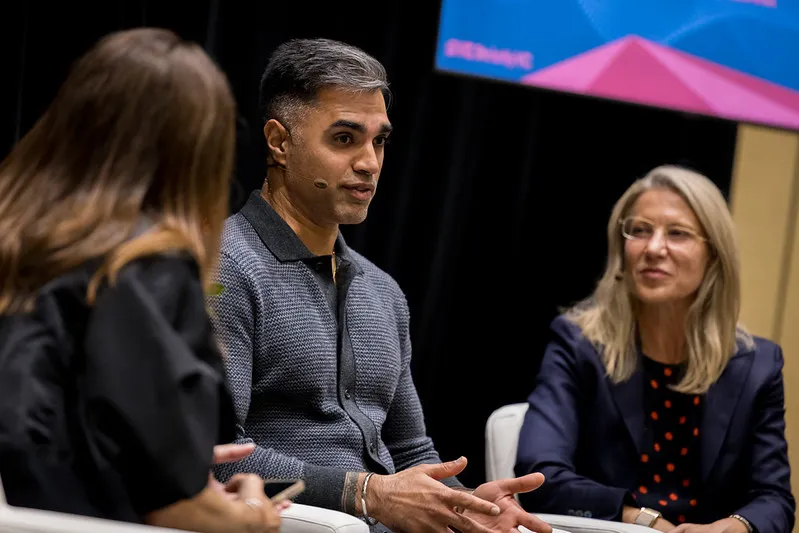
At the same time, these institutional investors do acknowledge that danger lies ahead, describing the current climate as a "yellow light" situation. They express growing unease regarding the velocity with which venture capitalists are returning to the market to raise successive funds. To better understand how the industry’s primary capital providers are navigating this environment, discussions were held recently with Beezer Clarkson of LGT Capital Partners, a Zurich-based diversified asset manager, and Amit Bhatti of TrueBridge, a Chapel Hill-based firm focusing exclusively on venture capital.
Navigating Strange and Exciting Days in the Startup Ecosystem
Reflecting on the psychological and operational state of the market, venture insiders note that while the current environment is intensely busy, it is far from terrifying for those who have weathered past economic cycles. Clarkson points out that the constant flux and multitude of variables make for a chaotic yet engaging marketplace. Having spent a couple of decades in the industry, she notes that familiarity with past market cycles helps temper any underlying fear, fostering an appreciation for the upside phases of the market because downturns are inevitable, and the upswings are inherently more enjoyable.
Bhatti shares a similar sentiment, viewing the current climate as an exciting moment for the asset class. While venture capital has historically been perceived by outsiders as a niche sector, the all-consuming nature of the artificial intelligence boom has thrust venture capital into the absolute center of global attention. From this perspective, the current moment feels less like a crisis and more like validation for the ecosystem, even if the pace of investing and escalating valuations look remarkably different from previous eras. Significant, meaningful technological shifts are underway, concentrating immense attention on this specific corner of private equity.
Managing Portfolio Concentration in the Age of AI Giants
A central challenge for institutional funds is maintaining proper diversification when multiple underlying venture portfolios hold shares in the exact same flagship brands—primarily OpenAI and Anthropic—multiplied across dozens of backed funds. While this concentration is undeniably advantageous during a bull market, a sudden market downturn could present severe systemic vulnerabilities.
Bhatti argues that venture capital has always functioned as a power law business, meaning that high portfolio concentration around a few massive winners is actually a positive indicator of health. He notes that as a fund approaches maturity, a healthy portfolio should naturally consolidate into a few dominant names rather than retaining a multitude of tiny, insignificant positions. Pointing to historical precedent, he notes that funds aged ten years and older inevitably consolidate around category-defining names such as Databricks, SpaceX, and Stripe. For the current generation of funds, seeing heavy concentration in Anthropic and OpenAI is seen as a feature rather than a bug. While not every mega-backed company is guaranteed to succeed, this consolidation pattern is historically typical; the only truly novel element is the sheer speed at which it has materialized.
Clarkson adds that at the early stage of venture investing, capital deployment remains relatively diverse, with smaller check sizes. While early-stage capital ultimately aggregates into the same dominant late-stage companies, early-stage funds generally avoid massive late-stage deals, preserving a degree of structural diversity for LPs seeking broader exposure.
The Accelerating Pace of Fundraising Cycles
A major point of discussion among limited partners is the shrinking timeline between fundraises. While venture funds historically operated on predictable four-year deployment cycles, that cadence has compressed significantly over time to three years, two years, and in some cases, a mere 18 months or even a single year.
Clarkson notes that seeing managers return on a one-year pacing schedule is exceptionally fast, especially compared to the historical norm of two to two-and-a-half years. Some managers are deploying capital at hyper-speed because they are writing massive, highly concentrated checks into high-profile rounds. While this strategy could ultimately prove successful, executing a one-year vintage successfully is inherently more difficult.
Bhatti echoes these concerns, noting that while a 24- to 36-month cycle was once standard, a 12- to 18-month window has become common for fast-moving funds. Furthermore, many managers are bumping up their fund sizes mid-cycle—an unusual practice driven partly by the massive scale of late-stage financing rounds. When companies like Anthropic raise historic quantities of capital and a venture fund allocates 20% of its total capital into a single round, that fund will naturally burn through its dry powder ahead of schedule. Seed round sizes have similarly doubled, forcing lead investors to commit significantly larger checks. Bhatti characterizes this acceleration as a clear "yellow light" that generates industry-wide heartburn, though he differentiates today’s environment from past frenzies by pointing to fundamental metrics. Unlike previous accelerated cycles characterized by speculative, zero-revenue crypto ventures, today’s market features companies rapidly scaling from zero to $100 million in revenue—a velocity that was previously unheard of.
Managing LP Commitments and Fund Pacing
When top-performing managers return to the market annually while their returns remain largely tied up in paper valuations, institutional investors face a delicate dilemma: whether to maintain their seat at the table or tell the manager to look elsewhere.
Clarkson explains that severing ties with a high-performing manager and attempting to return later is extraordinarily difficult. While it occasionally happens, the more common strategy is to downsize check sizes. During the frothy market of 2021, for instance, many LPs halved their intended commitments, opting to deploy $5 million instead of $10 million because the original target was modeled on a multi-year deployment plan. Institutional portfolios must carefully synchronize their own capital pacing with the accelerated deployment schedules of their general partners.
Bhatti agrees, noting that maintaining a calendar of anticipated capital commitments is essential for managing institutional cash flow. When a manager deviates significantly from historical maps, LPs must ensure the necessary capital is readily available. Consequently, institutional investors often opt to downsize commitments or communicate adjustments upfront rather than sitting out entirely, which would compromise their status as reliable capital partners. This dynamic also explains why some managers choose to upsize existing funds rather than face the friction of launching entirely new vehicles. However, Clarkson warns that relentless capital calls without concurrent distributions place severe financial strain on operating budgets for institutional clients like university endowments, hospitals, and charitable foundations.
Evaluating COVID-Era Vintages and Emerging Liquidity Avenues
Evaluating the performance of funds raised during the pandemic years requires patience, as those 2021 vintages are still relatively early in their lifecycle at five years in. Clarkson notes that while extreme valuations and rapid deployment make those vintages challenging, a select few will capture winning AI assets and ultimately deliver strong results. Bhatti adds that while the COVID-era vintages may not statistically emerge as the best overall historical grouping, foundational breakout companies like OpenAI and Cursor were established during that era and are embedded within those portfolios.
Furthermore, liquidity channels have begun opening up beyond traditional initial public offerings. Although the broader market experienced a slowdown over the preceding two years, headline-grabbing exits like SpaceX, large-scale mergers and acquisitions exceeding $10 billion, and massive transactions like Cursor’s $60 billion exit demonstrate that liquidity is flowing through diverse financial pathways.
Secondary markets have similarly matured into a vital third leg of liquidity alongside IPOs and M&A. Clarkson emphasizes that secondaries have grown significantly more sophisticated over the past five years, providing essential liquidity options concentrated within top-tier companies. This evolution is welcomed by the ecosystem, as waiting two decades for a traditional public offering is structurally incompatible with the realities of modern venture capital. Secondary transactions now occur at multiple levels, enabling limited partners to sell stakes in general partners or strip portions of their portfolios with diminishing social stigma.
Bhatti points out that venture capital historically lacked the well-developed secondary market found in traditional private equity, where selling a stake was once unfairly stigmatized as a sign of distress. However, after watching market participants hold illiquid assets through the downturns following 2021, attitudes shifted fundamentally. Modern managers now view secondaries as a judicious portfolio management tool. While a fund will rarely exit a core power-law company entirely, selling a fraction of a position—such as 20%—to successfully return the entire fund to its investors is viewed as sound fiduciary practice.
Founder Selling, Employee Tenders, and the Bay Area Talent Loop
The rise of early founder selling and employee tender offers has introduced complex motivational questions regarding long-term commitment. Bhatti draws a parallel to the challenges faced in the cryptocurrency sector, where employees holding immediately liquid tokens often lacked structural incentives to stick around when operational challenges arose. Consequently, he views employee tenders as healthy primarily for mature companies with proven financial longevity, such as Stripe and Databricks, where offering partial liquidity is entirely reasonable. Ultimately, responsibility falls on lead institutional investors to push back behind the scenes against premature employee liquidity, though leverage ultimately rests with founders who command immense negotiating power.
When these venture-backed companies eventually go public and employees achieve significant personal liquidity, those individuals frequently transition into the investor ecosystem. Clarkson notes that successful employees routinely become limited partners or launch new emerging manager funds themselves, mirroring the generational talent spinouts seen during Google’s earlier growth phase. Bhatti underscores that despite soaring real estate costs and cost-of-living challenges in San Francisco—which threaten to price out subsequent generations of founders—the enduring density of talent, capital, and networking ensures that the Bay Area will remain the epicenter of the tech ecosystem for the foreseeable future. While secondary hubs in locations like New York continue to expand, the localized gravitational pull of Northern California’s technological infrastructure remains exceptionally difficult to replicate.
Opportunities for Emerging Managers
Despite the trend of large institutional commitments concentrating within a handful of mega-funds, emerging managers continue to secure backing. Clarkson explains that first-time and early-stage funds—spanning funds one through three—continue to find support as long as they offer a differentiated point of view and a clear reason for existing. While fundraising has grown tougher, smaller fund sizes allow specialized managers to succeed; if 50% of institutional capital flows to giant funds, a collection of emerging funds sized between $25 million and $50 million can still aggregate meaningful capital.
Bhatti notes that many prominent venture firms historically originated from modest $5 million pools, advising emerging managers to focus on building an authentic track record, proving investment thesis execution, and demonstrating access and judgment with smaller pools of capital before attempting to scale up. Defining "emerging managers" broadly, Bhatti points out that institutional backers now support a diverse spectrum of talent, including active founders investing on the side, experienced operators spinning out from established platforms, and remarkably young general partners leveraging direct access to the newest generation of AI-native founders coming out of university accelerators at institutions like MIT, Harvard, and Stanford.
Concluding on check sizes and portfolio construction, Clarkson notes that institutional allocation minimums generally prevent writing checks smaller than $5 million, and limited partners strive to cap their ownership at roughly 20% of a fund to ensure the general partner maintains a healthy incentive structure. Bhatti shares similar parameters, noting that while check sizes typically range between $3 million and $5 million, flexibility remains essential in early-stage venture investing, where customized strategies and experimental pools continue to find viable paths to success.